The traditional systems of mutual support that undergird many Indigenous Central and North American cultures have formed a safety net during a very dark time in New York City’s history.
The ongoing struggle for racial justice. The future for immigrant families. The health and well-being of all Americans. The very fate of our fragile planet. The United States faces a crossroads in 2020. Seeking out the stories flying under the national radar, The Nation and Magnum Foundation are partnering on What’s At Stake, a series of photo essays from across the country through the lenses of independent imagemakers. Follow the whole series here. This installment was produced with support from the Economic Hardship Reporting Project.
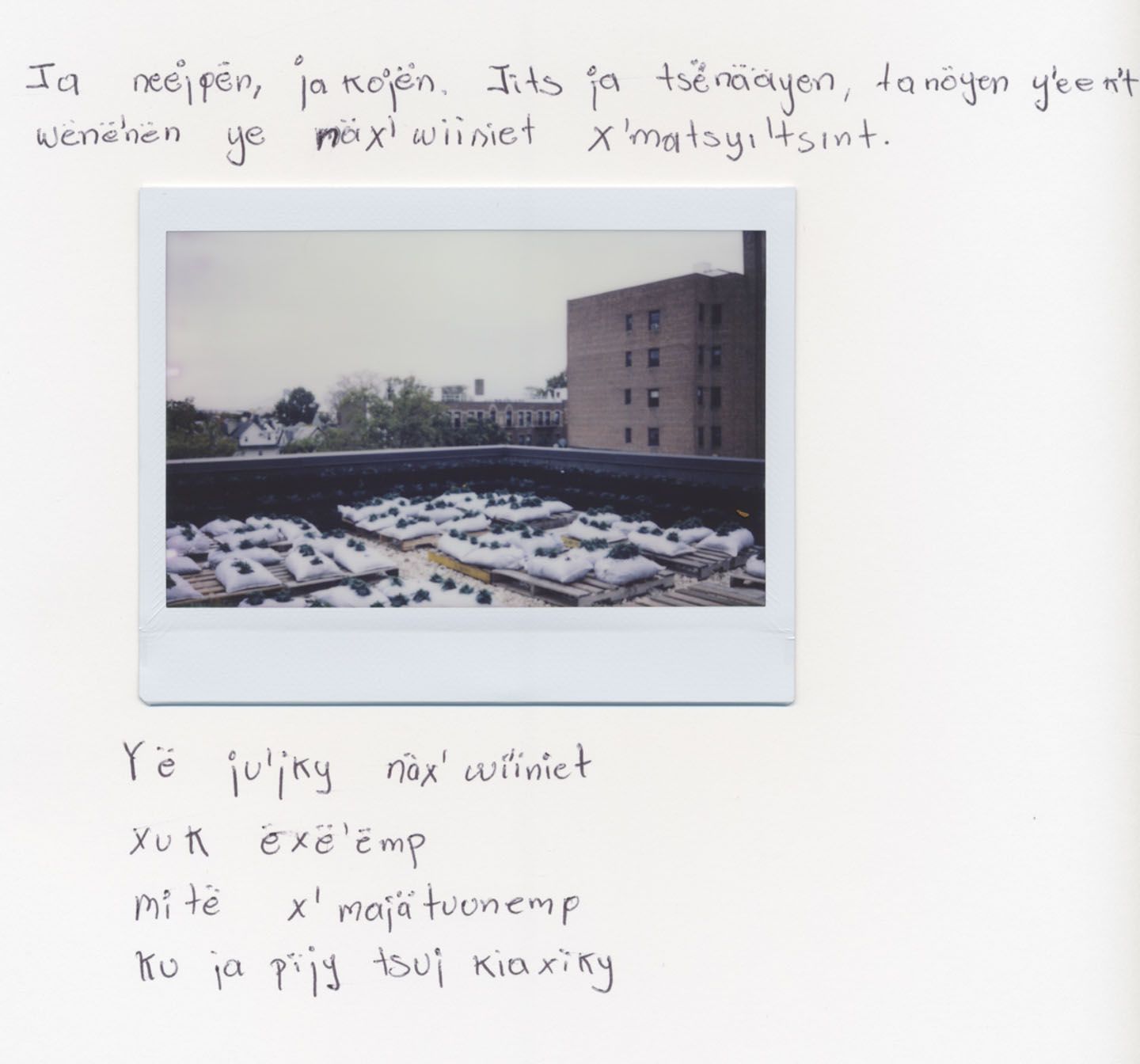
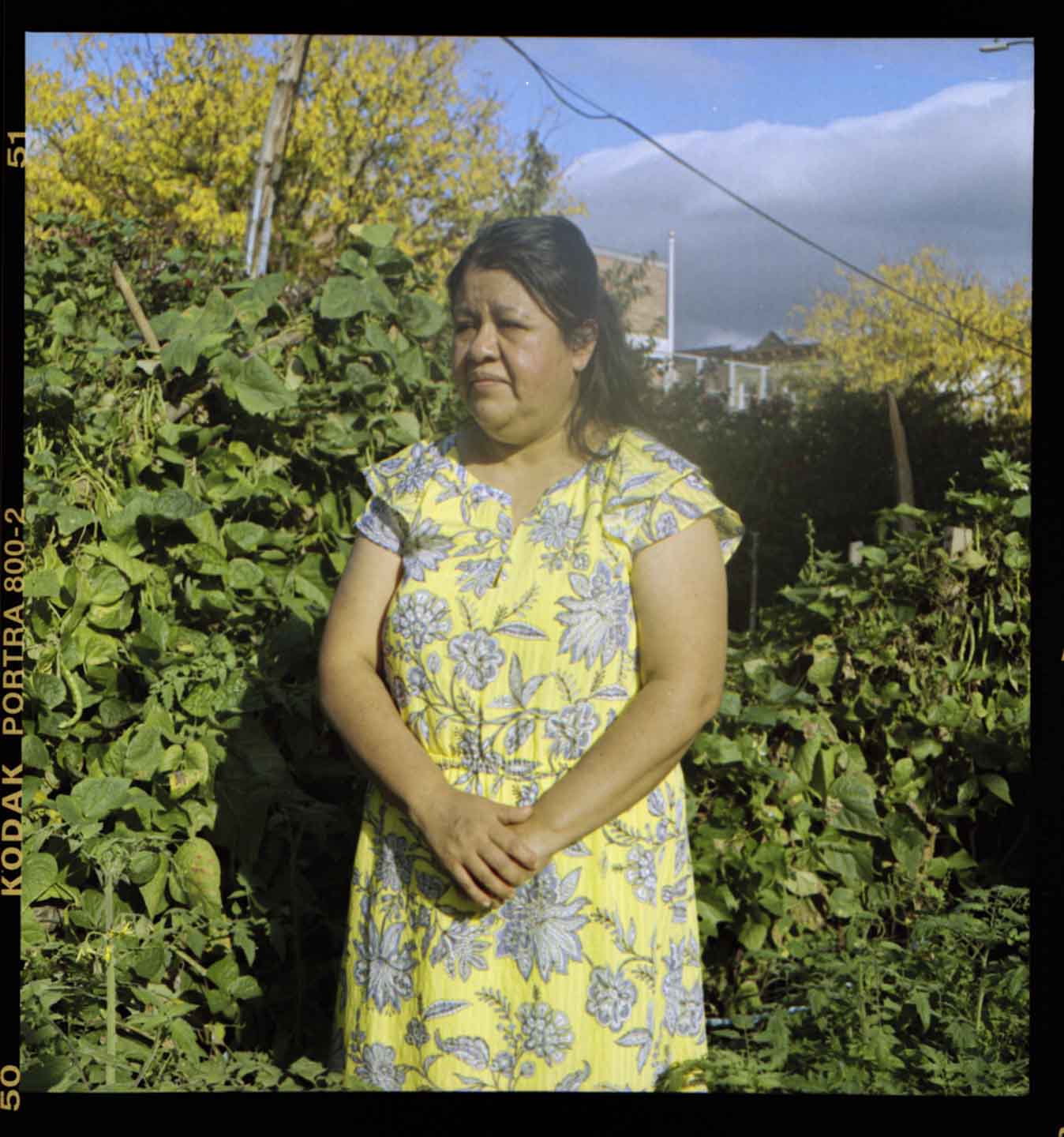
When the pandemic hit New York City this spring, Próspero Martínez, a Mixe Indigenous migrant from the community of Tlahuitoltepec in Oaxaca, Mexico, began managing a community garden and green roof project at the Good Shepherd Lutheran Church in Bay Ridge, Brooklyn. The community was experiencing food shortages and many people were losing jobs or having hours cut. People were scared.
Polaroid photo of the green roof that Próspero Martinez created.
Text written in the Ayuujk jää’y language by Próspero about his inspiration for the garden: “Sow and build to preserve the integrity of the universe to which we belong. Coexist as far as our mother earth allows our species. The wisdom of nature gives us the opportunity to interpret what is beautiful at heart. When a seed turns into a flower we state that we exist.” (Cinthya Santos Briones)
For Próspero, joining with his neighbors to get through the crisis together just made sense. “Planting your own food is a way of resisting, of being autonomous—it is what we, Indigenous peoples, have fought all our lives to preserve,” he told me this summer. “It is a way to return to our origins, to revalue the work of the campesino, which in the labor hierarchy occupies the last step and, during the pandemic, we saw paradoxically, that he became the ‘essential’ and yet the most exploited worker.”
The food distribution network that Próspero is a part of, centered around the Good Shepherd Church, is largely run and led by Indigenous people, and for many like him, the work they are doing to keep their neighbors fed and housed draws heavily on the Indigenous practices they’re importing from their home communities. (Full disclosure: My husband is the pastor at Good Shepherd Church, so I have deep connections with this congregation.) Over the course of the pandemic, I have been visiting these centers of mutual support run by Indigenous migrants, photographing their work and talking to them about the importance these practices represent to them.
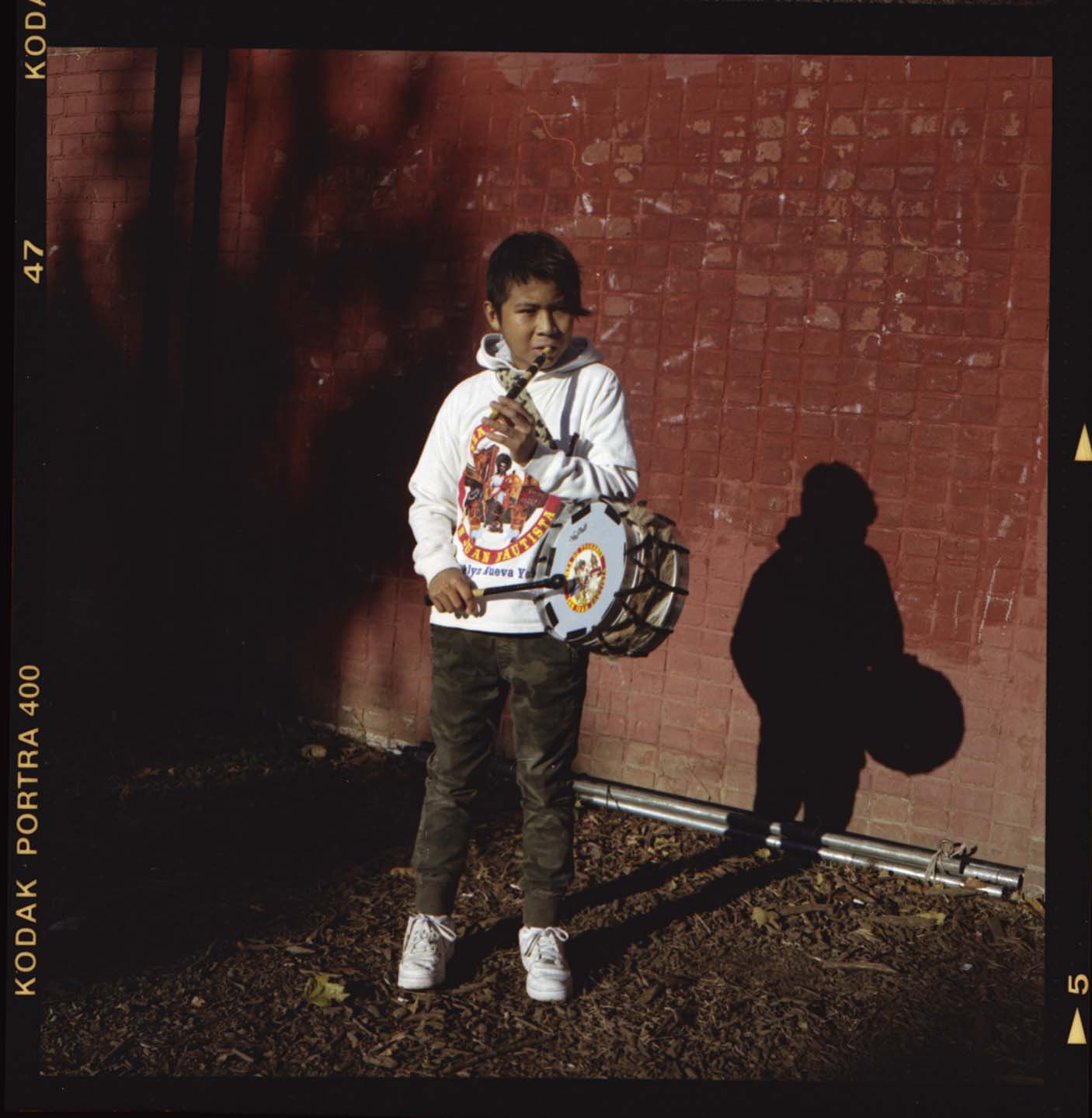
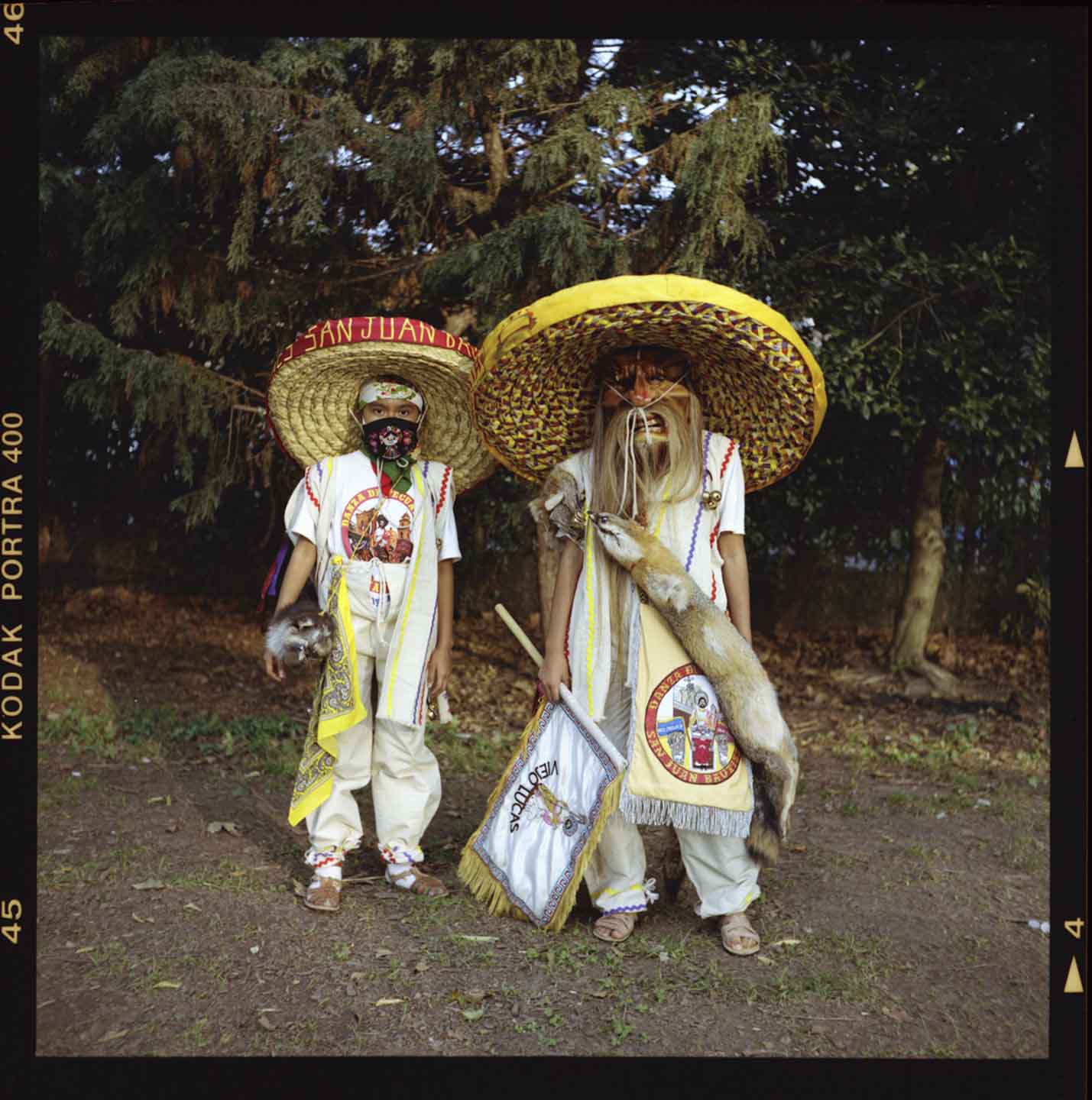
“I am the musician of the Tecuanes group, I accompany the dance playing a flute and a drum,” says Jeffrey Perez, a 12-year-old boy who is part of the Los Tecuanes de San Juan Bautista’s dance group, which is mostly made up of children born in New York. La danza de los tecuanes, the dance of the jaguar, is a theatrical, Indigenous celebration that fuses magical-religious elements and fertility rites in its portrayal of a group of hunters trying to catch a tecuane, a word which itself is of Nahuatl origin. (Cinthya Santos Briones)
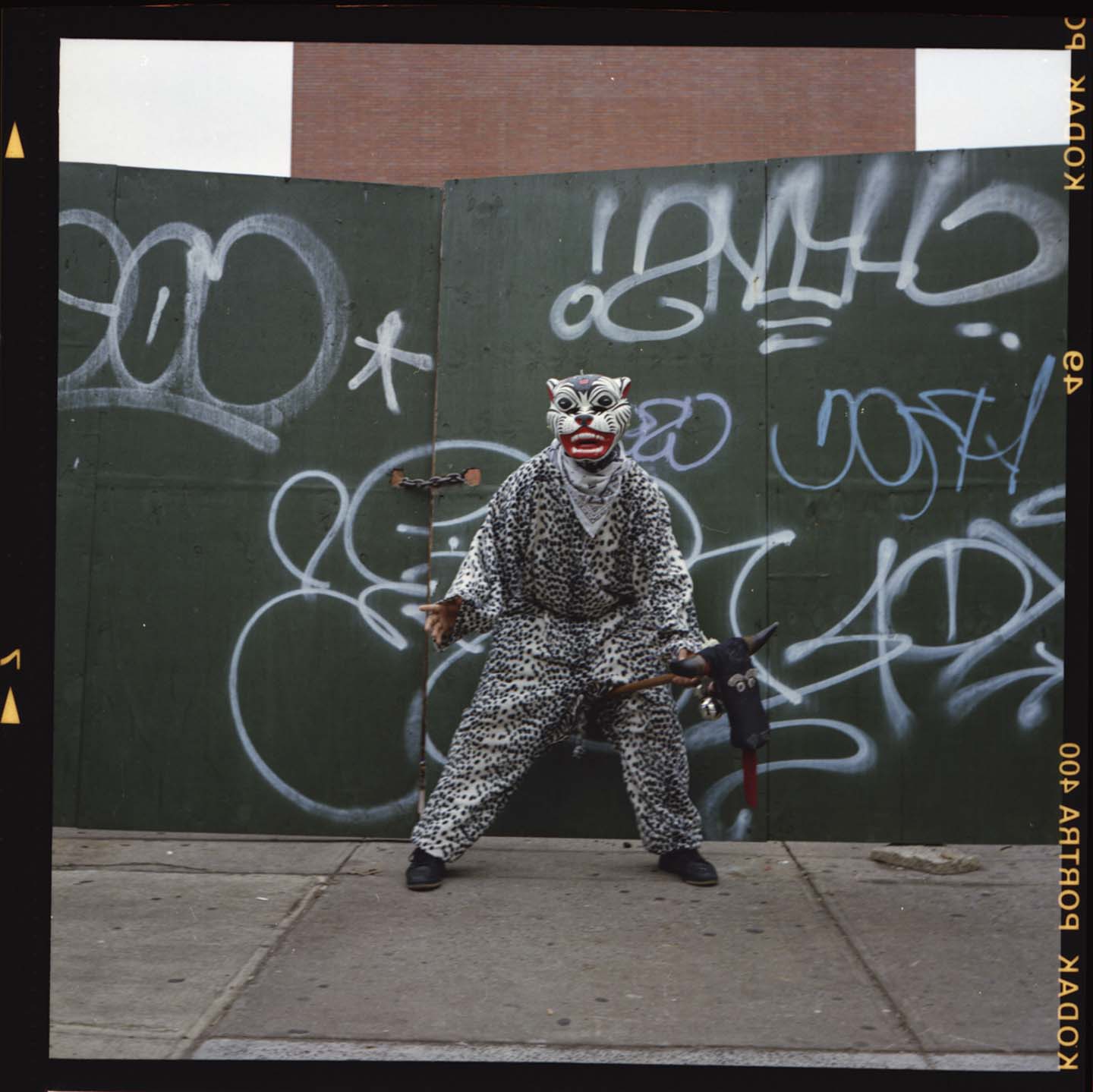
Dancer dressed as a jaguar or tecuani during the Mixtec carnival celebration in Williamsburg, Brooklyn. “In Mixtec mythology there has been a battle between Tecuán and man since pre-Hispanic times, a struggle that is recreated today in the Tecuán dance that stages the persecution, hunt, and death of the Tecuán,” says Demetrio, an Indigenous Mixtec migrant from Puebla. (Cinthya Santos Briones)
When Próspero came to New York City two years ago, he was joining a diverse mix of Mesoamerican Indigenous immigrant communities hailing from the mountains, jungles, and deserts of Mexico and Guatemala. Though not wholly new (Indigenous migrants have been in the United States for as long as the country has existed, and from the 1940s to the ’60s, Indigenous manual laborers from southeast and central Mexico worked as peasants in the US under the government’s “Bracero Program”), the pace of Indigenous migration to the United States has accelerated in recent decades. Indigenous communities in Mexico and Guatemala have faced new levels of economic precarity and violence in recent decades, which has displaced thousands of Indigenous people from their communities. New York has become a destination for many of them, and the city is now home to Mixes, Totonacos, Mixtecos, Otomís, Tlapanecos, Tepehuas, Amuzgos from Mexico; K’iches, Mams, Kaqchikels and Tz’utujils from Guatemala; Nahua from across Central America; and Quechuas and Aymaras from South America. Each of these peoples come with their own language, culture, identity, gastronomy, religion, oral history, philosophy and worldview that is glossed over or erased in many discussions of Latin American migration to the United States.
Natalia Méndez Saavedra is a Mixtec Indigenous migrant from Oaxaca and co-owner with her family of La Morada restaurant in the South Bronx. When the pandemic began, La Morada opened its doors in an act of solidarity with the communities most in need, providing more than 5,000 meals a week. “This system has taken away everything and even our fear. In this crisis, we do not mind dying because our spirit and values as a family is to fight for equality, social justice, and human rights. To facilitate a place that the most needy can call home and thus to respond to this crisis as we as Indigenous people have always done,” Natalia told me. (Cinthya Santos Briones)
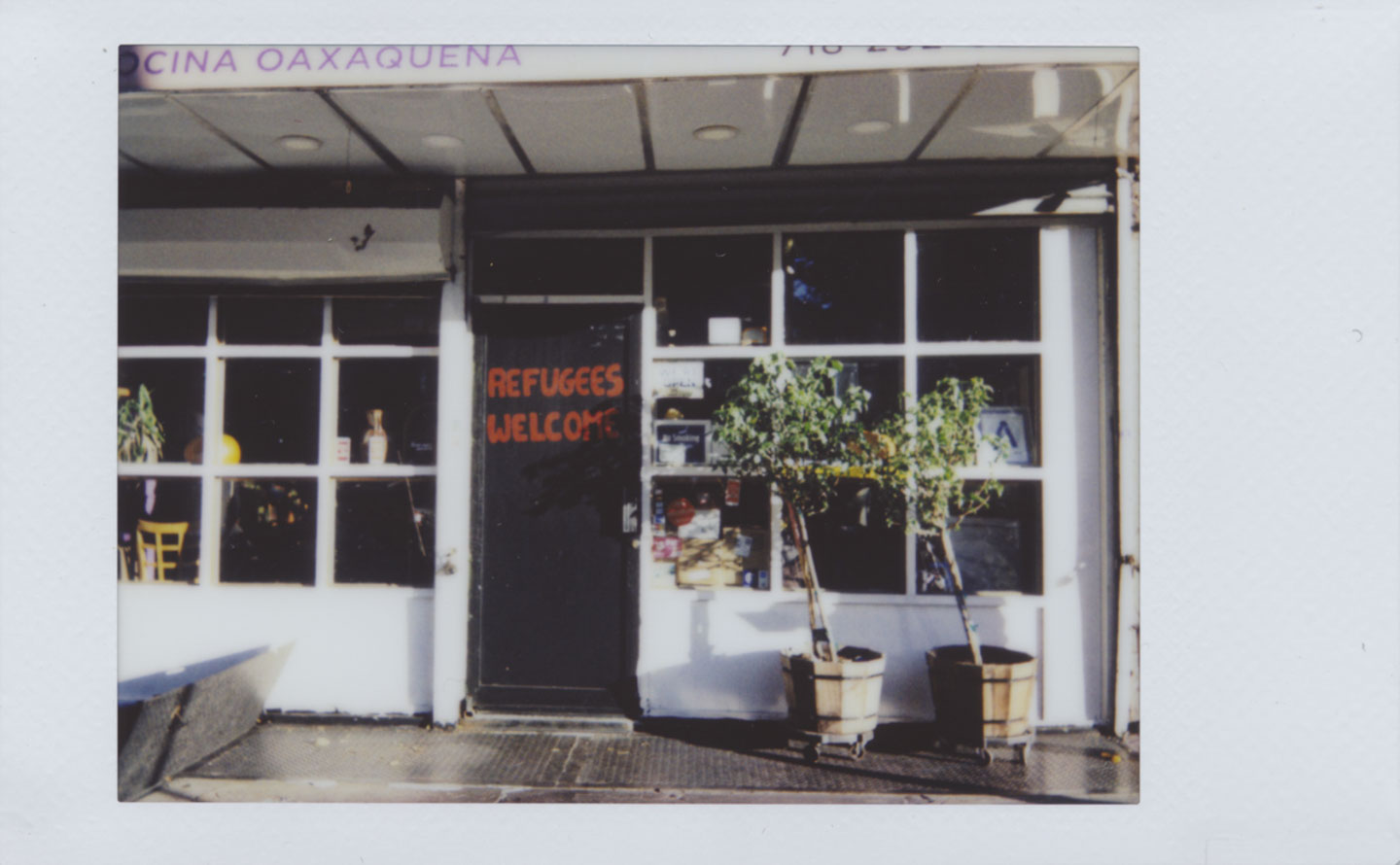
Portrait of the exterior of La Morada. The restaurant has operated for years as both a refuge for undocumented migrants and a cultural and political meeting point in New York City.
“We have built a space where justice can be smelled and eaten, where our roots as Mixtec Indigenous people can be transmitted,” Natalia Mendez says. (Cinthya Santos Briones)
What many of these peoples share, however, is an idea of reciprocity and mutual support—“giving, returning and receiving”—as a social organizing system. These concepts and practices are embodied in words and phrases like tequio, faena, la mano vuela, mayordomías, and compadrazgo, concepts that have no direct translation in English but that all imply an individual’s responsibilities to the collective, and the obligations that come with being part of a community.
I’ve been working with and photographing Indigenous communities for over a decade, and this work has been grounded in a personal search for my own roots. My paternal family are Nahua from the community of Ahila Pahuatlán Puebla, Mexico, for years I lived in Indigenous Otomí, Nahua, Téenek, and Tepehua communities in Mexico, and when I first came to New York in 2011, I lived in an Otomí community in Queens. These experiences have led me to work as a community organizer with Indigenous K’iche’, Nahua, Otomí, Tepehua, and Tlapaneco communities in New York, creating long-standing ties of friendship and kinship.
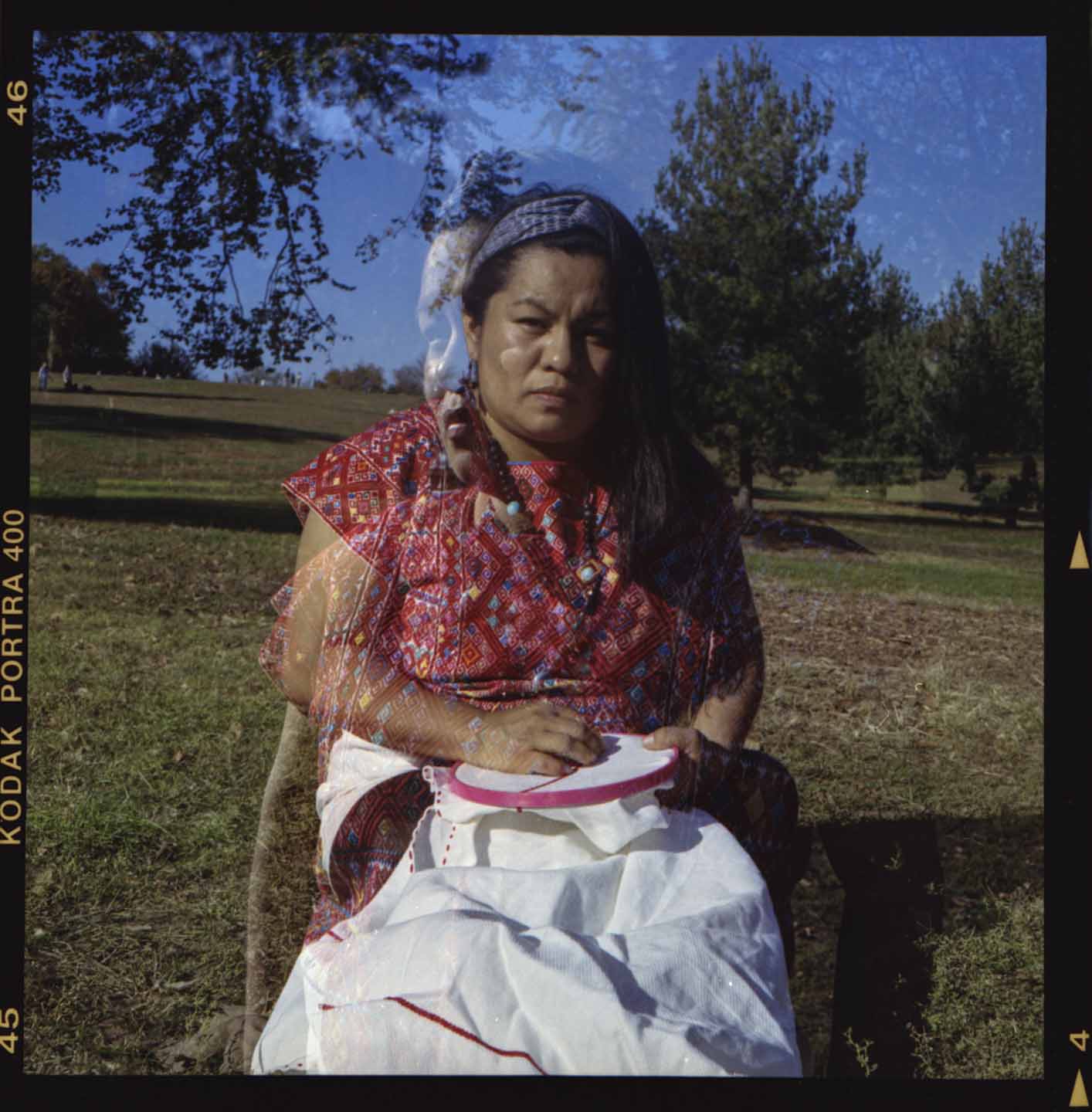
“Weaving is a way of healing, being in community with women and empowering ourselves,” says Maria José Prudente, an Indigenous Tu’u savi migrant from the community of Yerba Santa, Guerrero, Mexico, who runs a collective weaving and embroidery group in which she teaches Indigenous women how to weave while speaking about social justice, domestic violence, and economic autonomy.
During the pandemic, María José decided to start an audiovisual radio program in the Mixteco language, “Telling stories in Tu’u savi,” through Facebook, with the aim of preserving the language, rescuing memory, and using this platform to talk about problems and find collective solutions to the issues facing her community. “I consider myself an Indigenous feminist and through my skill as a cultural promoter and community organizer I want to provide legal, economic, and social tools to the women of my community so that they can get ahead and discover their power,” she told me. (Cinthya Santos Briones)
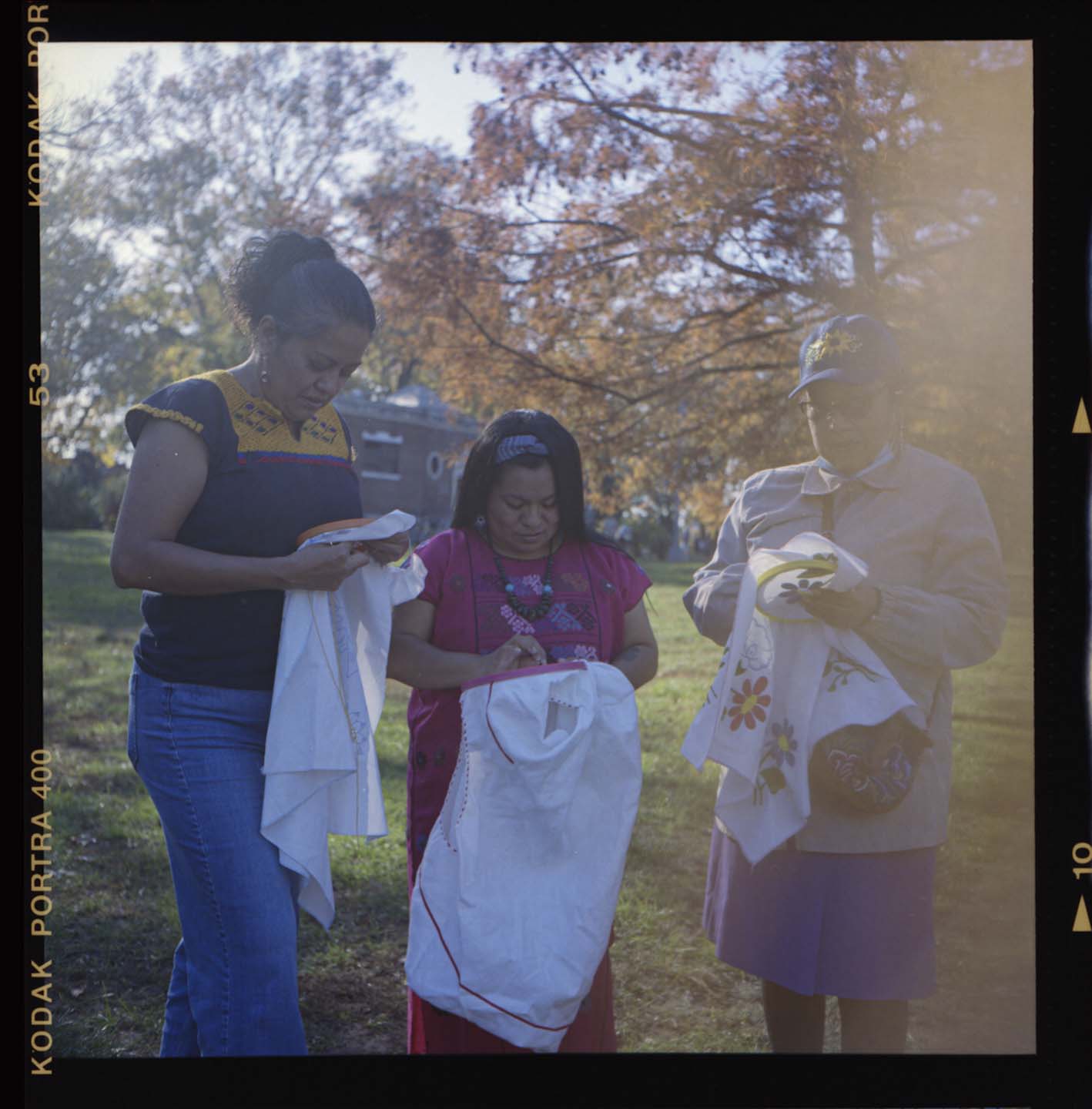
“Weaving in community is resisting” says Maria, center, with the weaving and embroidery group she runs in Owl’s Head Park, Bay Ridge. (Cinthya Santos Briones)
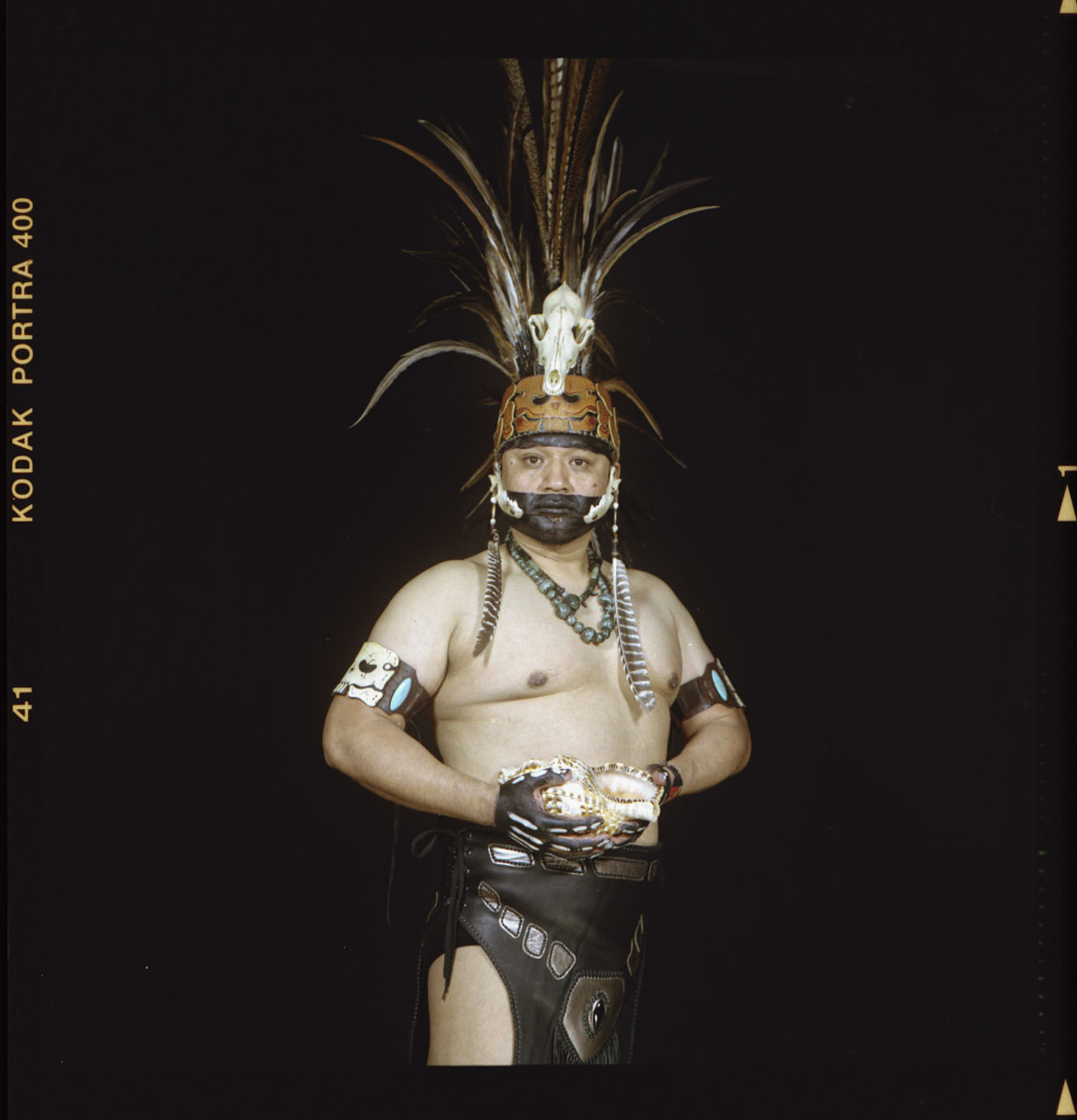
Mario Cortés, a Nahua Indigenous migrant from Puebla, dressed as a Mexica warrior from pre-Hispanic times. Mario is a dancer with the Mexica group Cetiliztli Nauhcampa, and has been working as a hairdresser in New York City for years.
“We believe that a connection exists among all things. The Mexica people, like the many other Native nations from the Americas, have a rich culture in which the principle of interconnectedness is central. Through our prayers in the form of dances, songs and ceremonies we honor this principle. Our circle and its dances represent the circle of life and all that is found on Mother Earth. It is our duty to keep these traditions alive and for future generations to do the same. In keeping the energy of this vision flowing, the Indigenous people of this continent, as all of humanity, will be able to heal and reestablish a connection between our spirit and the Mother Earth.”
(Cinthya Santos Briones)
So when it came to documenting Indigenous communities during the pandemic, I wanted to draw upon the ethic of mutual support that guides many of these communities. To make these portraits, I used the approach that guides all my work: Through collaboration, I asked how they wanted to be represented, and worked with them to create images that reflected what they wanted to express about their identities and their lives. This more horizontal, anti-hierarchical approach to image making is driven by my desire to create work collectively, in community with the people represented, in an effort to more accurately represent what Indigenous migrants consider to be important to them. This mode of engagement stands in stark contrast to the way these non-Latino immigrants are treated by the institutions that exert outsize influence on their lives, be they the courts, the migration system, hospitals or other institutions that fail to recognize the diversity—linguistic and otherwise—of Indigenous migrants. Many Indigenous migrants work low-paid and dangerous jobs, including as delivery workers, carwasheros, nannies, domestic workers, and day laborers, making them particularly vulnerable during this time. As the Indigenous peoples of the Americas, the fact that many of these migrants are also categorized as “undocumented” by a government that has existed for less than 250 years is another nonsensical affront to the enduring resilience of peoples who have made their lives and developed their cultures here for millennia.
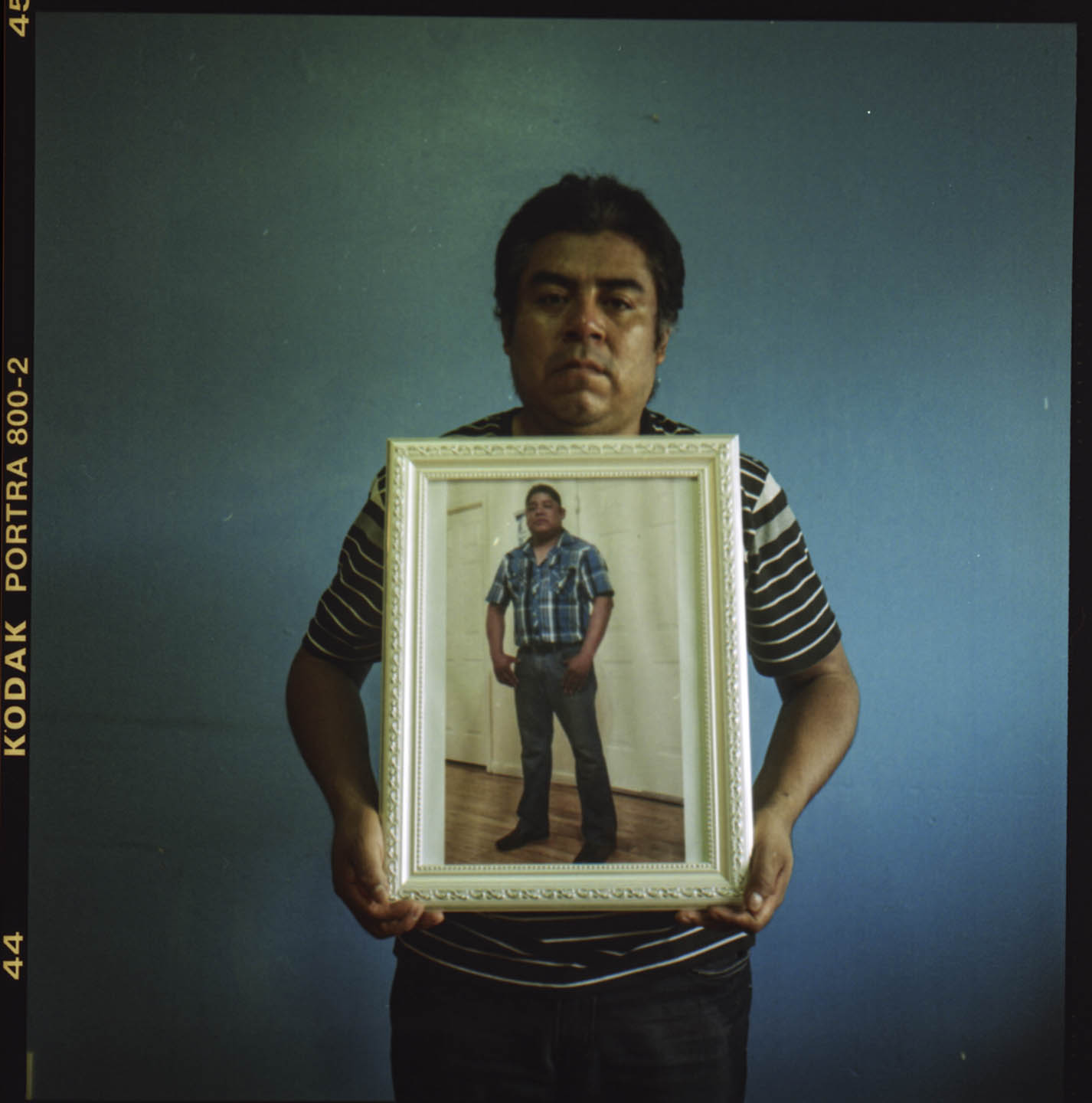
Elias Guzmán holding the portrait of his brother, Victorio Hilario Guzmán, who was making food deliveries on his bike in the Bronx when he was killed in a hit-and-run in the Bronx on September 23. “Being Indigenous and migrant is difficult because we cannot express ourselves accurately before the institutions, ask for justice, fight for our rights,” says Elías, a Meꞌphaa Indigenous migrant. Following his brother’s death, Elias organized, together with his family and community, a series of protests and vigils in a political act of saying: “Here we are, the Indigenous migrants, we deliver food to their tables. Yes, we are essential workers with many dreams.” (Cinthya Santos Briones)
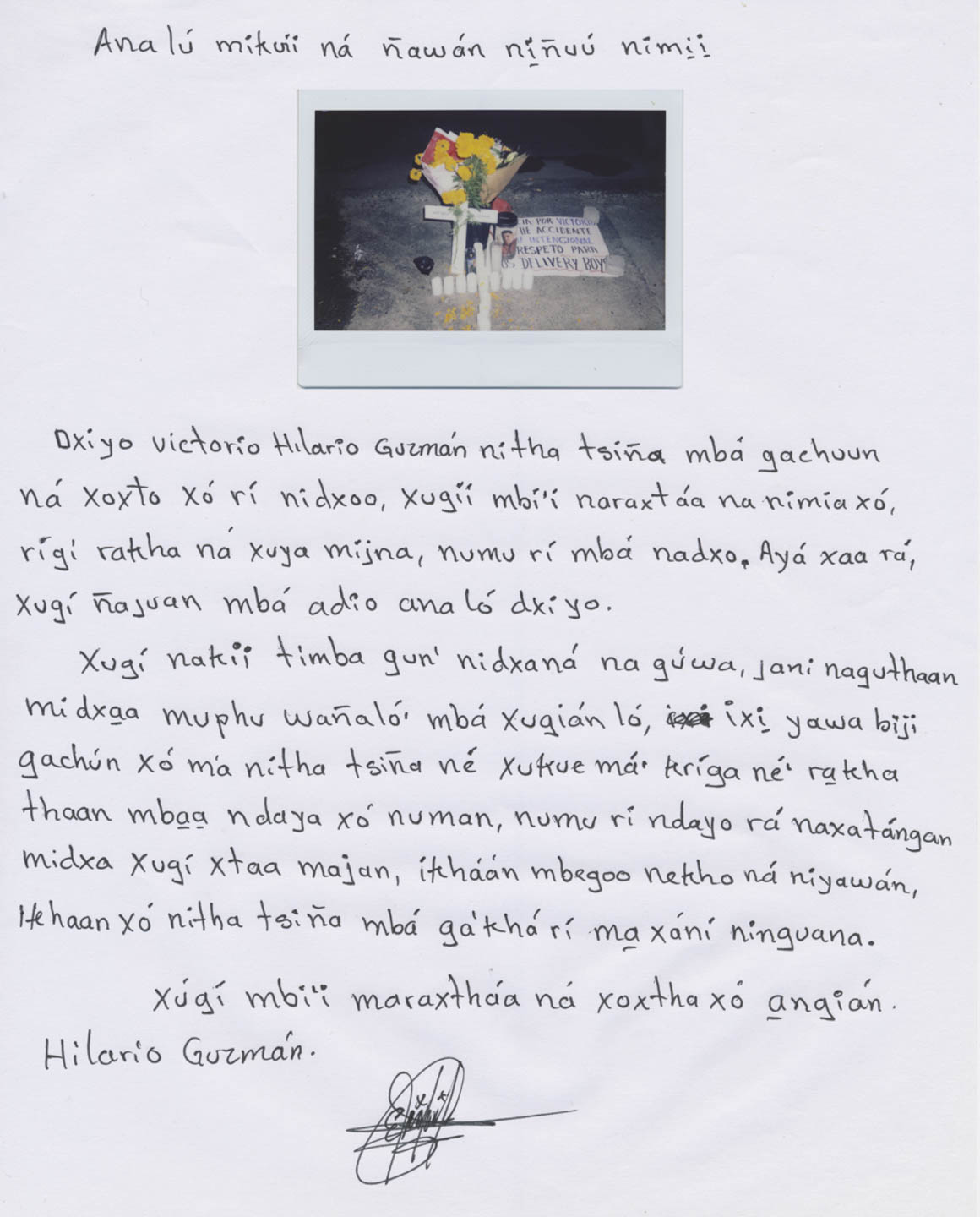
A photo of the memorial and offering to Victorio Hilario Guzmán, with text by Elias: “Lord, into your hands I commend his spirit. You left us a great void in your departure, but we will always carry you in our hearts. This is not a goodbye. Rest in peace, now you are already an angel, brother.
You left the house a month ago today, we are still waiting for you to come back to have dinner with us. Your bed is still empty, just as you left it that day when you left the house. We need you. But we know that you will never come back. Now you are in a better place, you suffered for a while. We will always suffer.” (Cinthya Santos Briones)
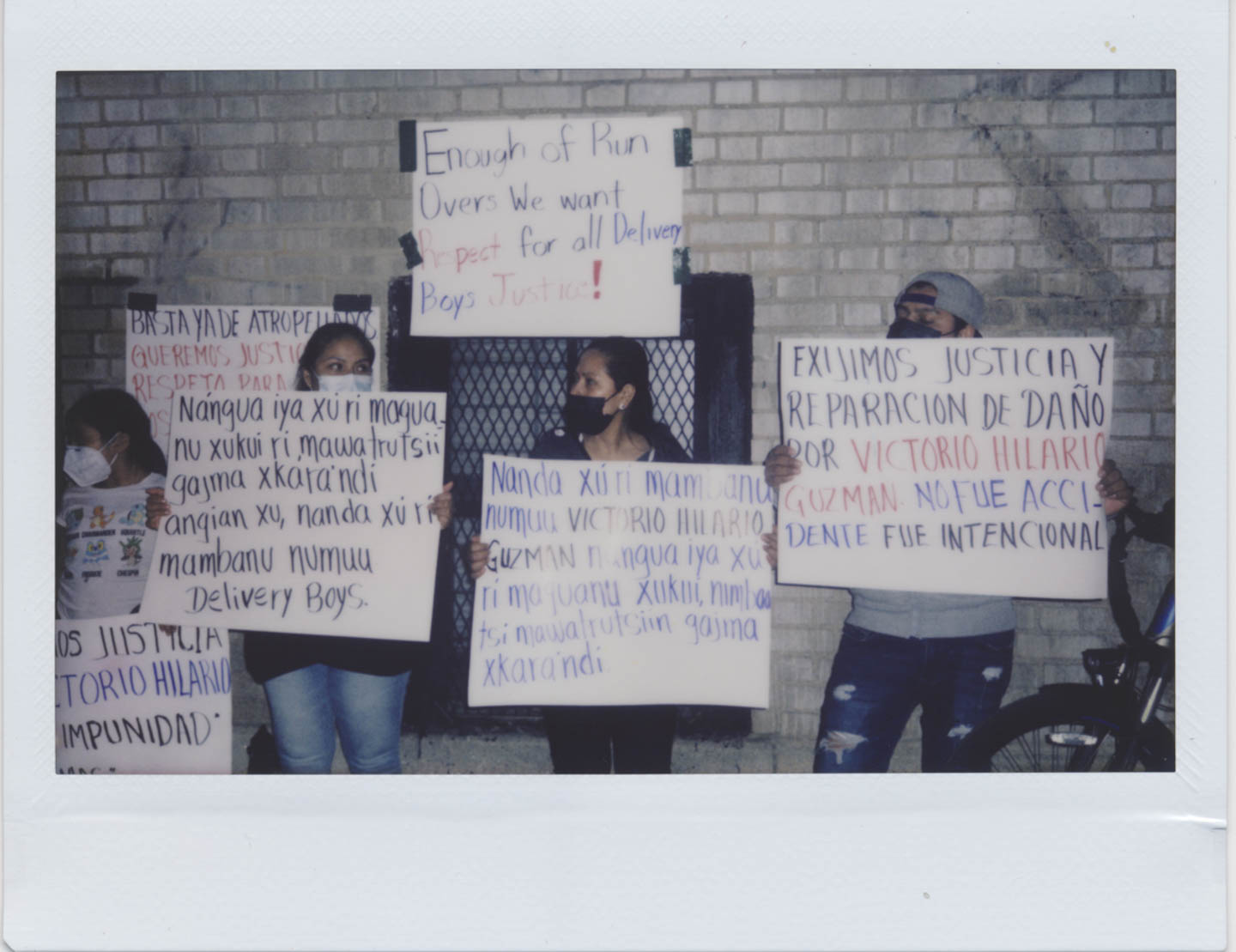
Migrants from Guerrero, Mexico, protest the death of Victorio Hilario Guzman on 180th Street and Grand Concourse in the Bronx with banners written in their Me’phaa Indigenous language. The banners say: “Enough of impunity, we want justice, not one more dead, justice for delivery workers.” “We want justice for Victorio Hilario Guzman. No more impunity, not one more killed.” (Cinthya Santos Briones)
Alongside the portraits, I asked people to write, in their own Indigenous language, what they wanted the world to read. Their messages reveal the struggles they face, the ways they adapt to a system that holds them in low regard, and the way they are thriving in their adopted city. From soup kitchens to Indigenous-language radio programs, green roofs to sports clubs, embroidery classes to community organizing drives, the diversity of efforts Indigenous migrants are currently leading points to the ways they are making New York City their own. These photos, then, represent a fraction of the efforts underway across the city to build and sustain vibrant Indigenous cultures.
Children of the dance group Los Tecuanes de San Juan Bautista’s participate in the celebration of the independence of Mexico, organized by the Mixtec organization in Sunset Park. (Cinthya Santos Briones)
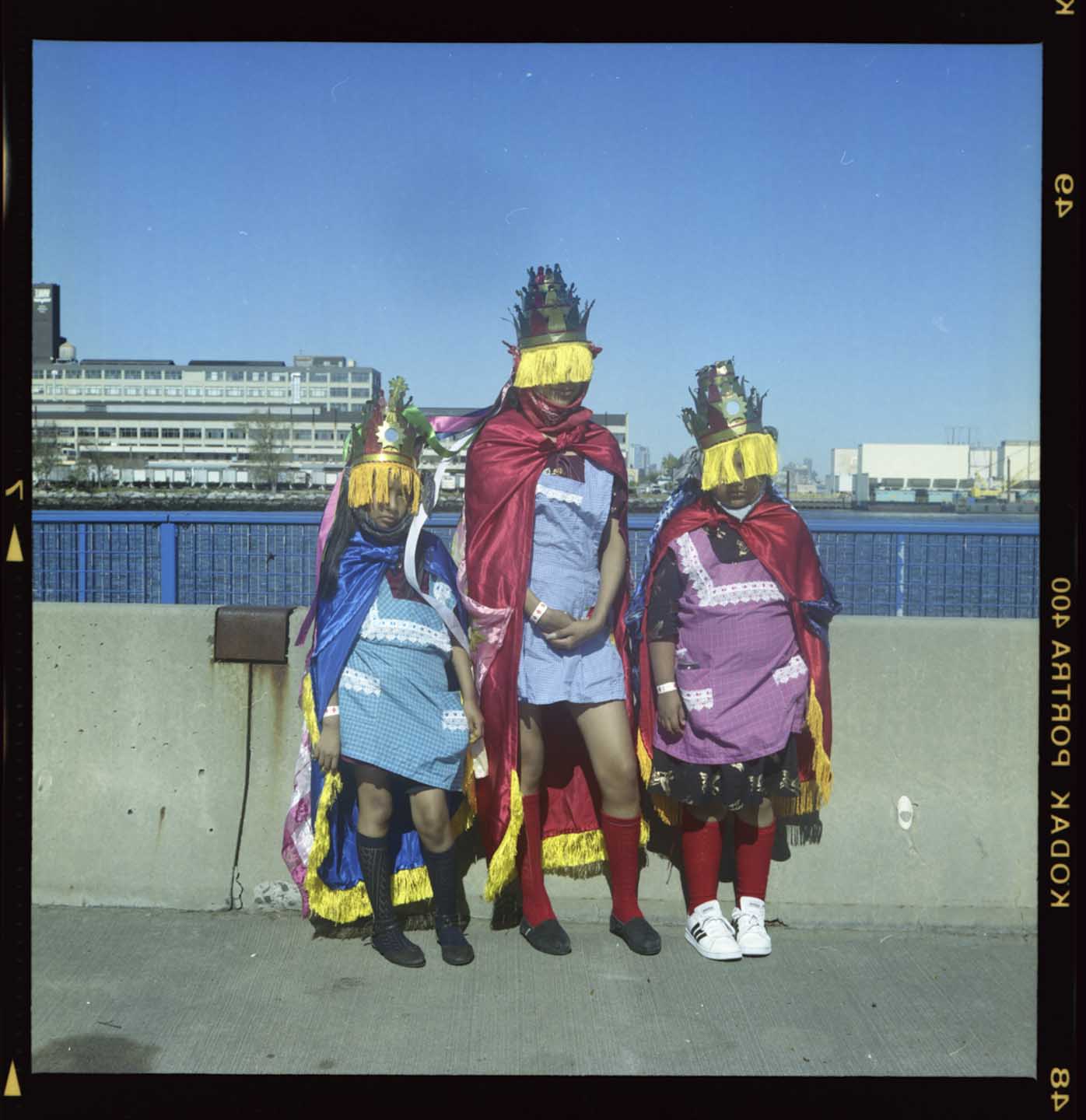
First-generation girls who are members of the Las Moras dance group.
Las Moras is an Indigenous dance from San Pedro Benito Juárez, Puebla. It emerged during the colonial period in Mexico, and it is accompanied by pre-Hispanic instruments like the teponaztli and the chirimia, a drum and a small flute. The dance is now performed by Indigenous migrants from San Pedro Benito Juárez in parties and festivals in New York. (Cinthya Santos Briones)