
For Palestinians in the West Bank, This Olive Harvest Is Literally Life-Threatening
As Israeli settlers ramp up their attacks across the West Bank, Palestinians are being forced to choose between their lives and their livelihoods.
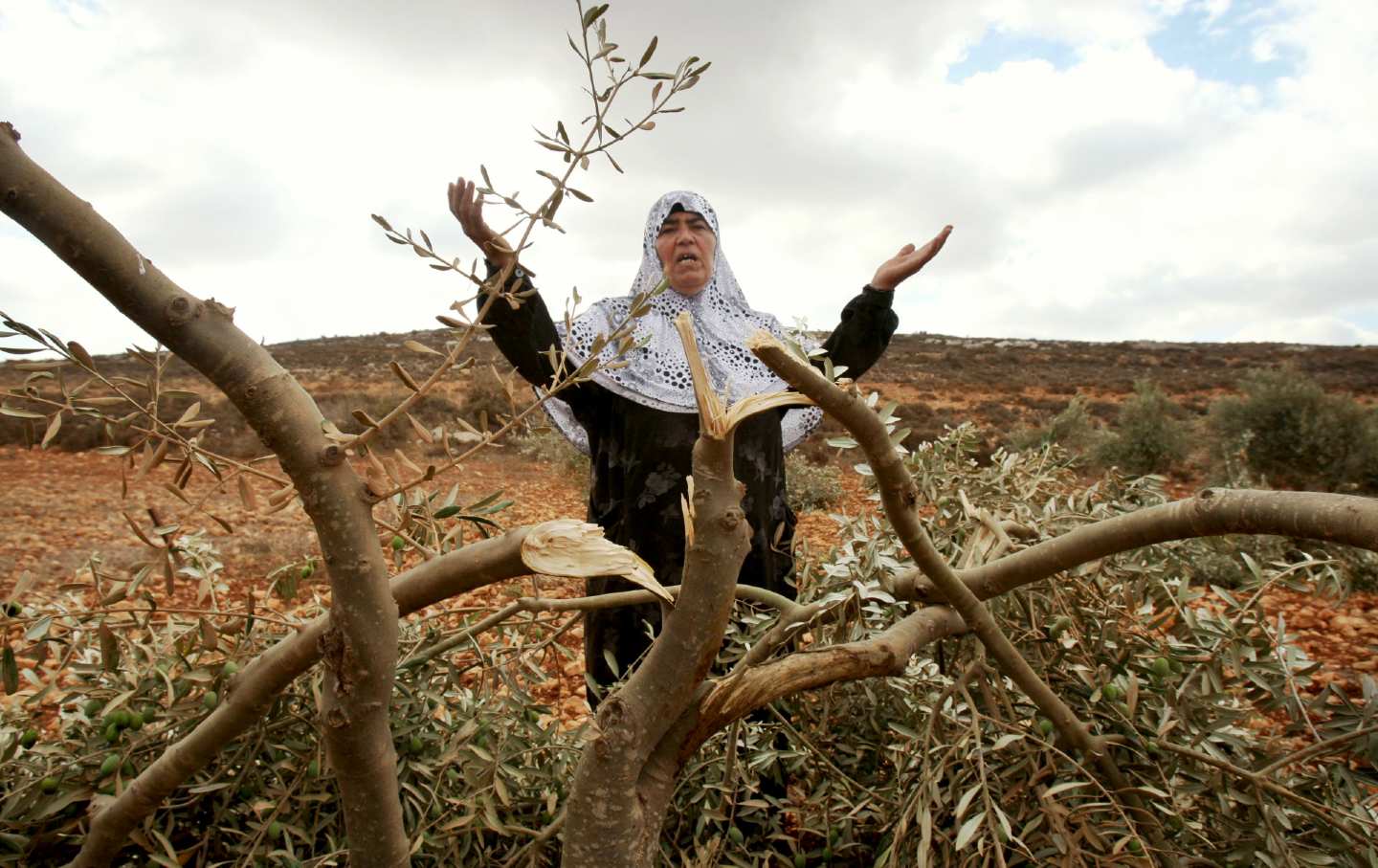
A Palestinian woman gestures next to a damaged olive tree in the village of Qusra in the northern West Bank in October 2011.
(Nasser Ishtayeh / AP Photo)At the end of each olive harvest in the occupied West Bank village of Qusra, Ibrahim Wadi leads his family in making Nabulsi soap, a staple of many Palestinian homes that is prepared using a centuries-old technique. He gathers relatives, old and young, and instructs them to bring olive oil from their homes so that they can make it together. While some help, others sing, drink, and eat snacks in what has become a cherished annual tradition.
But this year there will be no soap.
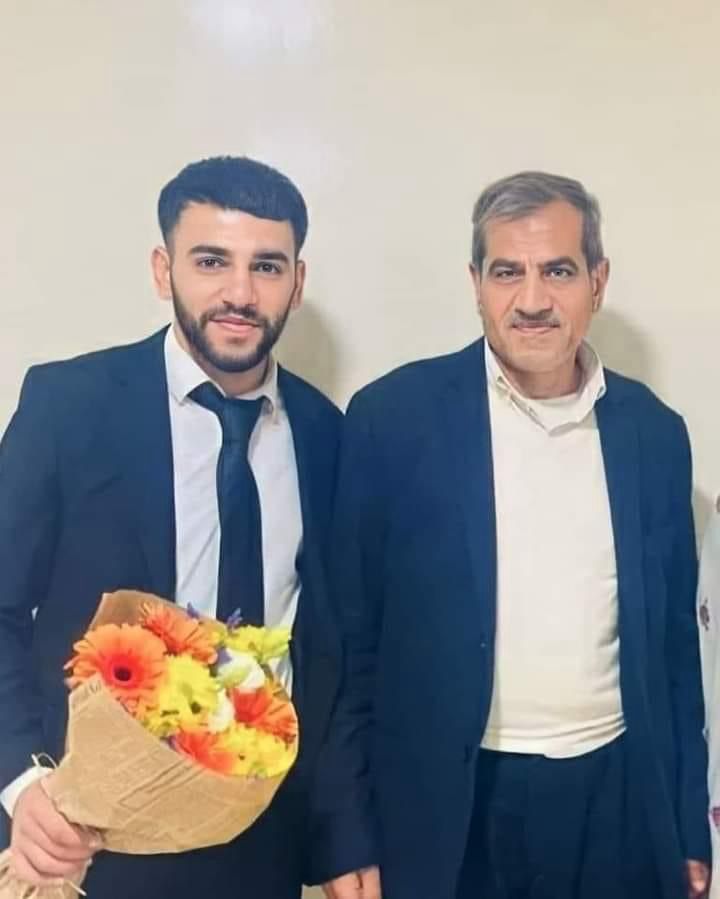
Ibrahim Wadi, 63, and his son Ahmed, 26, were killed on October 12 by Israeli settlers, who Palestinians say are taking advantage of the international community’s focus on the war in Gaza to carry out attacks in the West Bank with impunity.
Since the start of the Israel-Gaza war on October 7, the Palestinian Ministry of Health reports that at least 190 Palestinians have been killed in the West Bank—most of them by soldiers, but at least eight by settlers. Meanwhile, the entire populations of at least 16 communities have been forcibly displaced from their land by settler-soldier militias that terrorize their villages night after night. In fact, when Ibrahim Wadi and his son were shot, they were on their way to a funeral for four men killed by settlers the day before.
Even before the war, settler and army violence against Palestinians in the West Bank had been soaring. Between January and September of this year, at least 199 Palestinians were killed in the West Bank, surpassing figures from 2022 to become the deadliest year for Palestinians in the territory since 2005, according to the UN. Three whole communities were also forcibly displaced from an area between Ramallah and Jericho in the months leading up to the war.
The settler violence that is currently taking place has coincided dangerously with the olive harvest season, which occurs between October and November each year.
Settlers have long targeted Palestinians during this period, aiming to disrupt their agricultural livelihoods. Since 1967, settlers have uprooted more than 800,000 Palestinian-owned olive trees. The burning of olive trees and mass swaths of agricultural land in the village of Burin, near Nablus, in July stands out as a tragic reminder of the ongoing theft. But the past five weeks have brought altogether new levels of state-backed settler violence.
“What we are hearing is that the olive harvest is more dangerous than ever now,” said Yasmeen Al Hassan of the Union of Agricultural Work Committees—one of seven Palestinian NGOs baselessly criminalized by Israel in recent years. UAWC is one of many organizations that coordinates volunteers to assist farmers during the labor-intensive olive harvest. They also bring international volunteers to bear witness to settler violence; their presence can sometimes dissuade settlers from attacking.
But with the West Bank currently on extended military lockdown—one that is extreme even by Israel’s harsh standards—settlers are running amuck.
“This year, they all have guns. Last year, we didn’t see settlers like this,” said Sara Wadi, niece of the late Ibrahim Wadi. “Before, a soldier would come down and tell us, ‘You have 10 minutes to leave.’ Now, it’s not like that. Now, the settlers come with guns, shoot at you, and say ‘leave.’”
This year, she and her family had to rush to pick their olive trees while settlers weren’t in sight, she said. There were no festivities like years before.
“It was, ‘Fast, let’s go,’ and there were kids that were scared.… [We had to] quickly finish picking so we can go before the settlers get here. Normally we bring food, we drink tea, we pick, but this time because of the settlers it was all done so fast,” Wadi said.
After she and most of her relatives left, her father and uncle stayed to continue picking and were confronted by armed settlers who forced them to leave, Wadi said. Later that night, settlers used bulldozers to destroy five of their olive trees and her neighbor’s chicken coup.
“People are very scared”
The rising wave of settler violence means that Palestinian farmers seeking to reach their olive groves are being forced to choose between their livelihood and their safety.
“People are very scared. They don’t want to risk their lives because of the olives, but they are really torn. It’s their way of life, it’s their livelihood and it’s their land,” said Dr. Quamar Mishirqi-Assad, a lawyer and codirector of Israeli NGO Haqel: In Defense of Human Rights.
While settlers often operate under the protection of Israeli officials and forces, Palestinians have no such safeguards.
On November 6, far-right Israeli Finance Minister Bezalel Smotrich—who also serves as the government’s West Bank overlord—called for the formation of “sterile security zones” that would prevent Palestinians from accessing land close to settlements and settler-only roads, even if that land contains their olive groves. The expanding sprawl of settlers across the West Bank means that many Palestinians have farmland within close range of Israeli settlements.
Mishirqi-Assad said there have been posts circulating on Israeli Facebook and WhatsApp groups calling for settlers to coordinate efforts to block farmers from their olive groves. One post called for banning the harvest altogether. Another suggested spraying the trees with chemicals. “I wonder what their olive oil will taste like,” one member joked.
On October 28, Bilal Mohammad Saleh, 40, was shot in the chest while picking olives on his family’s land in As-Sawiya, another village in the northern West Bank. A settler shot him in front of relatives, and he remained bleeding out for half an hour before he died. His body was carried out to the road on the ladder that he had been using to reach olives, witnesses said.
Popular
“swipe left below to view more authors”Swipe →Saleh had been picking olives on a part of his land that did not require a permit from the Israeli military to access, which is not the case for most residents of As-Sawiya. Since the village is surrounded by settlements on all sides, much of the agricultural land is blocked by Israeli military restrictions, and residents must be granted permits to tend to their trees.
Arafat Abu Ras, a village council member and friend of Saleh, mourns his loss and says that he and many others in As-Sawiya have been reluctant to return to their olive trees. “Everyone in the village is worried now,” he said. “I cannot pick my olives this year, which are near the settlements, as my family is afraid for me to go.”
An act of sumud
Khadra Rateb Boom is among many Palestinian farmers who are unable to harvest any of their lands this year.
Her family typically tends to around 250 olive trees in Qaryut, not far from as-Sawiya. Boom said they’re used to settlers harassing them during the olive harvest, but this year they’ve been completely barred from picking their trees.
On October 20, Boom said she was picking olives with her two sons, who are 4 and 5 years old, when an armed settler, accompanied by Israeli soldiers, told them to leave. “They said, ‘We will shoot your kid if you don’t leave,’” Boom explained. The settler then took the sack with the olives they collected that day and emptied it onto the ground.
“When we got back home, we didn’t believe we were still alive,” Boom said. One of her children has repeatedly said he doesn’t want to go back to the land; the other has started wetting his bed.
Normally, Boom’s family harvests enough olives to make around 60 gallons of oil, which brings income and sustains them throughout the year. She is dismayed, after having spent most of the year tending to the olive trees, that she won’t be able to harvest any of them.
The olive oil industry makes up 14 percent of the agricultural income for the Occupied Palestinian Territories and supports the livelihoods of approximately 80,000 families, the United Nations reports. Palestinian farmers and workers say that won’t be the case this year.
“Olive oil is the most important product in my village,” Abu Ras said of As-Sawiya, where 60 percent of residents are farmers. “The majority of the people in my village cannot reach their land, [so] there will be a shortage of oil, and a high price on the oil.”
The olive harvest also holds cultural significance for many Palestinians. “We are physically rooted in this land. It’s not just about what we get but what we give,” said Al Hassan of UAWC. Palestinian farmers are not only distraught over the loss of income, she explained, but also mourn their traditional role as caretakers of these trees.
Still, despite the settler violence, Palestinians will never stop trying to access their land and pick their olive trees, Wadi said. It’s an act of sumud, Arabic for “steadfastness,” she added.
After five of her family’s olive trees were uprooted, Wadi’s father requested double that number from the municipality.
“For every tree they break,” she said, “my father says he will plant two.”
As for the olive trees that belonged to her uncle Ibrahim and his son Ahmed, she and her cousins are determined to carry on their work. “His young kids can’t go alone, so the cousins go,” she said. “We went and we finished their land. We sent the olives to the press. We filled the bottles.”
More from The Nation
The Jewish Case Against AI The Jewish Case Against AI
Haredi rabbis and the secular left agree: This technology is a threat to the entire social fabric.
The Fight for Educational Equality Is Also a Fight for a Just Supreme Court The Fight for Educational Equality Is Also a Fight for a Just Supreme Court
The court has severely weakened our ability to make an education system that fulfills the promise of Brown.

The Fall of “Scientific American” The Fall of “Scientific American”
When the beloved science publication got too political, its corporate owners stepped in. Now its future is uncertain.
The Bookstore Revolution in Taiwan’s Conservative Heartlands The Bookstore Revolution in Taiwan’s Conservative Heartlands
After Taiwan legalized same-sex marriage, gender-themed bookstores are working to build the social acceptance that the law alone couldn’t deliver.
Jalen Hurts Deserved Better. We All Do. Jalen Hurts Deserved Better. We All Do.
In a country that treats workers as expendable parts, Hurts’s playing through a blood clot is just the highest-profile example of the price workers pay in an oligarchy.
The Terrifying Future of States’ Criminalizing Pregnant People Is Already Here The Terrifying Future of States’ Criminalizing Pregnant People Is Already Here
The idea of charging people who have abortions with murder is gaining traction on the right. But a report finds that people are already being prosecuted for their pregnancy outcom...

