
“Let’s Wait Till Israel Says Something”: Why the Media Has Failed the Test of the War in Gaza
A dispatch from the front lines of the information war.
Back in 2014, during a previous iteration of Israel’s incursion into Gaza, I was anchoring a live international news and current affairs program, Newshour, on BBC World Service radio—a show that has many millions of listeners in the US on public radio stations. We had been covering the fighting between the Israel Defense Forces and Hamas inside Gaza for many days when a flash ran across the top of my computer screen: a press conference in Beirut, held by Khaled Meshal, who was at the time, the head of the Politburo of Hamas. I clicked it open. Hamas had announced a cease-fire. We still had around 20 minutes left on air, and I asked the editor to see about booking a correspondent or analyst to talk us through this significant development. Instead, the editor said something that has stayed with me ever since: “Let’s wait till Israel says something.”
For me, that episode encapsulates in a nutshell, a crucial element of the grammar of journalism: The nation-state is what we understand; it has power and status, and is therefore, the more important newsmaker than, in this instance, the militia fighting against it. You might argue that bias in favor of nation-states is nothing out of the ordinary, but in the case of Israel and Palestine—a name, by the way, that is not even used in BBC coverage—this is an important reference point.
We tell ourselves stories to understand the world better. In that moment, I recognized something about this story, and how it has dominated and shaped the lives of Palestinians: The very fact of their being the largest community in the world without a state makes an impact on how the media treats its perspective.
And, as a nation-state—regardless that the history of its formation is contested—Israel commands credibility and support, not least from the United States. This matters in several ways: how we produce, frame and shape stories in the media but also how we have become accustomed to consuming them.
With this contentious story, who controls the narrative, and how, really matters. There is the actual war—and then there is the information war. The BBC and other so-called legacy media operate in similar ways, and though they may deny it, in accepting the notion that a nation-state carries more weight, whether consciously or unconsciously, they aid and abet Israel in that information war. By that I mean the emphasis, angles. and focus it gives to the nation-state appear obvious if you make the effort to see them.
There is a deference to those who represent the nation-state, rarely afforded to those who represent the stateless; the demand that they condemn Hamas only gets you so far. The use of language is worth examining too. The words “massacre,” “slaughter,” and “atrocities” are routinely used to describe what Hamas did on October 7. And I am not arguing against those terms. They are an accurate description of those events. Yet you’d be hard-pressed to find any of those words attributed to Israel’s actions in Gaza. State terror wears an official mask, with the words “the right to self-defense” emblazoned on it. Hamas murders civilians, and Israeli bombs result in Palestinian deaths. Meanwhile, we are learning more each day about Israel’s war aims.
In the opening days and weeks of this phase of the conflict, a routine glance at The New York Times app showed the first six or seven stories beginning with the word “Israel.” Opinion columns have been dominated by what is happening inside Israel. And the detailed stories and lives of those affected by the horror of October 7 are front and center. None of this is surprising, given the shock and nature of the Hamas attack. The Israeli retribution was immediate, with high numbers of Palestinian civilians being killed. The coverage, however, continued to be dominated by the Israeli perspective, as it was on so many legacy media outlets. The front cover of the Economist in the fourth week of the conflict—illustrating a leader (the British name for an editorial) titled “Why Israel Must Fight On”—was particularly shocking.
And, if your only source of BBC output was the corporation’s website—the most visited news website in the world—in the first few days, you might have been under the impression that the more legitimate suffering was that of Israel, so prominent were the human-interest stories from the country. In contrast, the suffering of Palestinians was more abstract; what you got were numbers—and even those were questioned. What you did not get, were actual people, and their human stories of suffering. If we are to accept that in each human life there is a whole world, then every life that is destroyed destroys a whole world.
Although I am now a professor at Princeton University, in the school of public and international affairs, I continue to consume news obsessively. My decades of work at the BBC have trained me to seek a balanced approach, but I also understand how difficult this is to achieve.
The BBC maintains, in this and other divisive stories, that since both sides criticize its coverage, it must be doing something right. That might persuade some—including those inside the BBC. But it’s a hollow argument.
It is certainly true that the BBC has wrestled with trying to get this right for many years. In 2004, an internal report was commissioned to examine coverage of the decades-long conflict. The Balen report, named after the senior journalist who conducted the investigation, remains under lock and key, and the BBC has spent thousands of dollars in legal fees to bat away freedom of information requests seeking to get it released. There have been renewed calls for it to be published in the wake of October 7, because of continued perceived bias by both sides.
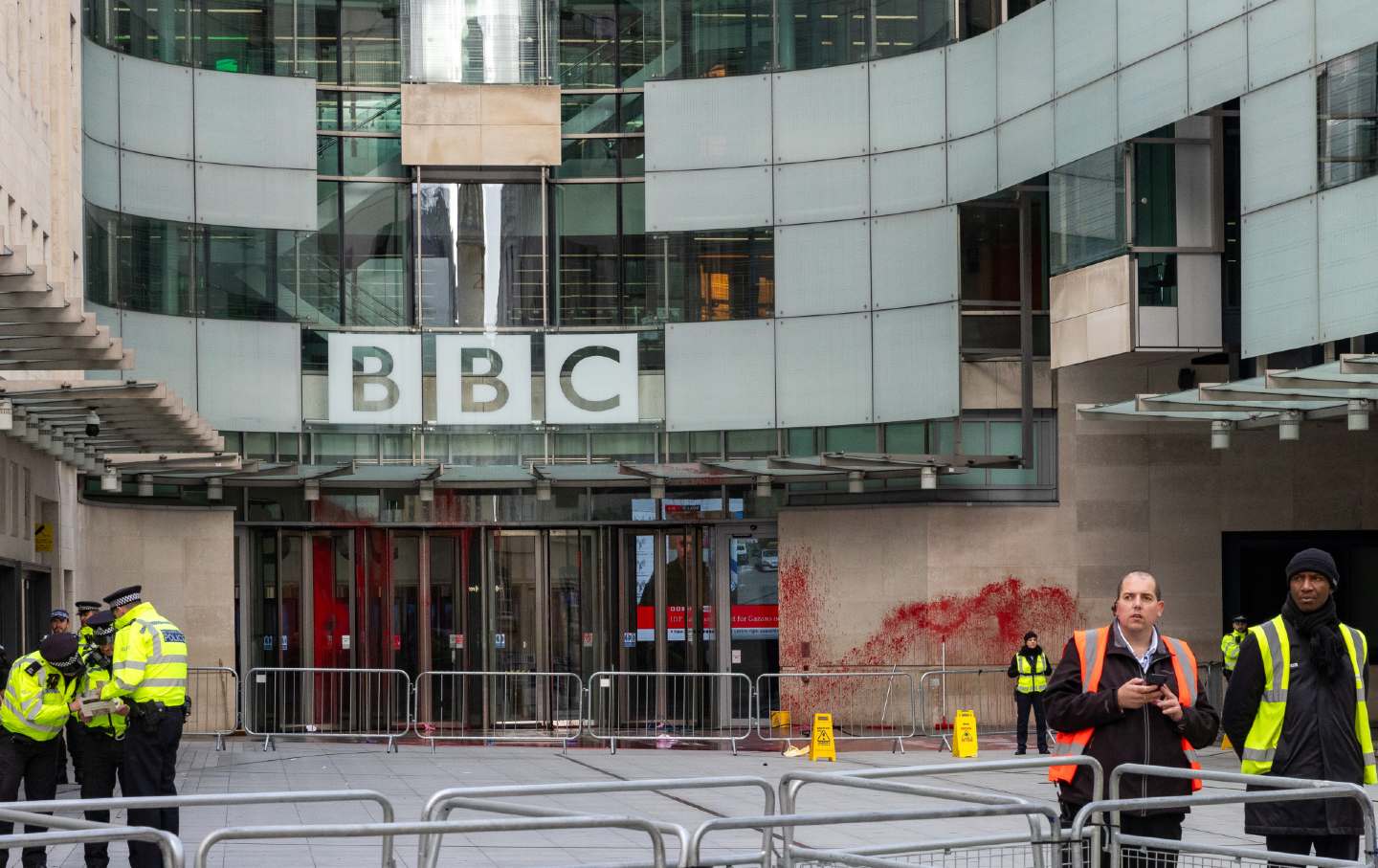
And sure enough, in its coverage of this latest round of carnage, the BBC has been criticized from several quarters. The BBC’s London headquarters was physically attacked just a week after October 7; a pro-Palestinian group accused the corporation of having blood on its hands, saying the BBC was “manufacturing consent for Israel’s war crimes.” And some seven weeks into the conflict, a former senior executive called for an independent review of coverage, saying the credibility of the organization’s relationship with the Jewish community was reaching a point of no return.
Popular
“swipe left below to view more authors”Swipe →These are two small examples of the both-sides-ism argument the BBC might be keen to highlight. But since October 7, a singularly brutal day for humanity, and the subsequent bombing of Gaza, also singularly brutal, something else has happened inside the BBC. Its own journalists have been speaking out about their employer’s coverage. That they are doing so anonymously is significant. Their sense is that the corporation humanizes Israeli victims and omits key historical context; a few journalists have resigned because of this. A similar trend is emerging with coverage of the hostage and prisoner releases.
The corporation’s news division is informed by the principle of “due impartiality”—not favoring one side over another. The ideal is that in considering coverage overall there should be a sense that no one side’s story prevails. But when so much of journalistic grammar, its stock in trade, leans toward deference to those already in power, rather than those seeking to challenge that power, the stateless are already screwed before they ever reach the starting line. In the spirit that journalism is the first draft of history, I leave you with this quote from the great Nigerian writer, Chinua Achebe: “until the lions have their own historians, the history of the hunt will always glorify the hunter.”
More from The Nation
Brazil’s Decision Brazil’s Decision
The moral compass and basic humanity of political leaders really does matter.
Albanian Student Strikes Spur a Political Crisis Albanian Student Strikes Spur a Political Crisis
A new round of protests against the ruling party’s corruption has Prime Minister Edi Rama giving cops bonuses to crack down on dissent.
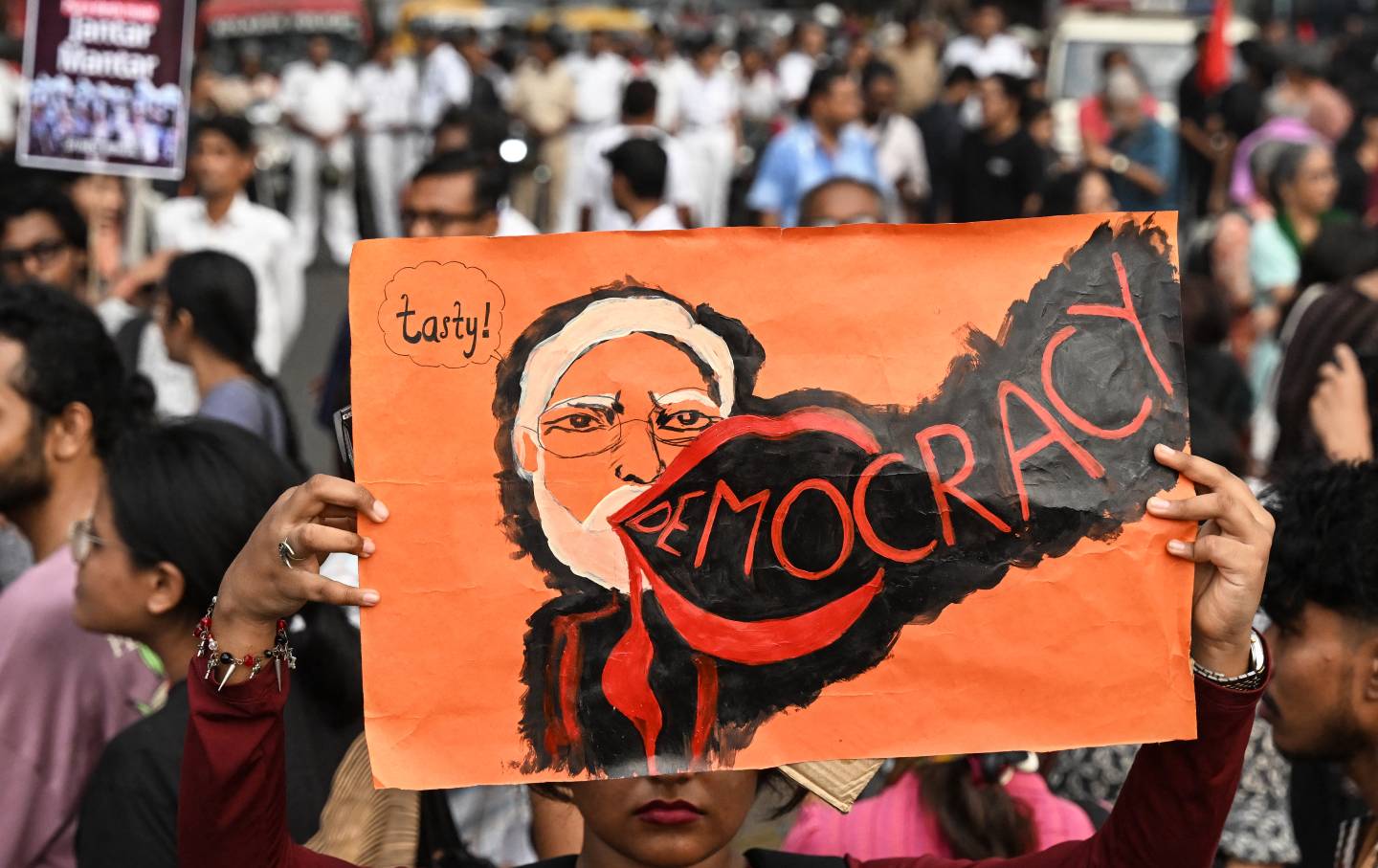
Inside India’s Gen Z Cockroach Janta Movement Inside India’s Gen Z Cockroach Janta Movement
Young Indians are challenging the purge of voter rolls by Modi’s right-wing government. Shrishti Khanna, who was detained by Delhi police while covering the protests, explains.
The Clarion Call of “NAZA” The Clarion Call of “NAZA”
Yuval Abraham and Rachel Szor’s new film not only documents the horrors of the present but gives us a glimpse of a possible future too.
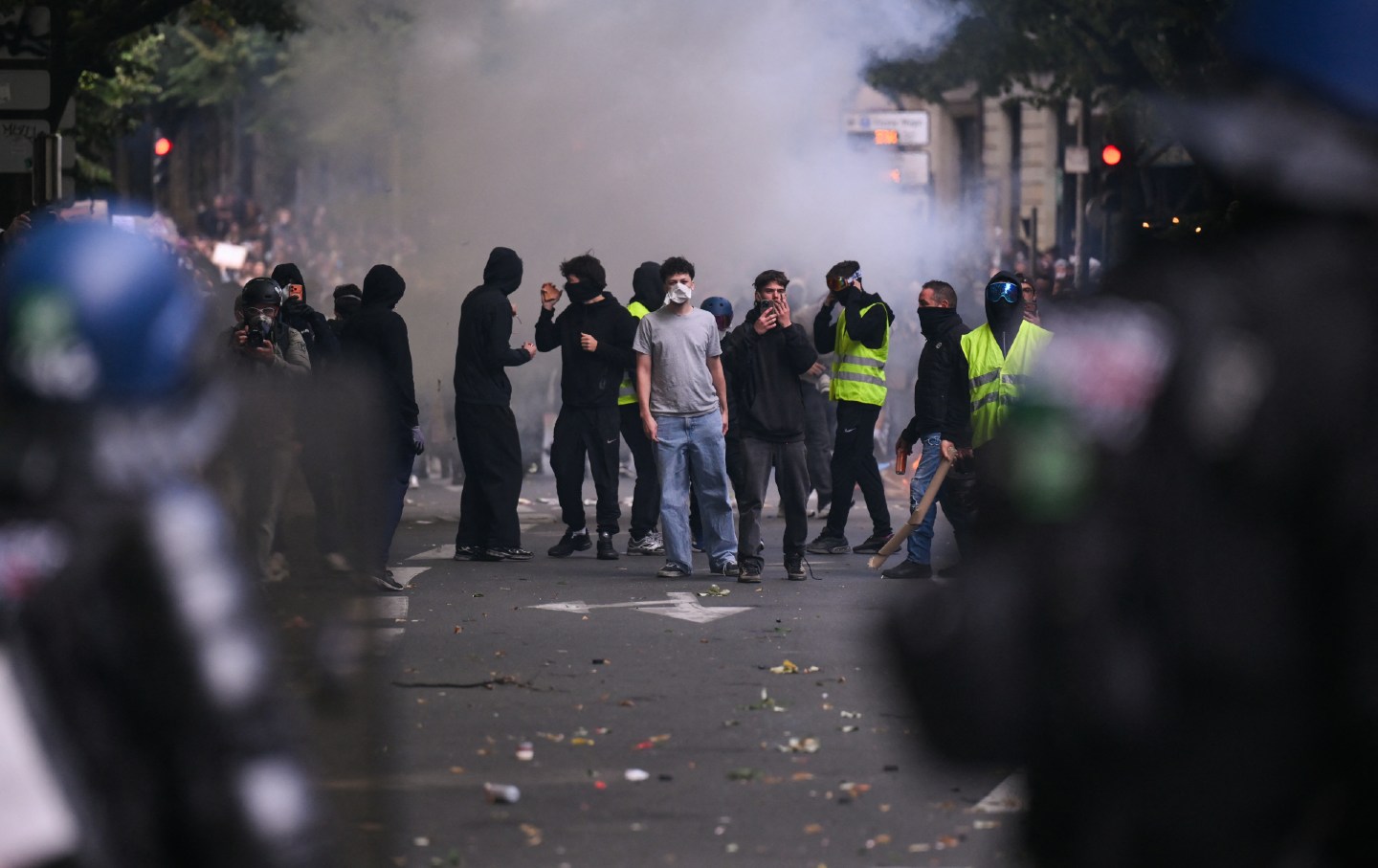
The Specter of Lepenism Looms Over France’s Social Crisis The Specter of Lepenism Looms Over France’s Social Crisis
Joining forces with the “yellow vests,” youth demonstrators are raising the alarm in a country falling to the far right.

