Our Back Pages / May 14, 2026

The United States’ Long War Against Iran

The Nation was among the first publications to report the CIA’s role in the 1953 overthrow of Iran’s democratically elected prime minister, Mohammed Mossadegh.
Richard Kreitner

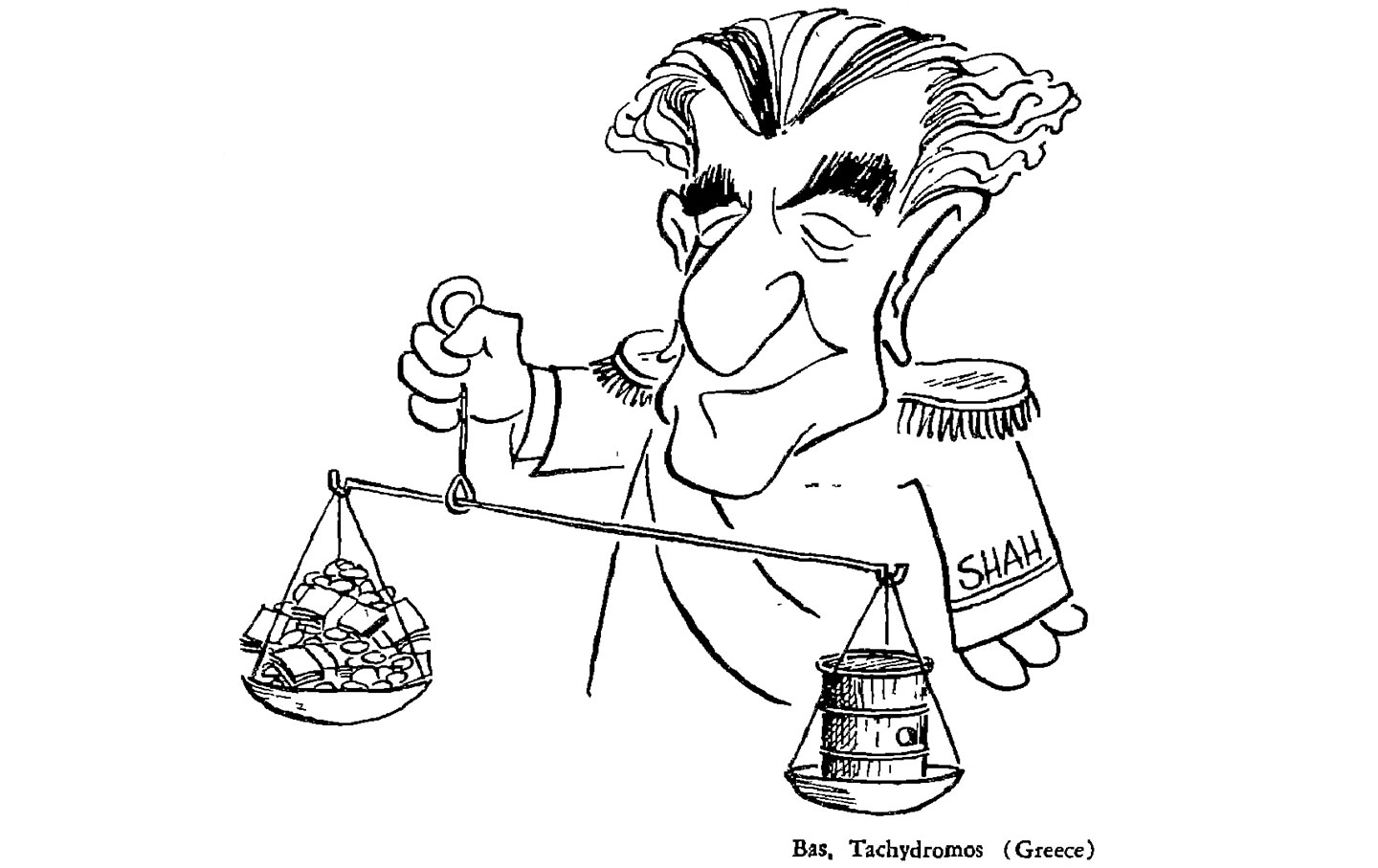
Earlier this year, when Donald Trump framed the US-Israeli attack on Iran as an effort to topple its regime, there was little talk about our own responsibility for the rise of that regime. By supporting the corrupt and wildly unpopular Shah Mohammad Reza Pahlavi with arms sales, corporate investment, and assistance in building a repressive security apparatus, the US sowed the seeds of the resentment that exploded in Iran’s 1979 revolution.

The Nation was among the first publications to report the CIA’s role in the 1953 overthrow of Iran’s democratically elected prime minister, Mohammed Mossadegh, whose opposition to foreign oil interests won him the support of the people and the enmity of the petroleum industry. Fred Cook, in a 1961 exposé published in these pages, chronicled the results of the coup: Iran remained woefully undeveloped, its monarch detested, and the people ripe for revolution.

Yet the US bolstered the shah at every turn. In 1977, Reza Baraheni observed that 31,000 Americans were “working in Iran for the Shah or his American allies. They train the Shah’s army, police and SAVAK (the horrendous secret police).” Baraheni had once been arrested by SAVAK and held in solitary confinement. In his exile in the US, he was sad to see this country’s ideals abandoned with so little concern: “Why are Americans fighting on the side of tyrants and dictators? No nation in history has suffered…the collective split personality that Americans display today…. In the year of [its] Bicentennial celebrations,” the US had “handed billions of dollars’ worth of weaponry to a King incalculably more tyrannical than George III.”

This year, America’s own aspiring tyrant threatened “a whole civilization” with annihilation because he’d launched a war against Iran that he could not win. “The contemporary American seems quite a different species,” Baraheni lamented in 1977. “He has lost his sense of identity with all progressive movements, American or otherwise. He seems ready to go to the next Vietnam under another name.”

One year later, the protests against the shah had spread across Iran and “coalesced into a massive resistance movement encompassing virtually every sector of the society,” as Linda Heiden wrote in The Nation. “One does not have to dig very deeply to find the roots of the dissent,” she continued. “The Shah’s economic development programs, designed and executed with considerable U.S. Government and corporate assistance, have been disastrous for Iran’s workers and peasants.” So too has been our latest needless, lawless, and disastrous war, which is likely to turn out no better than the coup that overthrew Mossadegh.
Support The Nation’s June Fundraising Campaign

With the midterm elections now firmly upon us, the question is whether Democratic candidates will do more than merely occupy ballot lines as mild alternatives to the red-hot crisis that is Donald Trump.

As Trump spends over $1 billion a day on a globally destabilizing war on Iran and admits that he doesn’t “think about Americans’ financial situation,” millions across the country are struggling with the surging costs of essentials. Democrats must seize this moment and advance bold, small-“d” populist ideas—not settle for cynical caution that once again snatches defeat from the jaws of victory.

The Nation elevates progressive ideas, movements, and elected officials achieving real change across the country into the national conversation. At the same time, our journalists are exposing how crypto and AI-funded super PACs are spending hundreds of millions of dollars to knock out candidates they oppose, reporting on the devastating impact of the Supreme Court’s evisceration of the Voting Rights Act, and sounding the alarm on attempts by red states to quickly redraw electoral maps, disenfranchising Southern Black voters.

We can play this critical role because of support from readers like you. This June, we’re raising $20,000 to power The Nation’s independent journalism in the run-up to November’s immensely consequential elections.

It’s in our power to build a more just society, and your support at this critical moment brings us closer to that bold vision. I hope you’ll donate today.

Onward,

Katrina vanden Heuvel
Editor and Publisher, The Nation

Richard Kreitner

Richard Kreitner is a contributing writer and the author of Break It Up: Secession, Division, and the Secret History of America's Imperfect Union. His writings are at richardkreitner.com.

More from The Nation

A member of the Otomi indigenous community in Mexico City holds a U.S. President Donald Trump latex mask during the “Anti-World Cup” rally on June 6, 2026, in Mexico City, Mexico.

At This Year’s World Cup, Make Way for Autocrats At This Year’s World Cup, Make Way for Autocrats

Sovereign wealth, private equity money, and a network of oily alliances between FIFA and the world’s most reprehensible regimes have transformed the sport forever.

Aaron Timms

A man searches through trash in the dark in Havana, Cuba, on June 11, 2026, as widespread shortages affect daily life.

Cuba’s Humanitarian Crisis: The United Nations’ Response Cuba’s Humanitarian Crisis: The United Nations’ Response

The UN confronts a “perfect storm” of US-sponsored deprivation on the island.

Peter Kornbluh

A video screen declaring “VOTE ANDY FOR US” and depicting Andy Burnham adorns the side of a home in Ashton-in-Makerfield, England, on June 10, 2026.

In Britain, an Election That Could Mark the Beginning of Prime Minister Keir Starmer’s End In Britain, an Election That Could Mark the Beginning of Prime Minister Keir Starmer’s End

Mayor of Greater Manchester Andy Burnham is expected to challenge Starmer for leadership of the Labour Party.

Stanley Reed

Smoke is rising from a fire lit in the street as protesters with flags call for the resignation of Bolivian President Rodrigo Paz after weeks of protests and blockades in La Paz, Bolivia, on June 10, 2026.

Bolivia’s Streets Have Erupted. Here’s Why. Bolivia’s Streets Have Erupted. Here’s Why.

Ordinary people are rising up against neoliberal orthodoxy.

Andrés Arauz

Soldiers and cameramen near the Small Boy nuclear test, part of Operation Sunbeam, also known as Operation Dominic II, in Nevada, on July 14, 1962.

Daniel Ellsberg vs. “Ordinary Insanity” Daniel Ellsberg vs. “Ordinary Insanity”

A new documentary issues an urgent warning about our dangerous nuclear delusions.

Norman Solomon

President Donald Trump stands alongside Chairman of the Joint Chiefs of Staff Dan Caine at an April press conference on the Iran War.

How Trump Has Boxed Himself Out of a Face-Saving Iran Deal How Trump Has Boxed Himself Out of a Face-Saving Iran Deal

By failing to absorb the lessons of Iran’s strategic victories, the White House is on course to turn the present stalemate into a disastrous quagmire.

David Faris