Jamaal Bowman Versus AIPAC
The outcome is a test of how far AIPAC will go to crush progressive movements.
No event in the news today poses a more immediate danger to world peace than the Israeli-Hamas war in Gaza. In addition to the lethal drones, missiles, and shells flying in Gaza, charges and countercharges fly at the United Nations and the International Criminal Court.
More important than the propaganda war, however, is the war on the ground, in which, according to the Gazan Health Ministry, more than 37,000 civilians and fighters have been killed by Israeli air strikes and shelling, including many women and children. According to the Associated Press, “Israel is killing entire Palestinian families, a loss even more devastating than the physical destruction and the massive displacement.”
In the October 7 massacre at a music festival that triggered the conflict, 1,139 Israelis were slaughtered. More than 300 Israeli Defense Force soldiers have died in the subsequent fighting, a heavy toll for a small nation.
In the United States, where the Biden administration has firmly backed Israel with words and weapons, countercharges of Israeli “genocide” are on the rise. According to the Anti-Defamation league, even before the October 7 attacks, there has been a rise in antisemitic incidents in America. The ADL, however, has itself become controversial. Wikipedia’s editors voted to declare it “generally unreliable” on the Israeli-Palestinian conflict, adding it to a list of banned and partially banned sources. The writers’ organizations PEN and Authors Guild have been riven by conflicting views on the war.
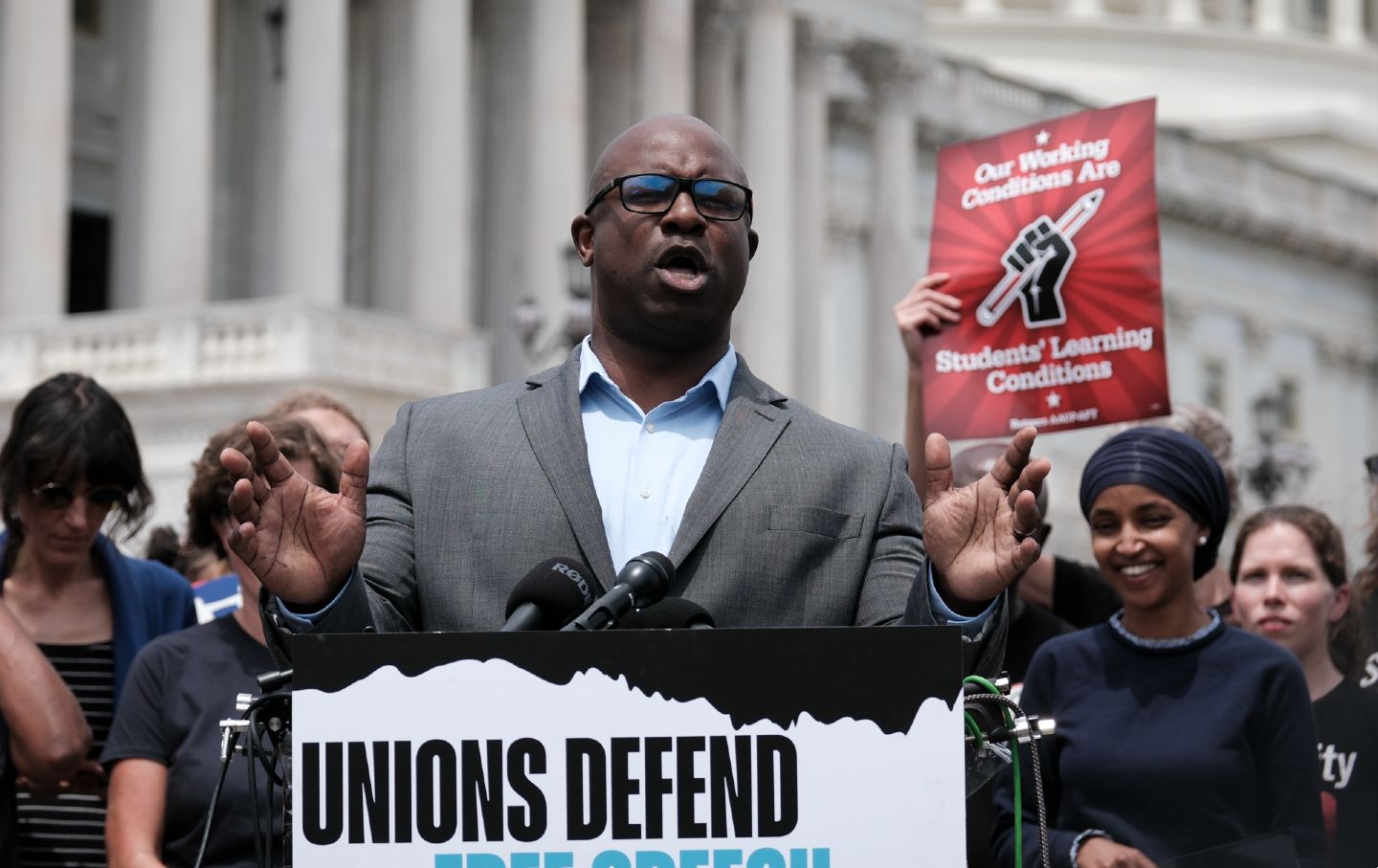
Recently, the war spilled over into a Democratic congressional primary in Westchester County, in which the incumbent, Jamaal Bowman, is fighting a challenger, Westchester County Executive George Latimer. What has nationalized (Israelized, if you will) the race is the powerful intervention by AIPAC, the well-heeled pro-Israel lobbying group that has donated $14 million worth of anti-Bowman ads. Representative Bowman, who is Black, is trailing by 17 percent according to a June poll. In a recent debate between the two candidates, he declared, “[AIPAC is] spending more money in this primary than any PAC has ever spent in US history. Why? Because I’m an outspoken Black man. I fight against genocide in Gaza, and I fight for justice right here.”
During interviews with the two candidates on his WNYC talk show, Brian Lehrer asked Latimer if he is worried about being too closely tied to AIPAC. Latimer responded (or rather didn’t respond), “If John Doe, who lives in Westchester County donates to me, and he did it through an AIPAC portal, I don’t believe it ties into the national donors to AIPAC, or the international positions of AIPAC.”
But contrary to Latimer’s dodge, AIPAC’s intervention on his behalf is important. As The Washington Post observed:
It’s hard to overstate the importance of the Bowman vs. Latimer showdown for progressives. The outcome represents much more than just the issue of money in politics. It raises concerns about right-wing money being funneled into Democratic primaries and tests the ability of AIPAC to shield Israel from criticism. But bigger than that, it is a test of how far America’s right wing will go to crush progressive movements. No one should be surprised that a Black politician is the canary in the coal mine.
Disobey authoritarians, support The Nation
Over the past year you’ve read Nation writers like Elie Mystal, Kaveh Akbar, John Nichols, Joan Walsh, Bryce Covert, Dave Zirin, Jeet Heer, Michael T. Klare, Katha Pollitt, Amy Littlefield, Gregg Gonsalves, and Sasha Abramsky take on the Trump family’s corruption, set the record straight about Robert F. Kennedy Jr.’s catastrophic Make America Healthy Again movement, survey the fallout and human cost of the DOGE wrecking ball, anticipate the Supreme Court’s dangerous antidemocratic rulings, and amplify successful tactics of resistance on the streets and in Congress.
We publish these stories because when members of our communities are being abducted, household debt is climbing, and AI data centers are causing water and electricity shortages, we have a duty as journalists to do all we can to inform the public.
In 2026, our aim is to do more than ever before—but we need your support to make that happen.
Through December 31, a generous donor will match all donations up to $75,000. That means that your contribution will be doubled, dollar for dollar. If we hit the full match, we’ll be starting 2026 with $150,000 to invest in the stories that impact real people’s lives—the kinds of stories that billionaire-owned, corporate-backed outlets aren’t covering.
With your support, our team will publish major stories that the president and his allies won’t want you to read. We’ll cover the emerging military-tech industrial complex and matters of war, peace, and surveillance, as well as the affordability crisis, hunger, housing, healthcare, the environment, attacks on reproductive rights, and much more. At the same time, we’ll imagine alternatives to Trumpian rule and uplift efforts to create a better world, here and now.
While your gift has twice the impact, I’m asking you to support The Nation with a donation today. You’ll empower the journalists, editors, and fact-checkers best equipped to hold this authoritarian administration to account.
I hope you won’t miss this moment—donate to The Nation today.
Onward,
Katrina vanden Heuvel
Editor and publisher, The Nation