The Election Is Getting Down to the Wire
It seems increasingly likely is that we’re headed for a tight race that, as in 2020, will be decided by voters in a handful of states.
I hung up my prophet’s mantle in 1992, after writing a column for New York Newsday predicting—on the basis of some combination of rumor, Broadway gossip, and a couple of polls—that New York Governor Mario Cuomo would jump into the presidential race and become the next occupant of the White House. His plane to New Hampshire was supposedly waiting on the runway, the papers required to enter the Democratic primary all filled out, but Hamlet on the Hudson never got off the ground.
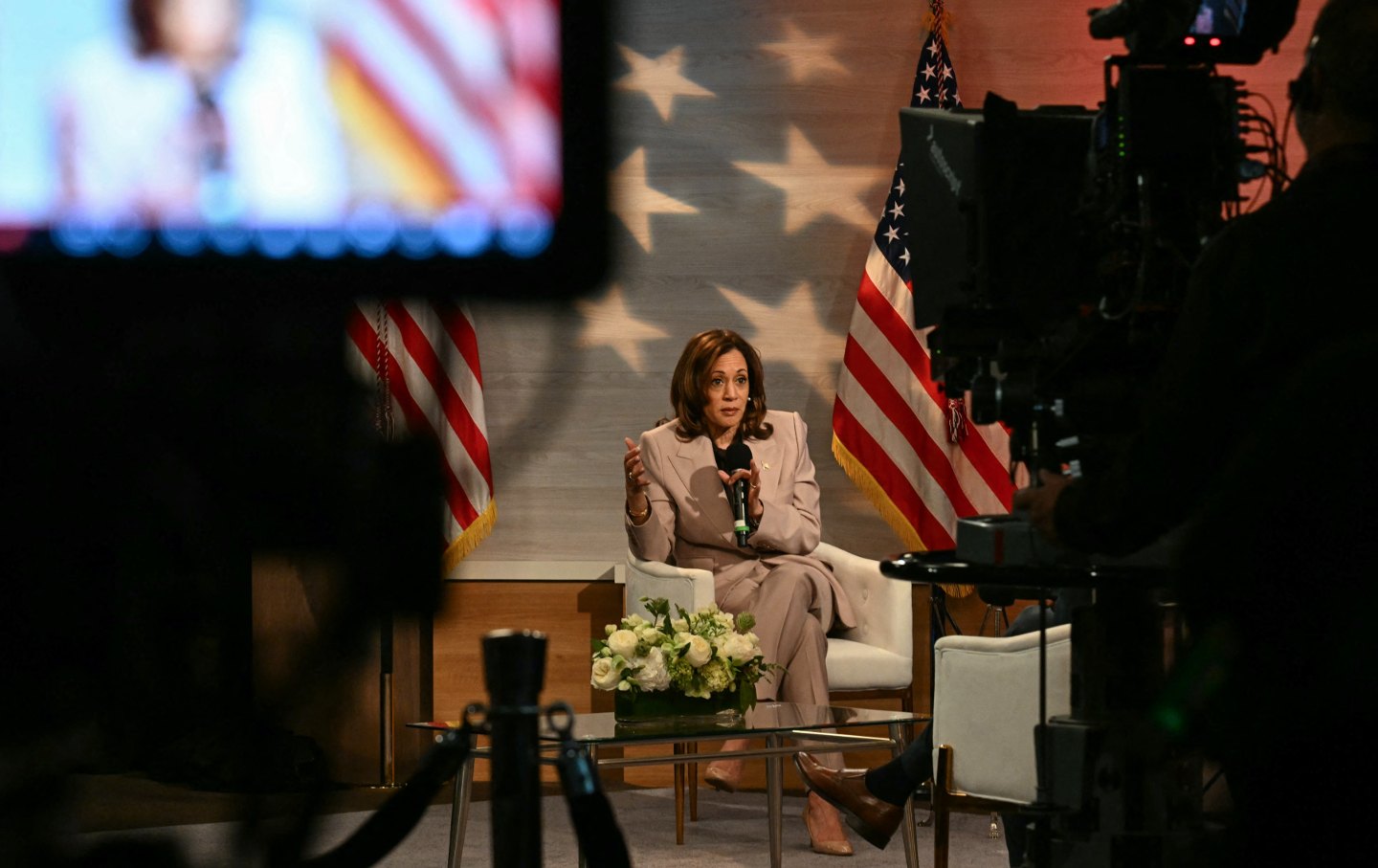
So when I say that things often don’t turn out as you—or at least I—expect them to, you can trust me. As I write, Vice President Kamala Harris leads former president Donald Trump nationally by a little over a point (in the RealClearPolling average) and by razor-thin margins in three of the seven swing states, with the two candidates statistically tied in Pennsylvania. But as The Guardian helpfully reminds us, Hillary Clinton had a wider lead over Trump at this point in 2016.
If that isn’t enough to keep you awake at night, October is the month for surprises. In 1980, Ronald Reagan’s campaign, fearing that a last-minute deal to free the American hostages in Iran might salvage Jimmy Carter’s chances, sent emissaries to make sure that any release would be delayed until after the election. In October 2016, FBI director James Comey decided to revive the bureau’s investigation into Hillary Clinton’s e-mails. And for history buffs, in October 1844, a story published in the Ithaca Chronicle claiming that President James Polk had branded the enslaved people he’d sold at auction was revealed to be a fabrication—in the end, the attempt to disparage Polk, published earlier that fall, backfired, not only because it turned out to be a hoax but because the episode reminded voters that the Whig candidate, Henry Clay, also owned slaves.
Related Articles
What might this October bring? Apart from being reasonably confident that Harris won’t make the mistake of failing to campaign in Wisconsin—or any of the other battleground states—I wouldn’t hazard a guess. But what seems increasingly likely is that we’re headed for a tight election that, as in 2020, will be decided by voters in a handful of states. Or even, given the Electoral College math, just one state: Pennsylvania. Which is why I spent Election Day 2020 in Reading and Allentown, and why I returned to the state (where, as it happens, I’d spent my elementary school years) for two weeks this August. You can read my findings here.
But as John Nichols reminds us in his report on critical Senate races in the Midwest, even if Harris and Tim Walz win their sprint to the White House in November, the chances of actually delivering on their campaign promises will be slim indeed unless Democrats hold on to that chamber. On the other hand, should the Democrats hold the Senate and retake the House—an effort that may come down to a handful of extremely expensive races in the very unpurple states of California and New York—progressives will have a lot more to fight for, and to argue about, in 2025.
Just to add to your jitters, Elie Mystal previews the coming Supreme Court term, and Gaby Del Valle traces the hidden—you might even say surprising—history that saw this nation of immigrants turn immigration into a political lightning rod. For inspiration amid the anxiety, read Renee Bracey Sherman and Regina Mahone’s profile of Sakinah Ahad Shannon, a pioneering member of Jane, Chicago’s pre-Roe underground abortion service—a Black woman who continued to help her community even after abortion became legal. And Elizabeth Pochoda spotlights the artist Mary Sully’s astonishing take on American history and celebrity.
This month’s Books & the Arts features Jess Bergman’s review of the latest Sally Rooney novel, Jorge Cotte on the return of the British spy series Slow Horses, Michael Kazin on the long shadow of the Scopes trial, Kevin Lozano on Emily Witt’s new memoir about New York’s underground nightlife scene, and Astra Taylor on the forgotten and future history of debt resistance.
Plus we have a forum marking the anniversary of the October 7 attacks, a debate on the left’s embrace of antitrust, and our usual complement of compelling columnists. And a real treat: a selection of photos by the extraordinary photographer Susan Meiselas, who covered the Democratic convention for The Nation.
To paraphrase Tim Walz, we can sleep after November 5.
D.D. Guttenplan
Editor
Disobey authoritarians, support The Nation
Over the past year you’ve read Nation writers like Elie Mystal, Kaveh Akbar, John Nichols, Joan Walsh, Bryce Covert, Dave Zirin, Jeet Heer, Michael T. Klare, Katha Pollitt, Amy Littlefield, Gregg Gonsalves, and Sasha Abramsky take on the Trump family’s corruption, set the record straight about Robert F. Kennedy Jr.’s catastrophic Make America Healthy Again movement, survey the fallout and human cost of the DOGE wrecking ball, anticipate the Supreme Court’s dangerous antidemocratic rulings, and amplify successful tactics of resistance on the streets and in Congress.
We publish these stories because when members of our communities are being abducted, household debt is climbing, and AI data centers are causing water and electricity shortages, we have a duty as journalists to do all we can to inform the public.
In 2026, our aim is to do more than ever before—but we need your support to make that happen.
Through December 31, a generous donor will match all donations up to $75,000. That means that your contribution will be doubled, dollar for dollar. If we hit the full match, we’ll be starting 2026 with $150,000 to invest in the stories that impact real people’s lives—the kinds of stories that billionaire-owned, corporate-backed outlets aren’t covering.
With your support, our team will publish major stories that the president and his allies won’t want you to read. We’ll cover the emerging military-tech industrial complex and matters of war, peace, and surveillance, as well as the affordability crisis, hunger, housing, healthcare, the environment, attacks on reproductive rights, and much more. At the same time, we’ll imagine alternatives to Trumpian rule and uplift efforts to create a better world, here and now.
While your gift has twice the impact, I’m asking you to support The Nation with a donation today. You’ll empower the journalists, editors, and fact-checkers best equipped to hold this authoritarian administration to account.
I hope you won’t miss this moment—donate to The Nation today.
Onward,
Katrina vanden Heuvel
Editor and publisher, The Nation