
The Difference That Matters Most Isn’t Between Left and Right
But between candidates who are defenders of the system and those who are anti-system. Democrats lost because they allowed Trump to be the only voice of antiestablishment rage.
In 2016, American politics was turned upside down by the Obama-Trump voter, but in 2024 we have an even stranger phenomenon: the AOC-Trump voter. Trump won the first time thanks to many voters (making up an estimated 13 percent of his support) who had previously voted at least once—and often twice—for the first African American president. In his third presidential bid, Trump drew unexpectedly robust support in congressional districts that also supported strongly left-wing Democrats such as Ilhan Omar and Rashida Tlaib. Strikingly, Trump improved his standing by more than 11 percent over 2020 in the district of another member of “the squad,” Alexandria Ocasio-Cortez, even as the congresswoman herself won by a landslide with 68.9 percent of the vote.
The existence of AOC-Trump voters might puzzle those who view politics solely along the left-right spectrum. After all, Trump is a man of the hard right and AOC is a fiery leftist.
But left-right isn’t the only relevant taxonomy in politics. Ben Kawaller of The Free Press interviewed AOC-Trump voters for an illuminating TikTok video in which some expressed anger at inflation while others complained about Kamala Harris’s record as a hard-nosed prosecutor. One African American woman said, “Kamala Harris is a puppet.” When Kawaller asked, “A puppet of who?,” the woman responded, “A puppet for the system.”
In that succinct phrase, “a puppet for the system,” we get to the heart of why Donald Trump won in 2016 and 2024—both times running as an anti-system politician channeling the anger of voters who are deeply frustrated by the status quo. In those elections, the choice was between Trump the disruptor and rivals who presented themselves as defenders of a basically good system—one that might need some tinkering around the edges but required no fundamental changes. In 2020, Trump himself had the misfortune of being the face of the unpopular status quo: a nation not just ravaged by Covid but also wracked by a massive uprising against police violence. In that election, Trump wasn’t the enemy of the Man; he was the Man. This helped Joe Biden (bolstered by his co-option of Bernie Sanders’s economic populism) win the largest popular-vote total in American history: 81 million votes. When all the votes have been counted for 2024, Harris will have about 75 million—a decrease of roughly 6 million.
Not just in America but in other advanced democracies around the world, the most salient cleavage right now is not left versus right but system versus anti-system. In his important book Anti-System Politics (2020), Jonathan Hopkin, a political scientist at the London School of Economics, argues that the 2008 global financial crisis broke the neoliberal consensus that had dominated Western countries since the 1980s and opened the door to politicians on both the left and right who challenged the status quo. During the period of neoliberal ascendancy, the model of market competition held sway, Hopkin writes, and “the main political parties progressively converged around this market liberal model, emptying electoral democracy of much of its meaning, as established political elites increasingly resembled a ‘cartel’ offering a limited range of policy options.”
When neoliberalism imploded in 2008, the path was set for anti-system politicians of the right (Trump, Matteo Salvini in Italy, Viktor Orbán in Hungary) preaching xenophobia and economic nationalism, but also for anti-system movements of the left (Podemos in Spain, Syriza in Greece, Bernie Sanders’s insurgency within the Democratic Party) advocating egalitarian economics.
As Hopkin wisely observes, “Rather than dismissing anti-system politics as ‘populism,’ driven by racial hatred, nebulous foreign conspiracies, or an irrational belief in ‘fake news,’ we need to start by understanding what has gone wrong in the rich democracies to alienate so many citizens from those who govern them.”
In American politics, Republicans were taken over by an anti-system movement (Trump’s MAGA), while Democrats defeated and subsumed their anti-system challenge (some major Sanders policies were adopted by Biden, but the working-class rage articulated by Sanders and his most fervent supporters was not echoed by party leaders).
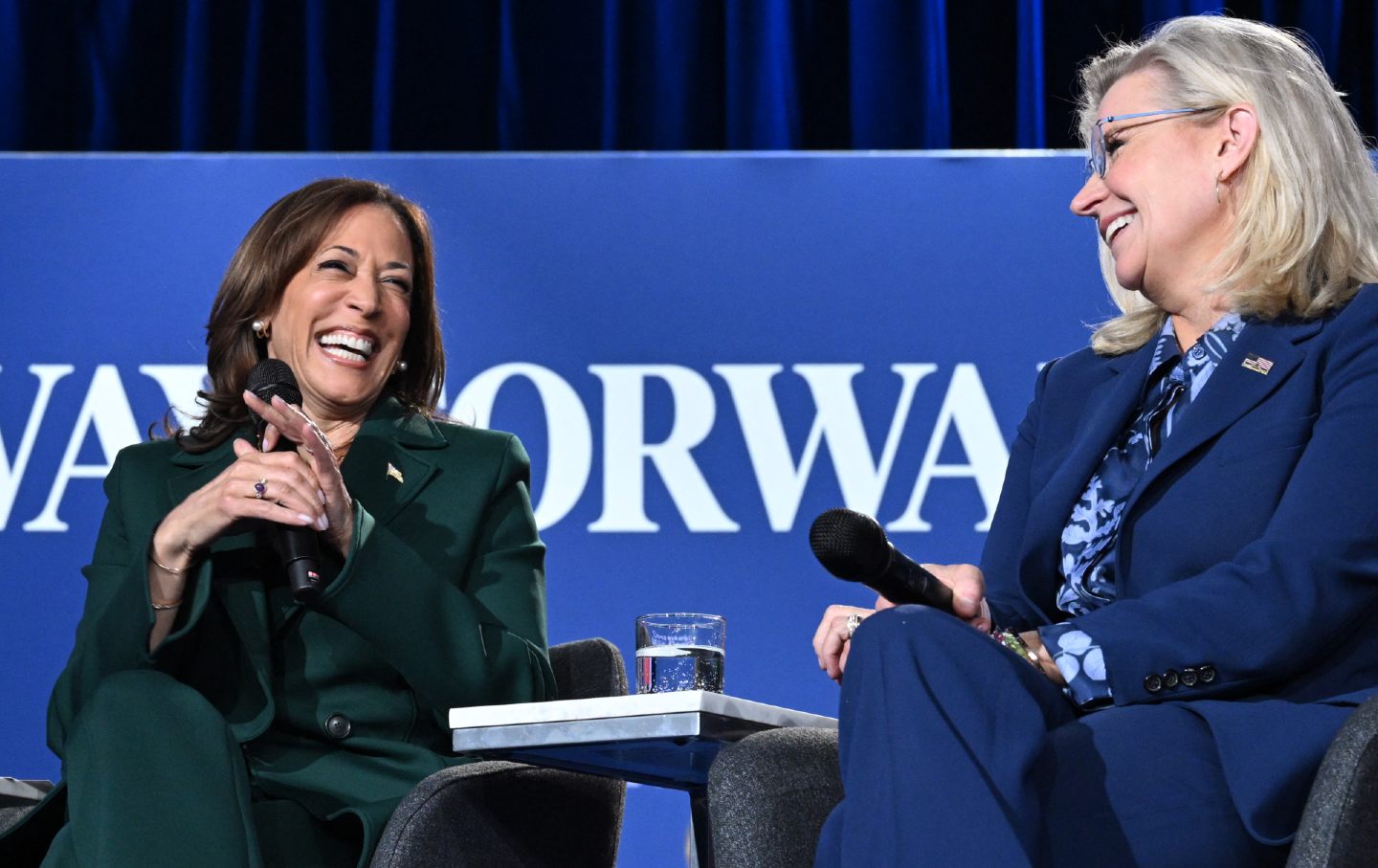
Strikingly, in response to Trump, both Hillary Clinton and Kamala Harris adopted pro-system rhetoric that cast them as defenders of a status quo threatened by a dangerously unstable interloper. Both candidates cited the support they received from Republicans (Christine Todd Whitman and John Warner for Clinton, Liz and Dick Cheney for Harris) as well as from retired military officers and Wall Street titans (Michael Bloomberg, Mark Cuban). While Democrats were touting their endorsements from these pillars of the establishment, Trump’s own gestures of bipartisanship were in the opposite direction: He gathered around himself former Democrats who’d been marginalized by the party for heterodox (and at times undeniably crackpot) opinions on vaccines (Robert F. Kennedy) and foreign policy (Tulsi Gabbard).
In a postelection lament, Sanders accurately noted, “The Democrats ran a campaign protecting the status quo and tinkering around the edges. Trump and the Republicans campaigned on change and on smashing the existing order. Not surprisingly, the Republicans won.”
Responding to this populist anger, Bill Clinton, the diminished but still cocky prince of neoliberalism, said that by “demonizing all establishments and all people who wear a tie…to work and have a good education, we are breaking down the legitimacy of…people who actually know things that are very important for us today and very important for our continued growth and prosperity and harmony.”
The Democrats now must choose. Like Bill Clinton, they can double down on being the party of the establishment. Or they can finally adopt the politics of Bernie Sanders, which means not just a few reforms but a wholesale attack on plutocracy as the enemy of democracy.
Disobey authoritarians, support The Nation
Over the past year you’ve read Nation writers like Elie Mystal, Kaveh Akbar, John Nichols, Joan Walsh, Bryce Covert, Dave Zirin, Jeet Heer, Michael T. Klare, Katha Pollitt, Amy Littlefield, Gregg Gonsalves, and Sasha Abramsky take on the Trump family’s corruption, set the record straight about Robert F. Kennedy Jr.’s catastrophic Make America Healthy Again movement, survey the fallout and human cost of the DOGE wrecking ball, anticipate the Supreme Court’s dangerous antidemocratic rulings, and amplify successful tactics of resistance on the streets and in Congress.
We publish these stories because when members of our communities are being abducted, household debt is climbing, and AI data centers are causing water and electricity shortages, we have a duty as journalists to do all we can to inform the public.
In 2026, our aim is to do more than ever before—but we need your support to make that happen.
Through December 31, a generous donor will match all donations up to $75,000. That means that your contribution will be doubled, dollar for dollar. If we hit the full match, we’ll be starting 2026 with $150,000 to invest in the stories that impact real people’s lives—the kinds of stories that billionaire-owned, corporate-backed outlets aren’t covering.
With your support, our team will publish major stories that the president and his allies won’t want you to read. We’ll cover the emerging military-tech industrial complex and matters of war, peace, and surveillance, as well as the affordability crisis, hunger, housing, healthcare, the environment, attacks on reproductive rights, and much more. At the same time, we’ll imagine alternatives to Trumpian rule and uplift efforts to create a better world, here and now.
While your gift has twice the impact, I’m asking you to support The Nation with a donation today. You’ll empower the journalists, editors, and fact-checkers best equipped to hold this authoritarian administration to account.
I hope you won’t miss this moment—donate to The Nation today.
Onward,
Katrina vanden Heuvel
Editor and publisher, The Nation
More from The Nation


The Supreme Court Has a Serial Killer Problem The Supreme Court Has a Serial Killer Problem
In this week's Elie v. U.S., The Nation’s justice correspondent recaps a major death penalty case that came before the high court as well as the shenanigans of a man who’s angling...
Corporate Democrats Are Foolishly Surrendering the AI Fight Corporate Democrats Are Foolishly Surrendering the AI Fight
Voters want the party to get tough on the industry. But Democratic leaders are following the money instead.

Marching Against a Corrupt Regime Marching Against a Corrupt Regime
People taking to the streets for democracy.

It Would Be Madness to Give Trump and His Toadies Even More Power It Would Be Madness to Give Trump and His Toadies Even More Power
And yet, that’s what the Supreme Court appears prepared to do.
Trump Is Dragging Republicans to Crushing Defeat After Crushing Defeat Trump Is Dragging Republicans to Crushing Defeat After Crushing Defeat
The president is deeply unpopular, his policies are failing, and Republicans are losing—everywhere.

