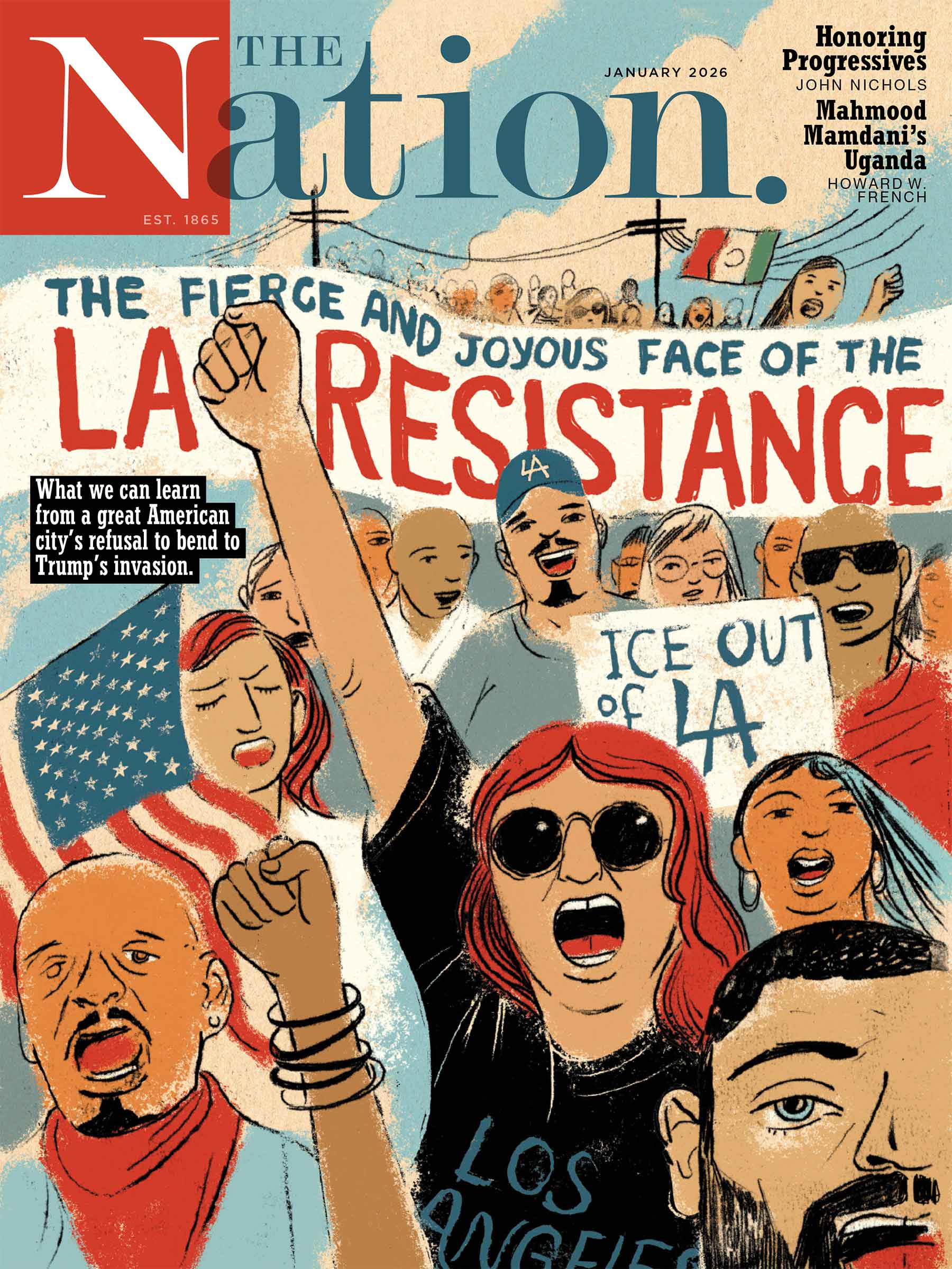
If you’ve read my recent cover story for The Nation magazine, "China in the Driver’s Seat," you know that I’m not a supporter of sanctioning China over its trade policy and that I think there’s a troubling tendency in the United States today to blame or scapegoat China for America’s ills. There is, unfortunately, a convergence of left and right on bashing China these days. On the left, criticism of China mostly revolves around allegations that China is somehow responsible for the loss of American manufacturing jobs over the past quarter-century, and that slapping harsh tariffs on China would make US-manufactured goods competitive again. On the right, the concern about China has more to do with China’s emergence as a great power, complete with dire warnings from Washington think tanks, Republican politicians and neoconservative media outlets about Chinese military spending.
Now, according to the New York Times, China is becoming an issue in the 2010 election, with both Republicans and Democrats bashing Beijing in campaign ads and accusing opponents of kowtowing to the Chinese. This is dangerous nonsense, and it contains echoes—well, more than echoes of the cold war, when the "Who lost China?" debate fueled McCarthyism in the 1950s and fear of "Red China" built momentum for the war in Vietnam. No, the United States isn’t going to war against China just yet—in fact, Secretary of Defense Robert Gates is in Beijing today, in an effort to rebuild US-China military ties. But the Obama administration has taken a series of steps that, seen from Beijing, must look a lot like American military containment of China. In the past few months, the United States has confirmed a $6.4 billion arms deal for the island nation of Taiwan, which China considers a breakaway province. It has conducted needless, provocative naval maneuvers off South Korea, not far from China. It has started cooperating militarily with disreputable, violence-prone special operations forces in Indonesia. And it has butted into disputes between China and some of its neighbors around the South China Sea, adopting a clearly anti-China position. In addition, of course, the United States and NATO have troops astraddle the Afghanistan-China border—which, Chinese officials told me a year ago, during a visit to Beijing, look very much like a NATO military deployment to contain China. And the United States is still pressuring China over Iran, whose oil and gas resources are vital to China’s economic expansion.
Which is why the campaign ads are so distressing.
According to the Times, "With many Americans seized by anxiety about the country’s economic decline, candidates from both political parties have suddenly found a new villain to run against: China."
The tone of the ads is despicable and disgusting, from foreign-sounding Chinese music to stereotypical gongs to pictures of, yes, Chairman Mao.
Adds the Times:
Polls show that not only are Americans increasingly worried that the United States will have a lesser role in the years ahead; they are more and more convinced that China will dominate. In a Pew poll conducted in April, 41 percent of Americans said China was the world’s leading economic power, slightly more than those who named the United States….
The ads are so vivid and pervasive that some worry they will increase hostility toward the Chinese and complicate the already fraught relationship between the two countries.
There’s a downside, too, to the decision by the Norway-based Nobel Peace Prize committee to award the 2010 prize Liu Xiaobo, a Chinese dissident and author of a manifesto for human rights. It’s well and good to draw attention to China’s treatment of political dissidents and its harsh restrictions on free speech, meetings and Internet communications. But supporting dissidents from afar, whether through actions like the Nobel Prize or President Obama’s recent speech at the UN, which carried a strong emphasis on human rights as a key component of US foreign policy, isn’t likely to cause Chinese authorities to change their minds; if anything, it’s more likely to cause them to crack down even harder. And back at home, in the United States, it feeds the growing paranoia and resentment of China that is building as a potentially ugly force.

