
A protest outside Google’s offices in San Francisco, Thursday, December 14, 2023.
(Santiago Mejia / San Francisco Chronicle via AP)When I joined Google, over 20 years ago, it was just a start-up employing a few thousand people. It felt like we were committed to making something useful for society. When I first visited the Mountain View headquarters and saw people in Google-branded T-shirts, I thought the company must make engineers wear a uniform—why else would someone wear a shirt announcing where they work? I’d never seen or experienced this sense of passion for one’s employer, but I soon saw why: Every few months, a new product or feature would launch that offered a free and truly useful service (Gmail! Google Maps!).
But if my overwhelming feeling back then was pride, my feeling now is a very different one: heartbreak. That’s thanks to years of deeply troubling leadership decisions, from Google’s initial foray into military contracting with Project Maven, to the corporation’s more recent profit-driven partnerships like Project Nimbus, Google and Amazon’s joint $1.2 billion AI and cloud computing contract with the Israeli military that has powered Israel’s ongoing genocide of Palestinians in Gaza.
Today marks one year since workers with No Tech for Apartheid staged sit-ins at Google offices to protest the use of our labor to power the genocide in Gaza, to demand an end the harassment and discrimination of our Palestinian, Muslim, and Arab coworkers, and to pressure executives to address the workplace health and safety crisis that Nimbus has caused. Google retaliated against workers and illegally fired 50 Googlers—including many who did not participate directly in the action.
In the year since, Google has only deepened its commitment to being a military contractor. Two months ago, in order to take advantage of the federal contracts the corporation can gain under Trump, Google abandoned its pledge not to build AI for weapons or surveillance. In rapid succession, Google then acquired Israeli cloud security start-up Wiz, pursued partnerships with US Customs and Border Patrol to update towers by Israeli war contractor Elbit Systems with AI at the US-Mexico border, and launched an AI partnership with the largest war profiteer in the world: Lockheed Martin.
Lockheed Martin, Northrop Grumman, and Raytheon are no longer the only war corporations in town; Google and big tech are increasingly eating their lunch. Big tech companies are being pushed by the market to continue to bank returns. But having saturated the consumer and enterprise markets, corporations like Google, in a contentious arms race to dominate the cloud market, have identified the ever-ballooning so-called “defense” budgets of the US and other governments as major pots for profit.
One thing is clear: We urgently need an AI arms embargo.
For years, I have organized internally against Google’s full turn toward war contracting. Along with other coworkers of conscience, we have followed official internal channels to raise concerns in attempts to steer the company in a better direction. Now, for the first time in my more than 20 years of working at Google, I feel driven to speak publicly, because our company is now powering state violence across the globe, and the severity of the harm being done is rapidly escalating.
Workers have always resisted the weaponization of technology, from the United Farm Workers campaigns leveraging boycotts, broader community organizing, and labor strikes to the Black American workers who organized the Polaroid Revolutionary Workers Movement against the use of Polaroid film technology in the passbooks of apartheid South Africa (and won). We can find a basis for treating solidarity as a workplace condition and organizing issue, and a way of building the necessary power not only to make small gains but to upend the power dynamic that allows our bosses to prioritize a genocide over our own voices.
To win victories in our struggle towards humane technology, we must act from a position of solidarity across our divisions: both with the structurally disempowered people in our workplaces and the communities that bear the brunt of the impact of the technologies, from Palestinians bombed by the AI platforms of Google and Amazon, to the workers in India facing contracts with 14-hour workdays, to the migrants being surveilled and tracked, to our own communities living under the microscope of police surveillance, to the coworkers we don’t see but who are surveilled and monitored in warehouse and data facilities to the point that they are unable to use the bathroom for fear of losing their job.
Only a strong, organized mass base of workers taking collective action together can end the militarization of our company. Workers have changed Google before. During Trump’s first administration, I joined my colleagues to organize against Project Maven, Google’s contract with the Department of Defense. We used our power as workers to force Google to drop the contract.
As workers, our power to effect change is found in one another. We not only have power when we come together, but also find community and purpose in collective struggle as a way to endure these dark times together. It is inspiring to be with other workers and grow our strength and courage together.
To my fellow Google workers, and tech workers at large: If we don’t act now, we will be conscripted into this administration’s fascist and cruel agenda: deporting immigrants and dissidents, stripping people of reproductive rights, rewriting the rules of our government and economy to favor Big Tech billionaires, and continuing to power the genocide of Palestinians.
As tech workers, we have a moral responsibility to resist complicity and the militarization of our work before it’s too late.
Disobey authoritarians, support The Nation
Over the past year you’ve read Nation writers like Elie Mystal, Kaveh Akbar, John Nichols, Joan Walsh, Bryce Covert, Dave Zirin, Jeet Heer, Michael T. Klare, Katha Pollitt, Amy Littlefield, Gregg Gonsalves, and Sasha Abramsky take on the Trump family’s corruption, set the record straight about Robert F. Kennedy Jr.’s catastrophic Make America Healthy Again movement, survey the fallout and human cost of the DOGE wrecking ball, anticipate the Supreme Court’s dangerous antidemocratic rulings, and amplify successful tactics of resistance on the streets and in Congress.
We publish these stories because when members of our communities are being abducted, household debt is climbing, and AI data centers are causing water and electricity shortages, we have a duty as journalists to do all we can to inform the public.
In 2026, our aim is to do more than ever before—but we need your support to make that happen.
Through December 31, a generous donor will match all donations up to $75,000. That means that your contribution will be doubled, dollar for dollar. If we hit the full match, we’ll be starting 2026 with $150,000 to invest in the stories that impact real people’s lives—the kinds of stories that billionaire-owned, corporate-backed outlets aren’t covering.
With your support, our team will publish major stories that the president and his allies won’t want you to read. We’ll cover the emerging military-tech industrial complex and matters of war, peace, and surveillance, as well as the affordability crisis, hunger, housing, healthcare, the environment, attacks on reproductive rights, and much more. At the same time, we’ll imagine alternatives to Trumpian rule and uplift efforts to create a better world, here and now.
While your gift has twice the impact, I’m asking you to support The Nation with a donation today. You’ll empower the journalists, editors, and fact-checkers best equipped to hold this authoritarian administration to account.
I hope you won’t miss this moment—donate to The Nation today.
Onward,
Katrina vanden Heuvel
Editor and publisher, The Nation
More from The Nation

The Longest Journey Is Over The Longest Journey Is Over
With the death of Norman Podhoretz at 95, the transition from New York’s intellectual golden age to the age of grievance and provocation is complete.

Breaking the LAPD’s Choke Hold Breaking the LAPD’s Choke Hold
How the late-20th-century battles over race and policing in Los Angeles foreshadowed the Trump era.
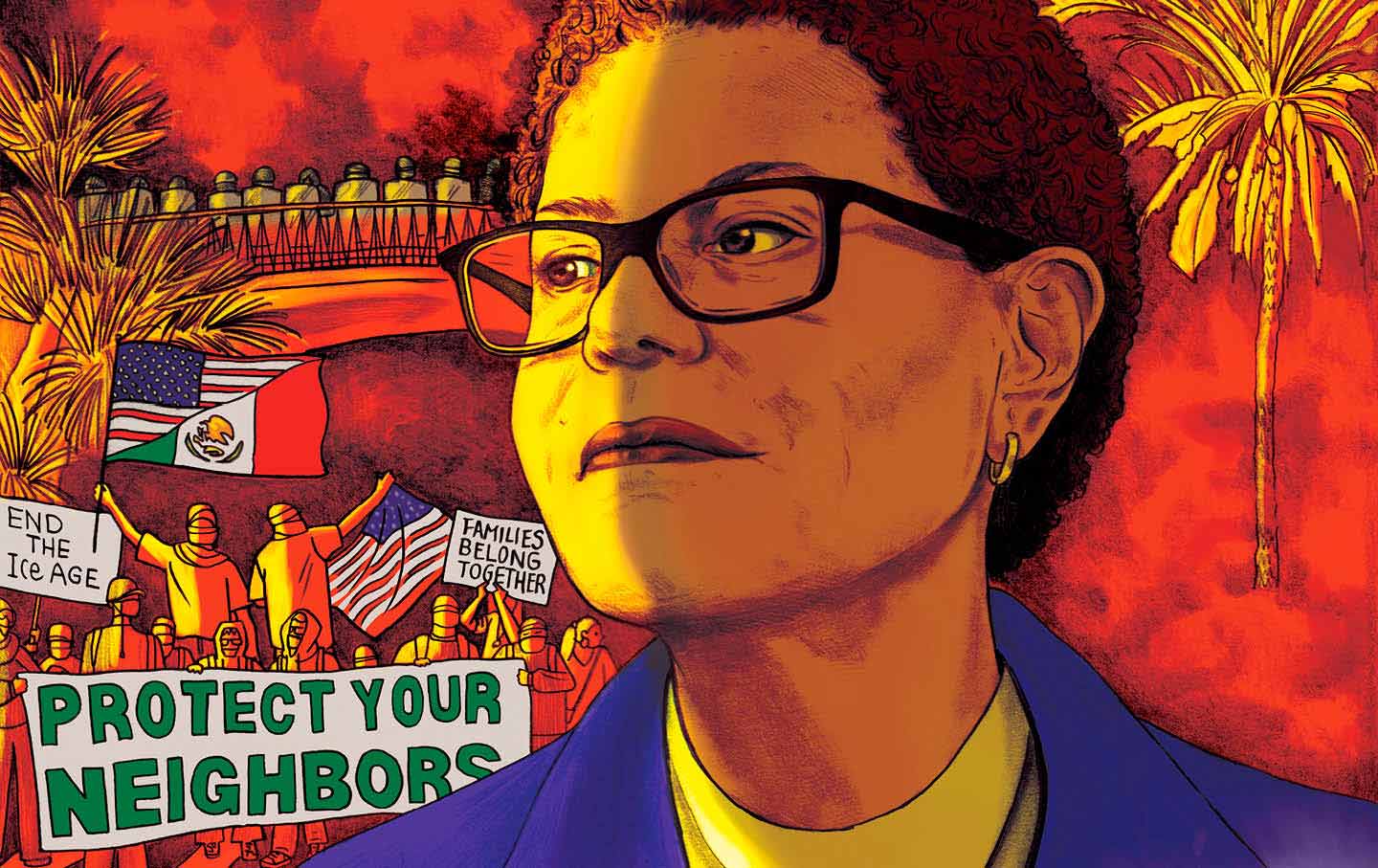
Mayor of LA to America: “Beware!” Mayor of LA to America: “Beware!”
Trump has made Los Angeles a testing ground for military intervention on our streets. Mayor Karen Bass says her city has become an example for how to fight back.
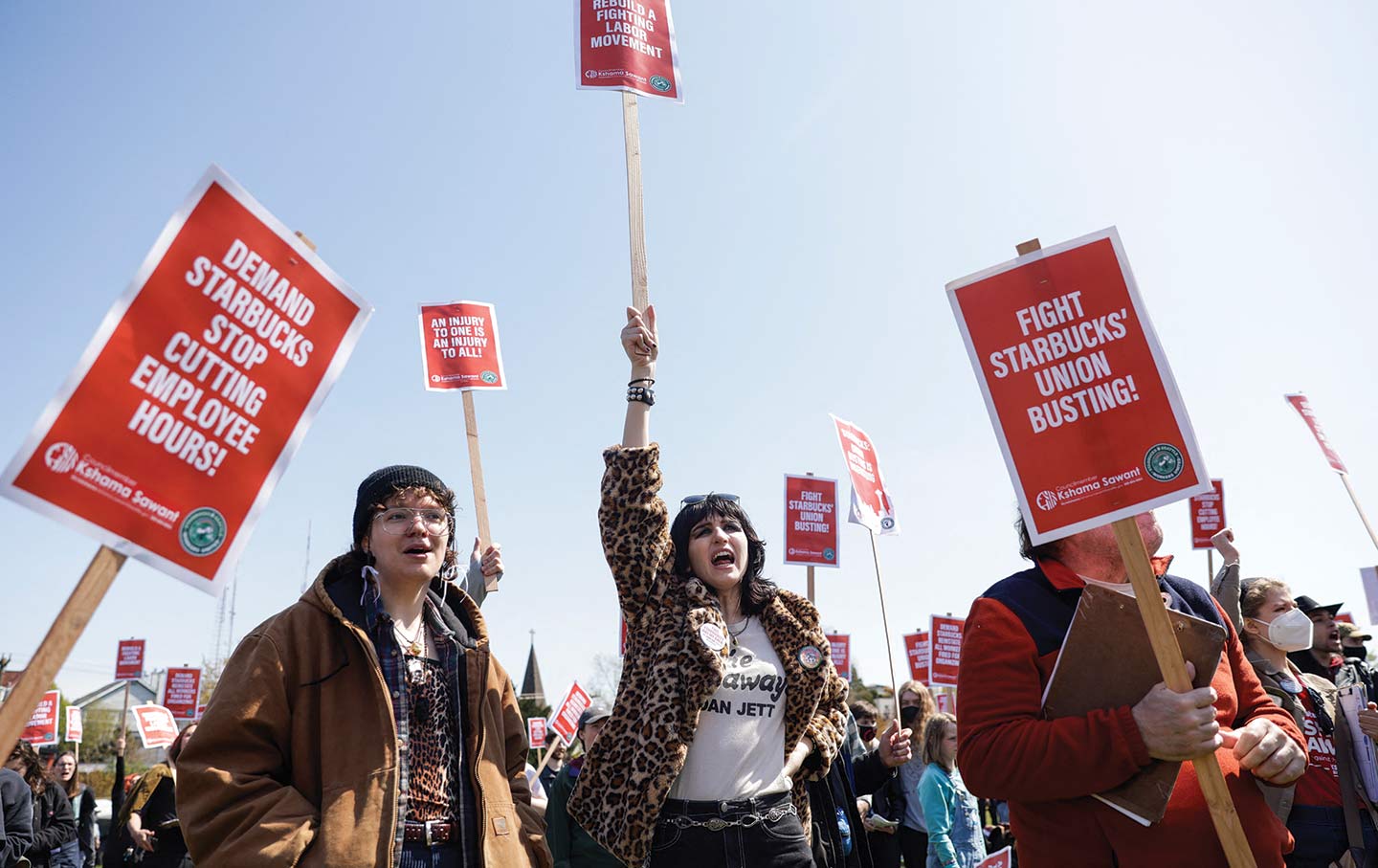
Organized Labor at a Crossroads Organized Labor at a Crossroads
How can unions adapt to a new landscape of work?
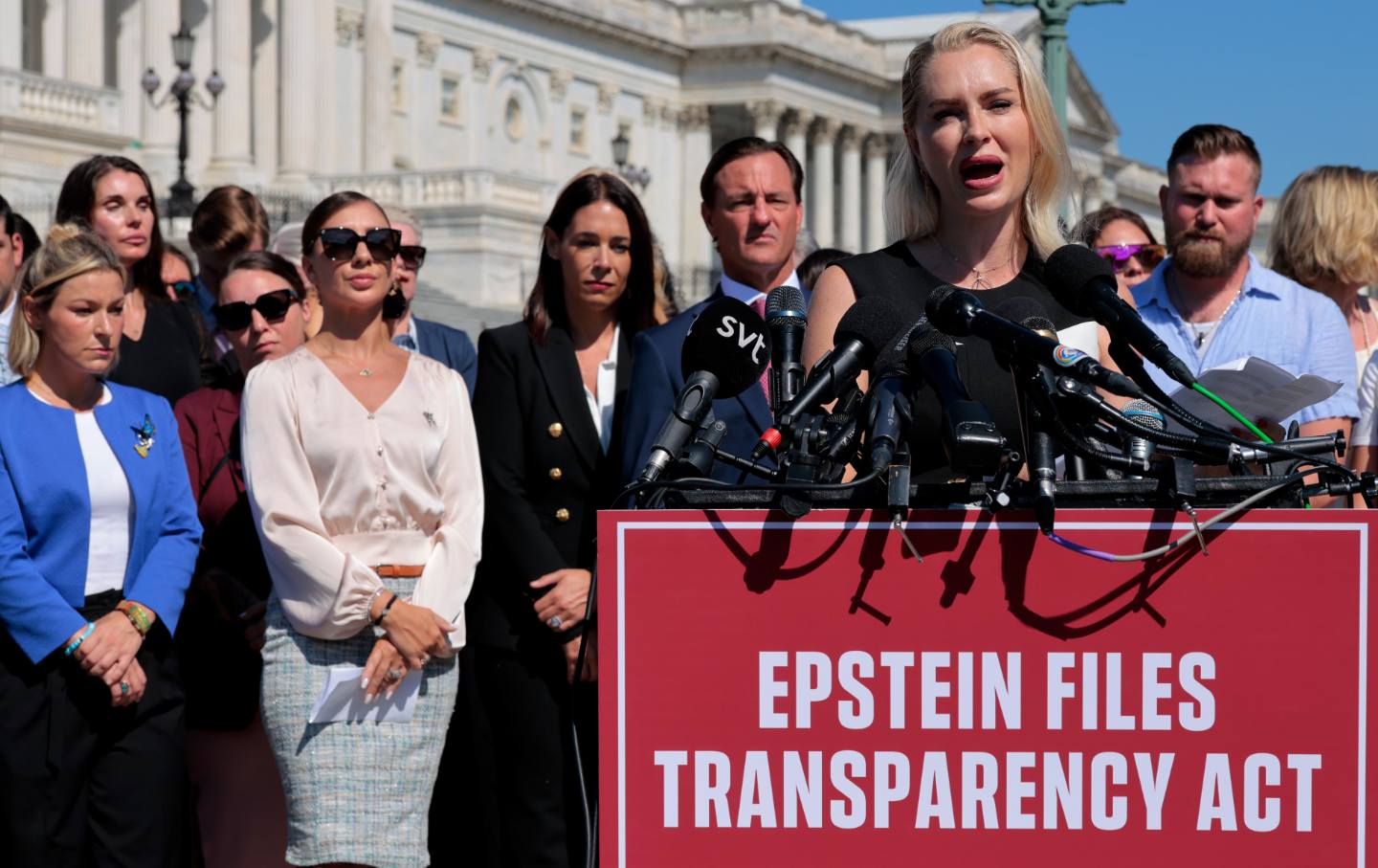
The Epstein Survivors Are Demanding Accountability Now The Epstein Survivors Are Demanding Accountability Now
The passage of the Epstein Files Transparency Act is a big step—but its champions are keeping the pressure on.

The Fight to Keep New Orleans From Becoming “Everywhere Else” The Fight to Keep New Orleans From Becoming “Everywhere Else”
Twenty years after Katrina, the cultural workers who kept New Orleans alive are demanding not to be pushed aside.

