
Is 2024 Democracy’s “Super Bowl”?
Two billion people—half the world’s population—will participate in more than 75 elections this year.
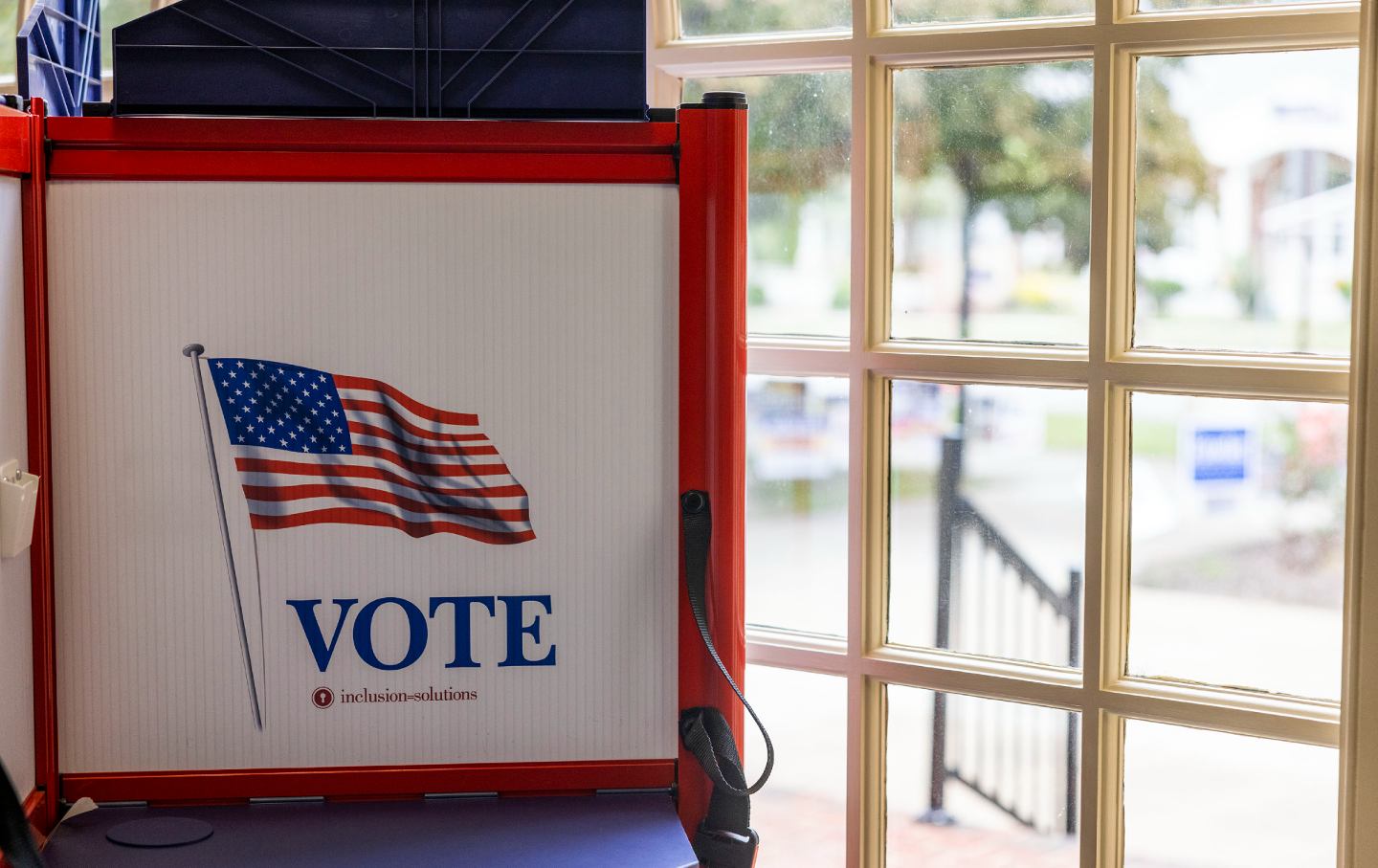
This is a banner year for elections. In 2024, an astonishing 2 billion people—half of the world’s adult population—will be participate in more than 75 national elections this year. Some have even called it democracy’s “Super Bowl.”
On its face, this may seem like democracy’s golden year, but illiberal candidates are likely to win in many countries. Worse still, many eligible voters take a dim view of democracy itself. More than half of Americans can’t or won’t identify a single strength of our political system. And around the world, only 57 percent of younger adults feel that democracy is preferable to other forms of government.
Increasingly, people view democracy in the same way Americans view their likely presidential nominees: not as stalwart and time-tested, but brittle and outdated.
This is a precarious time for a year as pivotal as 2024. Taiwan’s recent presidential race will impact the risk of wider conflict with China. Indonesia’s February elections may reveal cracks in its capacity to transfer power. India’s elections—the world’s biggest—could propel it further down a path of Hindu strong-arm nationalism. South Africa will decide whether it ousts the party of Nelson Mandela three decades after the end of apartheid. Pakistan faces its first general election since its prime minister was removed and arrested, and Sri Lanka its first since its government collapsed.
Of course, democratic elections don’t necessarily mean democratic outcomes. Electing illiberal leaders by democratic means is not a new phenomenon, but we are witnessing the rise of more candidates willing to play fast and loose. Russia and North Korea will both hold elections this year, but the outcome will not bring an upset. Ukraine election due to martial law, a sobering reminder that the cadences of democracy can too easily become casualties of war. Twenty twenty-four’s elections will be held as conflicts rage, climate disasters accelerate, and strongmen surge to take advantage of the chaos.
So it’s no surprise that this year, the word “democracy” is being uttered like a prayer—and more precisely, a Hail Mary. President Joe Biden has called Donald Trump a “threat to democracy” and cast himself as its last, best hope. (Trump, who has threatened to lock up his opponents if reelected, called Biden the “true destroyer of democracy.”) Around the world, 2024 has already been dubbed the year that democracy itself is on the ballot.
One problem is that democracy means different things to different people. For some, it’s about voting rights; for others, an independent media or judiciary. And often, it doesn’t poll well. In countries with advanced economies, the number of people satisfied with the state of their democracy barely hovers over 50 percent. In the United States, it’s now closer to 25 percent—a record low. In South Africa, seven in 10 citizens say they’d give up democracy for a leader who could create jobs and reduce crime.
These frustrations have obvious roots. Go to the grocery store and you’ll see prices higher than last month’s. Visit the pharmacy and you’ll notice the global drug shortage. Read the news and you’ll see ongoing failure to end the carnage of two major wars—all in the shadow of newer threats like climate change and challenges like AI.
Democracy’s bad polling betrays an underlying problem: Voting is often an investment of time and trust, and people aren’t seeing the returns.
Politicians would be wise to update their playbooks accordingly. Yes, democracy is full of history and possibility. And yes, it’s on the ballot in 2024. But those arguments can’t stand alone.
Democracy is also about electing leaders or parties that make clear the tangible, near-term benefits that participation could bring to people’s lives: increasing the minimum wage, capping the price of insulin, and forgiving student debt, to name just a few. Taiwan’s candidates took this approach: Despite the election’s seismic implications for sovereignty and security, campaigns focused on “ kitchen-table issues” like slowing wage growth and surging housing prices.
For every far-right fearmonger or wannabe demagogue, there is a pragmatic politician laser-focused on delivering tangible positive outcomes. Take Claudia Sheinbaum, the front-runner in the Mexican presidential race. She’s the former mayor of Mexico City and a scientist who served on the UN’s Intergovernmental Panel on Climate Change. In her campaign, Sheinbaum has focused on environmental issues with the most pronounced effects on people’s lives, such as decontaminating bodies of water and accelerating Mexico’s transition to renewable energy.
Or take Brazilian president Lula: A year after the country’s own insurrection, he argues that “government that improves lives is the best answer we have to extremists who attack democracy.” Ahead of Brazil’s municipal elections this year, Lula is defending democracy by building workers’ rights programs, anti-poverty policies, and protections against deforestation—things that help people in ways they can see.
Though 2024 could be the most consequential election year of our lifetimes, citizens may not feel a sense of reverence for the system as they cast their vote. Leaders everywhere must demonstrate why voting matters—not only in the sweep of history, but also in the everyday sweep of people’s lives.
Disobey authoritarians, support The Nation
Over the past year you’ve read Nation writers like Elie Mystal, Kaveh Akbar, John Nichols, Joan Walsh, Bryce Covert, Dave Zirin, Jeet Heer, Michael T. Klare, Katha Pollitt, Amy Littlefield, Gregg Gonsalves, and Sasha Abramsky take on the Trump family’s corruption, set the record straight about Robert F. Kennedy Jr.’s catastrophic Make America Healthy Again movement, survey the fallout and human cost of the DOGE wrecking ball, anticipate the Supreme Court’s dangerous antidemocratic rulings, and amplify successful tactics of resistance on the streets and in Congress.
We publish these stories because when members of our communities are being abducted, household debt is climbing, and AI data centers are causing water and electricity shortages, we have a duty as journalists to do all we can to inform the public.
In 2026, our aim is to do more than ever before—but we need your support to make that happen.
Through December 31, a generous donor will match all donations up to $75,000. That means that your contribution will be doubled, dollar for dollar. If we hit the full match, we’ll be starting 2026 with $150,000 to invest in the stories that impact real people’s lives—the kinds of stories that billionaire-owned, corporate-backed outlets aren’t covering.
With your support, our team will publish major stories that the president and his allies won’t want you to read. We’ll cover the emerging military-tech industrial complex and matters of war, peace, and surveillance, as well as the affordability crisis, hunger, housing, healthcare, the environment, attacks on reproductive rights, and much more. At the same time, we’ll imagine alternatives to Trumpian rule and uplift efforts to create a better world, here and now.
While your gift has twice the impact, I’m asking you to support The Nation with a donation today. You’ll empower the journalists, editors, and fact-checkers best equipped to hold this authoritarian administration to account.
I hope you won’t miss this moment—donate to The Nation today.
Onward,
Katrina vanden Heuvel
Editor and publisher, The Nation
More from The Nation

The Supreme Court v. My Mother The Supreme Court v. My Mother
After my mother escaped the Holocaust, she broke the law to save her family. Her immigration story is more pertinent today than ever before.

The Supreme Court Has a Serial Killer Problem The Supreme Court Has a Serial Killer Problem
In this week's Elie v. U.S., The Nation’s justice correspondent recaps a major death penalty case that came before the high court as well as the shenanigans of a man who’s angling...
Corporate Democrats Are Foolishly Surrendering the AI Fight Corporate Democrats Are Foolishly Surrendering the AI Fight
Voters want the party to get tough on the industry. But Democratic leaders are following the money instead.
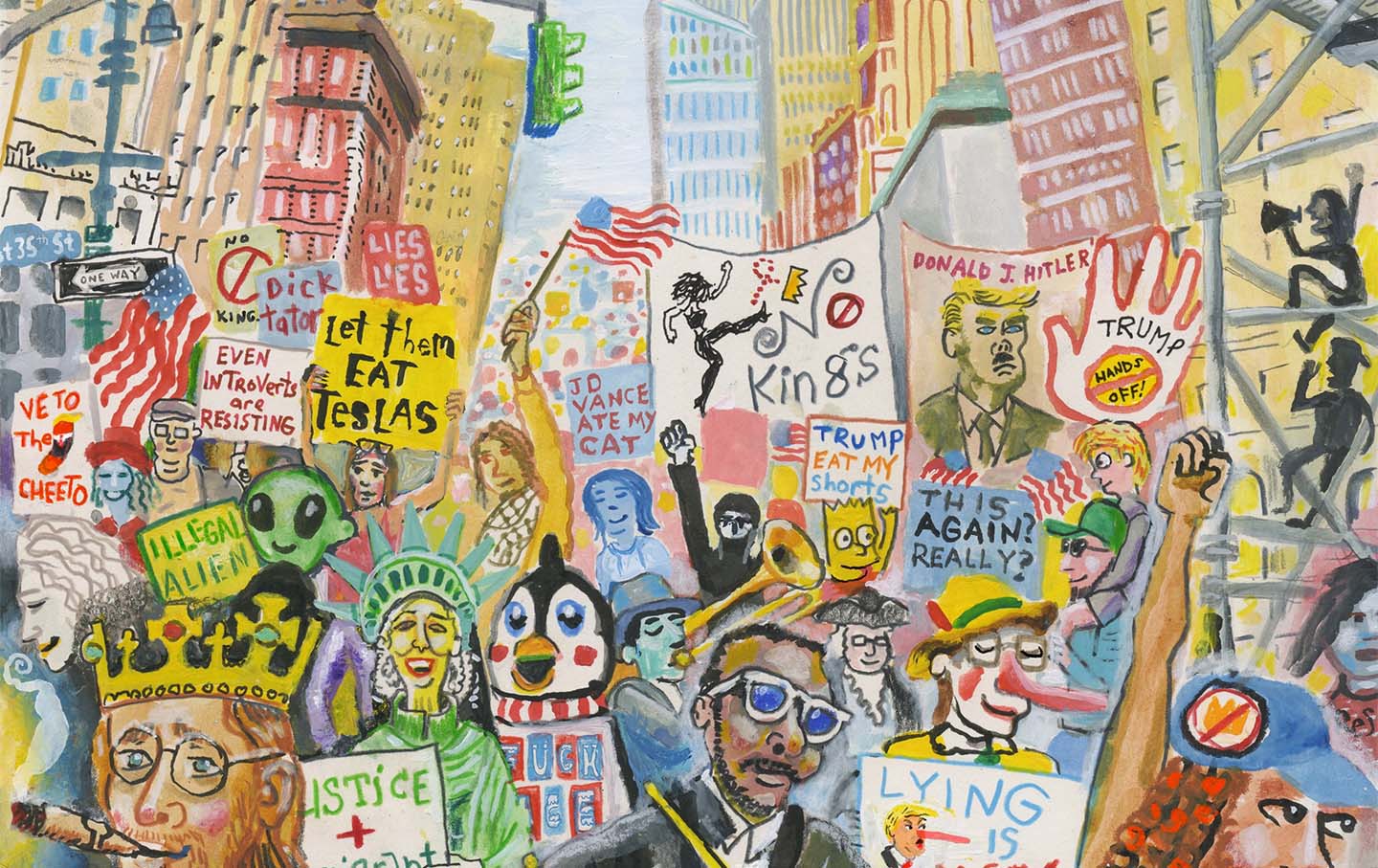
Marching Against a Corrupt Regime Marching Against a Corrupt Regime
People taking to the streets for democracy.

Keeping the Police Out of Pregnancy Care Keeping the Police Out of Pregnancy Care
We must be vigilant in keeping law enforcement out of exam rooms.

