History According to Ridley Scott
Ultimately what we learn in Napoleon says far more about the director than it does about Napoleon.
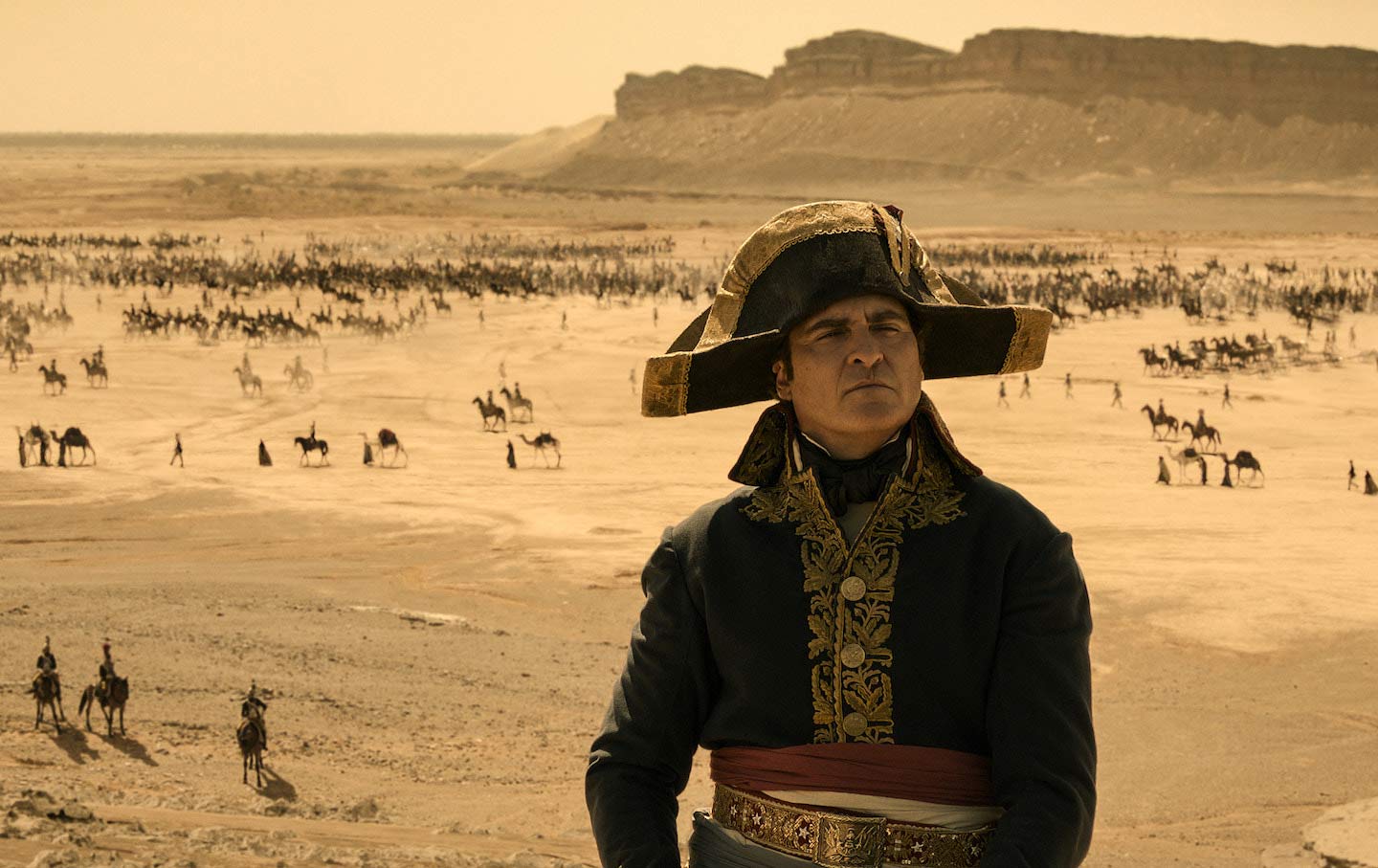
Ridley Scott could not have picked a more exciting period in modern history to make a movie about. The years between 1789 and 1815 form one of the most crucial epochs of the last three centuries. The great upheavals kicked off by the French Revolution touched every aspect of life. In politics, modern republics emerged out of the wreckage of medieval kingdoms. In economics, capitalism supplanted feudal arrangements. In social relations, individual human rights replaced archaic aristocratic hierarchies as mere subjects became full citizens. In religion, secular ideals undermined the role of traditional churches. In warfare, small professional armies gave way to vast militaries that relied on national conscription. The Age of Revolution was also the age of republicanism, capitalism, secularism, nationalism, and total war. It is not an exaggeration to call it the birthplace of the modern world.
Telling this cacophonous story is no easy task. Luckily, in his new film, Napoleon, Ridley Scott has chosen the perfect subject. More than any other single figure, Napoleon stood at the center of this consequential maelstrom. He himself was a product of the times, climbing the ranks from minor Corsican nobility to emperor of France precisely because of the novel ideals of the age: that talent, hard work, and determination should count for more than the arbitrary accidents of birth. Upon attaining such heights, Emperor Napoleon unleashed sweeping reforms and programs that solidified the great changes of the era and effectively built the modern age. He also did this while millions died either fighting for and against him in a never-ending war. Under his watch, the great revolutionary ideals of liberty and equality were swapped for an authoritarian regime bolstered by a brutal war machine that was fixated on imperial conquest and exploitation.
Ridley Scott’s Napoleon could have examined this paradox. To tell the story of the Age of Revolution, one must engage with its contradictions in one way or another. But Scott is not really interested in history. While fascinated by the great march of the past into the present, he is also relentlessly incurious about the historical causes and effects driving and sustaining that march. Ultimately what we learn in Napoleon says far more about Scott than it does about Napoleon.
Since the arrival of the first trailer, critics have cataloged Napoleon’s litany of errors, misrepresentations, and outright fabrications. From the opening scene that badly misrepresents the chronology of the Reign of Terror and inaccurately places Napoleon at the execution of Marie Antoinette to the final climax that shows Napoleon personally leading a cavalry charge at Waterloo, we are presented with an inescapable conclusion: If you care even remotely about the history of the Napoleonic Era, this is not a movie for you. Scott is more than happy to agree. As Variety reported, “When asked to respond to such historical fact-checkers, Scott was blunt in his response: ‘Get a life.’”
Despite a career dedicated to the craft of history, I am sympathetic to Scott’s response. I love a good romp as much as anyone. Historical films are great vehicles for adventure, intrigue, and romance. Many people, myself included, begin their journey to serious study of history as a result of a set of movies and TV shows that captured our imaginations about a particular period in time. If Scott can deliver a movie whose quality transcends complaints about historical accuracy, then we will tip our cap and move on. Did Scott’s sword-and-sandal epic Gladiator tell a true story? No, of course not. But was it a highly entertaining movie that won a well-deserved Best Picture? Yes, it was.
Unfortunately, Napoleon is not Gladiator—or even on the level of Scott’s other historical films like Kingdom of Heaven, American Gangster, and The Last Duel. Far from helping make a more entertaining movie, Scott’s dismissal of the historical facts only makes it a slog. The lack of context, the absence of historical insight and understanding, means the viewer is given very little explanation for why things are happening. Events seem to follow in succession not because characters and events propel the action forward but because that’s what happens next. Why is Napoleon in Egypt? Why does he fight the Battle of Austerlitz? Why does he invade Russia? Because that’s what happens next. Nothing more is ever said about the wider political or military context. Nor—with one notable exception—are Napoleon’s own personal motivations and calculations mentioned. The advances and setbacks of his career are rendered dull and inert. There is no reason for the plot to follow the course it does other than the fact that it does. Scott simply takes the audience from one historical diorama to the next without bothering to bind them together with compelling narrative tissue.
Part of the problem is that, despite his film’s being stacked with great actors, his two leads do not add any energy or vitality to their roles. Joaquin Phoenix plays Napoleon as a fixed character who undergoes no growth, change, or transformation. The Napoleon we meet in 1789 is the same Napoleon we bid adieu in 1821. It is not just that 49-year-old Phoenix plays the whole course of Napoleon’s life with identical bearing and tone: He is taciturn, grouchy, and squirming with repression. It’s that nothing that happens in the movie seems to impact him in the slightest. His counterpart Josephine fares little better. Vanessa Kirby’s beguiling performance can’t avoid the fact that she too is stuck in a role without room for growth. When we meet Josephine, she is a scandalous libertine who needs the marriage to Napoleon to secure her position in society. This holds true for the rest of the film. For all that happens in the movie, the main characters remain unchanged.
One could remedy this situation with an entertaining secondary cast of characters. But there are hardly secondary characters to speak of. The real Napoleon lived a life surrounded by a gallery of legendary figures. He rose to power with the help of brilliant and charismatic comrades like Joachim Murat, André Masséna, and Jean-Baptiste Bernadotte, all of whom could feature as the stars of their own movies. He battled great foes like Archduke Charles of Austria and Mikhail Kutuzov of Russia. But in Scott’s telling Napoleon has no mentors, friends, or comrades. Nor does he have any antagonists, rivals, or enemies—at least none who make any impression on Napoleon or the audience. Some of the great figures surrounding Napoleon do appear on onscreen, like Paul Barras, Abbé Sieyès, and Talleyrand. But they are often accompanied by docudrama style labels of their name and position, whereupon they deliver some necessary exposition, and then recede from the story. For a film that does not care about historical accuracy, the invocation of history often seems to be all we have left. This is not a movie enlivened by a large and colorful cast of characters who propel the plot, add emotional notes, or provide any kind of relief, comic or otherwise—without any context we are left just with a lot of action.
The lack of meaningful interactions with other characters leaves the film emotionally empty. Napoleon’s marshals demanding that their beloved emperor abdicate at Fontainebleau would have hit hard had the audience ever been told who these marshals were. Napoleon’s dramatic reunion with the Fifth Regiment during the Hundred Days might have stirred tears had the bond between Napoleon and his common soldiers been established earlier in the film. The Duke of Wellington’s speech before the Battle of Waterloo might have had real dramatic weight had the scene not doubled as Wellington’s very first appearance in the movie. Despite his “get a life” attitude, we find Scott not all that interested in the actual lives of this subjects.
If this were all simply a matter of a filmmaker disregarding history for the sake of a big-screen spectacle, that would at least be understandable. Unfortunately, “get a life” was not Scott’s only retort to his critics. Asked in another forum about the issues historians have with the movie, he responded, “Well, I have issues with historians. I ask: Excuse me mate, were you there? No? Well, shut the fuck up then.” Scott is not just saying that it is silly to care about telling a fact-based story, but also that no one really knows what the facts are. More to the point: that Ridley Scott’s interpretation of Napoleon is as valid as any historian’s.
So what does Ridley Scott have to say in Napoleon? Often the only life he seems interested in is Josephine’s sex life. It is not an exaggeration to say the entire film revolves around one memorable scene when Josephine seductively flashes Napoleon and captures him forever. Everything else is shoved to the side to focus on this one paramount fixation. This was clearly at the heart of Scott’s interest in making the movie in the first place. When the filmmaker announced the project, he released a statement. “Napoleon is a man I’ve always been fascinated by,” Scott says, “He came out of nowhere to rule everything — but all the while he was waging a romantic war with his adulterous wife Josephine. He conquered the world to try to win her love, and when he couldn’t, he conquered it to destroy her, and destroyed himself in the process.”
Scott’s thesis that Napoleon’s unattainable goal of controlling Josephine’s sex life animated his career is borne out by two key moments in the film. The first is when Napoleon abandons his army in Egypt in 1799, the second when he returns from exile on Elba in 1815. Both are unambiguously portrayed as the result of Napoleon’s learning that Josephine has been unfaithful. If true, these moments would have made for a powerful insight into Napoleon’s life as valid as any historian’s. But here’s the problem: This isn’t actually how it happened! Portraying Napoleon’s primary motivation in these two incidents as anger at his wife’s indiscretions is just another example of the film’s errors, mirepresentations, and outright fabrications we’ve long since given up cataloging.
Popular
“swipe left below to view more authors”Swipe →So what does that leave us? Unfortunately, not a lot. As a movie, Napoleon suffers from a lifeless plot, wooden characters, and thin worldbuilding. As an exploration of the life and times of a great historical figure, Napoleon suffers from Scott’s scorn for history. What’s the point of making a movie about a historical figure when every single fact has been replaced by fiction?
Even granting the necessity of poetic license, we know that depictions of historical events in pop culture ground our historical imaginations. A survey by the American Historical Association shows that 66 percent of respondents said fictional film/TV were sources of their historical knowledge; so some people, maybe many people, will walk away from Napoleon believing that he fired canons at the pyramid, impregnated a prostitute to prove his virility, and slapped Josephine at their divorce hearing. So even as we accept that reality can never be fully depicted on screen, it’s not unreasonable to ask a filmmaker to still accept some responsibility for how he depicts the past.
One can still grind down some of history’s details to dust to make a larger lens of truth, but it’s important, at the very least, for that lens to say something true about the subject. Napoleon unfortunately does not do this. It tells us little about Napoleon the man, almost nothing about the world he lived in, and leaves the viewer with even less of an understanding of his choices and motivations. It’s sad that a historical subject as compelling as Napoleon has been paired with a director so uninterested in engaging with reality. Now if you’ll excuse me, I must go get a life.
Disobey authoritarians, support The Nation
Over the past year you’ve read Nation writers like Elie Mystal, Kaveh Akbar, John Nichols, Joan Walsh, Bryce Covert, Dave Zirin, Jeet Heer, Michael T. Klare, Katha Pollitt, Amy Littlefield, Gregg Gonsalves, and Sasha Abramsky take on the Trump family’s corruption, set the record straight about Robert F. Kennedy Jr.’s catastrophic Make America Healthy Again movement, survey the fallout and human cost of the DOGE wrecking ball, anticipate the Supreme Court’s dangerous antidemocratic rulings, and amplify successful tactics of resistance on the streets and in Congress.
We publish these stories because when members of our communities are being abducted, household debt is climbing, and AI data centers are causing water and electricity shortages, we have a duty as journalists to do all we can to inform the public.
In 2026, our aim is to do more than ever before—but we need your support to make that happen.
Through December 31, a generous donor will match all donations up to $75,000. That means that your contribution will be doubled, dollar for dollar. If we hit the full match, we’ll be starting 2026 with $150,000 to invest in the stories that impact real people’s lives—the kinds of stories that billionaire-owned, corporate-backed outlets aren’t covering.
With your support, our team will publish major stories that the president and his allies won’t want you to read. We’ll cover the emerging military-tech industrial complex and matters of war, peace, and surveillance, as well as the affordability crisis, hunger, housing, healthcare, the environment, attacks on reproductive rights, and much more. At the same time, we’ll imagine alternatives to Trumpian rule and uplift efforts to create a better world, here and now.
While your gift has twice the impact, I’m asking you to support The Nation with a donation today. You’ll empower the journalists, editors, and fact-checkers best equipped to hold this authoritarian administration to account.
I hope you won’t miss this moment—donate to The Nation today.
Onward,
Katrina vanden Heuvel
Editor and publisher, The Nation
More from The Nation
The Best Albums of 2025 The Best Albums of 2025
From Mavis Staples to the Kronos Quartet—these are our music critic’s favorite works from this year.
Forrest Gander’s Desert Phenomenology Forrest Gander’s Desert Phenomenology
His poems bridge the gap between nature’s wild expanse and the private space of one’s imagination.
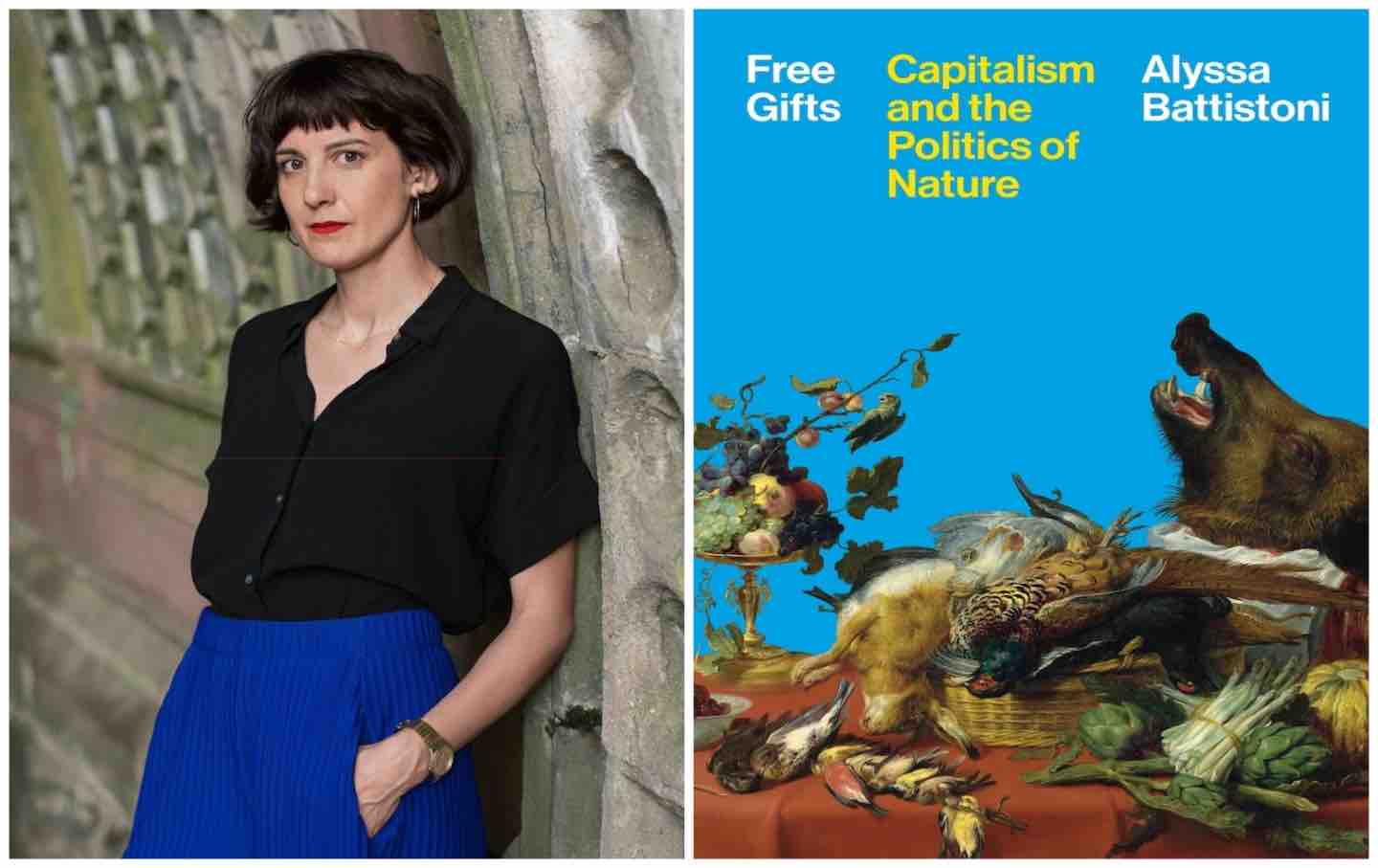
Capitalism’s Toxic Nature Capitalism’s Toxic Nature
A conversation with Alyssa Battistoni about the essential and contradictory nature of capitalism to the environment and her new book Free Gifts: Capitalism and the Politics of Nat...
Solvej Balle and the Tyranny of Time Solvej Balle and the Tyranny of Time
The Danish novelist’s septology, On the Calculation of Volume, asks what fiction can explore when you remove one of its key characteristics—the idea of time itself.
Muriel Spark’s Magnetic Pull Muriel Spark’s Magnetic Pull
What made the Scottish novelist’s antic novels so appealing?
Luigi Pirandello’s Broken Men Luigi Pirandello’s Broken Men
The Nobel Prize-winning writer was once seen as Italy’s great man of letters. Why was he forgotten?

