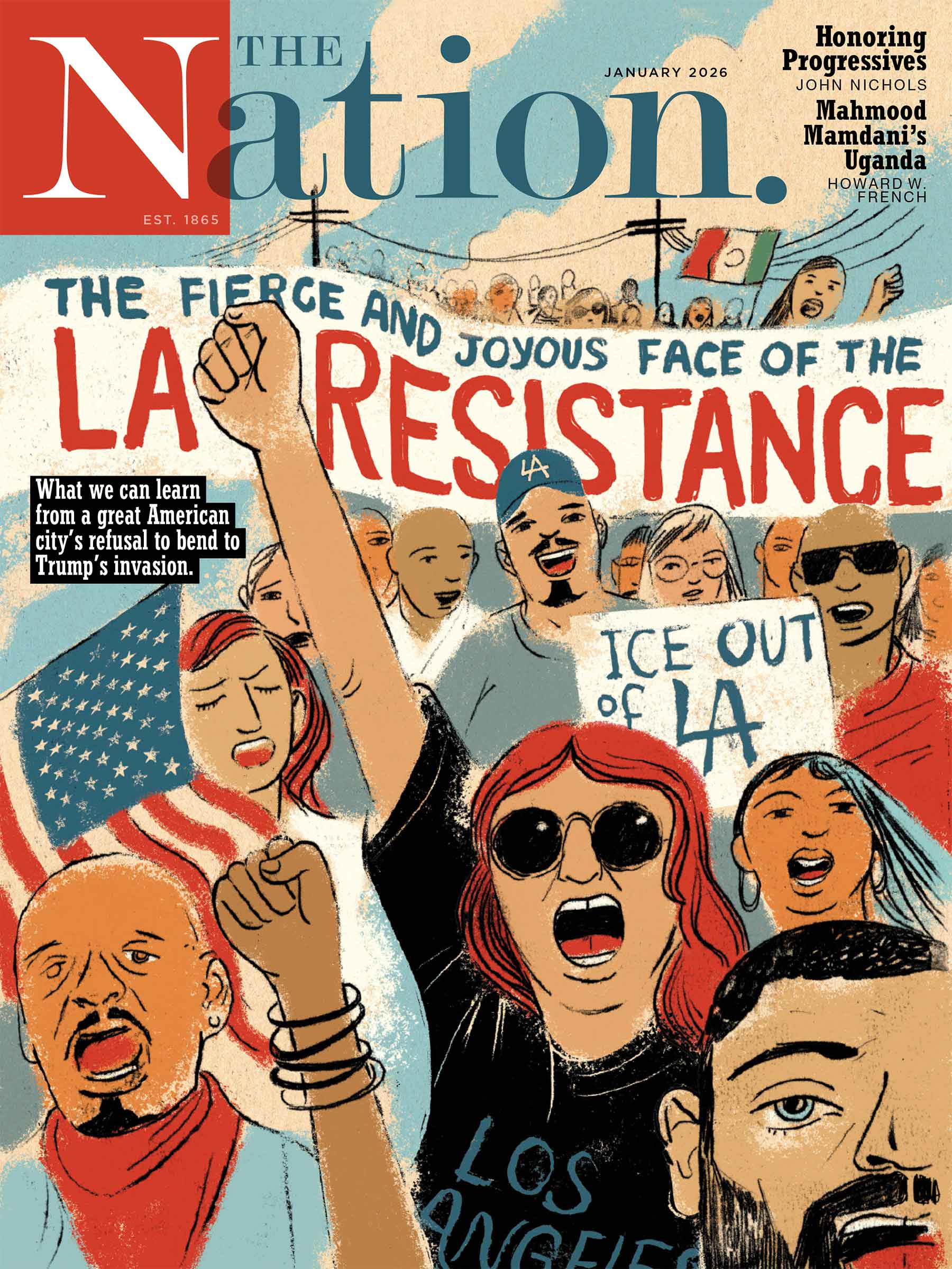
Fifty years ago, as today, the problem of economic inequality was very much on the minds of Nation editors. The issue of May 11, 1963 was given over—“in the spirit of thoughtful and significant dissent which is the hallmark of The Nation,” the editors wrote—entirely to a nine-chapter investigation by the economist and futurist Robert Theobald of the threat posed to the American economy by abundance. Whereas traditional economics was defined as the art of “distributing scarce resources,” in Theobald’s view the incredible developments of technology in recent years, and the promise of even greater leaps in the near future, meant that the chief economic problem of the time was not scarcity but abundance.
His magisterial essay, published later that year as a book titled Free Men and Free Markets, argued that great technological changes would free up surplus labor and capital to such an extent that it could actually prove detrimental to American society if not adequately harnessed. All the benefits would accrue to the rich, creating stress and disillusionment among the rest of the populace. Radical changes would have to be undertaken in order to accommodate that abundance: first among them what Theobald elsewhere called a “basic living guarantee,” or unconditional allotment of funds to all citizens. Piecemeal compensation like retraining, unemployment insurance, or Social Security wouldn’t improve the situation, Theobald argued. The solutions proposed by traditional economic theory were empty, he wrote:
Unemployment rates must…be expected to rise. This unemployment will be concentrated among the unskilled, the older worker and the youngster entering the labor force. Minority groups will also be hard hit. No conceivable rate of economic growth will avoid this result.
Only broad, systemic, and proactive initiatives like a guaranteed income could do that. One fault of Theobald’s essay is that he was perhaps too optimistic regarding the United States’ ability to adapt to the changes he describes, as here in Chapter IV:
The historian of the 21st century will still be puzzled as he looks back on the nineteen-sixties, for he will never understand our point of view. He will wonder how we could tolerate an exploited minority when it was possible for the remainder of the population to provide for it without damaging their own economic position. He will ask how we could accept a society in which those with money had relatively few unsatisfied needs and those with many unsatisfied needs had no money.
No historian is truly puzzled about this today, of course, since all the problems Theobald describes as of the utmost urgency have only grown worse, and the kind of structural changes advocated by Theobald in The Nation in 1963 have been deferred, to the detriment of so many, for fifty years and counting. That is why our work at The Nation is never done—as we continue to propose systemic economic changes that would lead to a more just and fair society.
* * *
Subscribers to The Nation can access our fully searchable digital archive, which contains thousands of historic articles, essays and reviews, letters to the editor and editorials dating back to July 6, 1865.

