Without Expanded DACA Protections, Undocumented Students Are Being Left Behind
Around 80 percent of the nearly 120,000 undocumented students who graduated high school in 2023 don’t qualify for DACA.
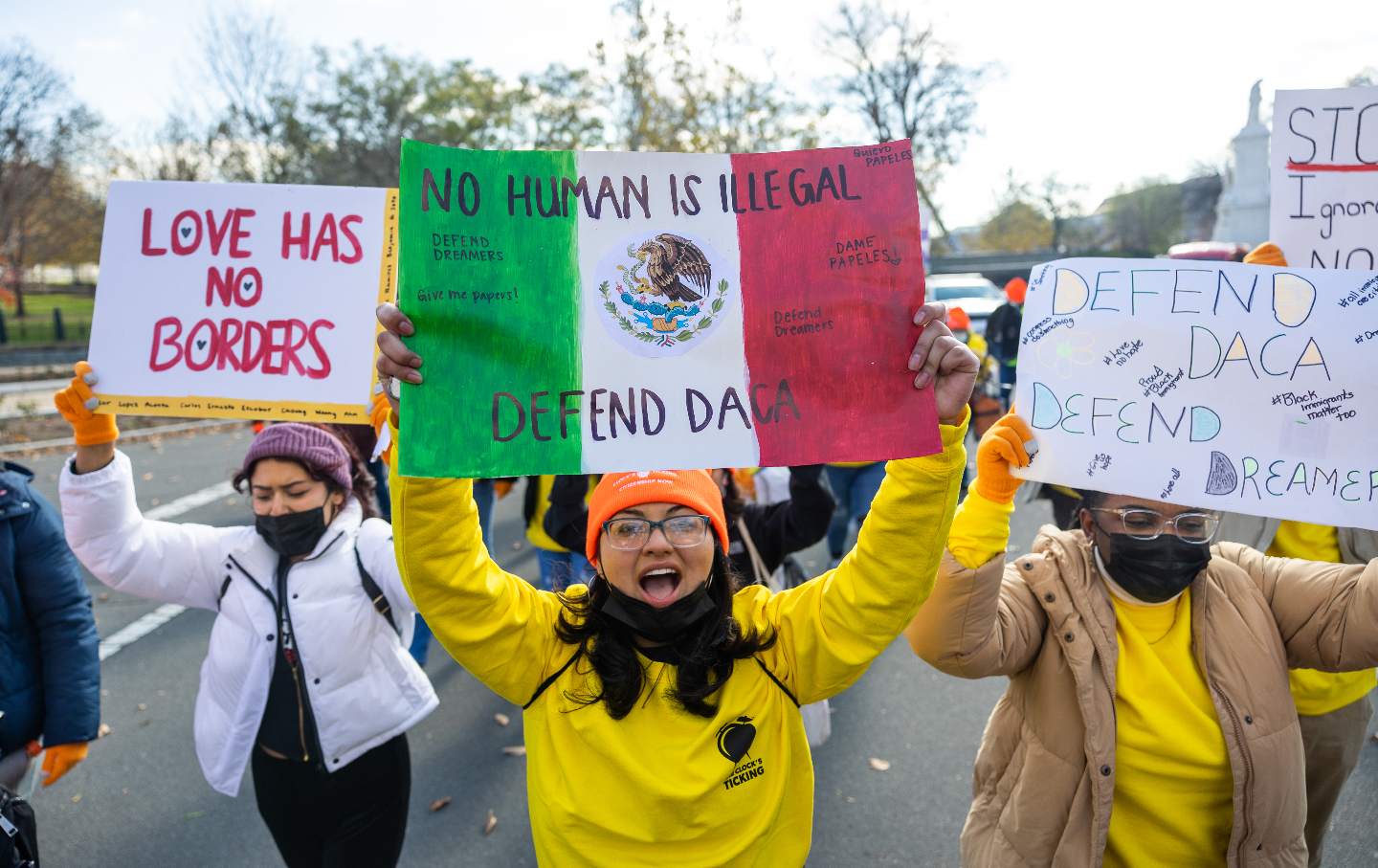
Pro-DACA protesters hold a march outside the US Capitol.
(Nathan Posner / Getty)At age 15, Luis came to the United States from Veracruz, Mexico. Today, he’s a 22-year-old senior at Rice University, studying math and planning to go to graduate school next fall.
His grandparents are US citizens, and his mom has applied for a green card. Since Luis was brought into the US as a minor, you might think he qualifies for Deferred Action for Childhood Arrivals (DACA), which shields young adults who arrived in the US as children from being deported, offering them work authorization along with temporary and renewable legal status. “I checked all the boxes, except for one,” said Luis, “which is that you have to have been here since 2007.”
Around 80 percent of the nearly 120,000 undocumented students who graduated high school in 2023 do not qualify for DACA, and even fewer undocumented high school graduates will qualify this spring. Yet nearly three-fourths of Americans are in favor of “granting permanent legal status to immigrants who came to the US illegally as children.” Despite its popularity, when Obama tried to update the program to include those who had been present in the US since 2010, it was challenged in court by Texas and 25 other states, arguing that it was an overstep of presidential authority. In 2016, the Supreme Court upheld this view, leading to the Obama administration rescinding the update.
For a current minor to be under 18 when they came into the United States, the earliest they could have arrived is 2005. According to the President’s Alliance on Higher Education and Immigration, this means a majority of undocumented students entering higher education are no longer eligible for DACA. “That number is going to continue to decline, and the population [of those eligible for DACA] is going to get smaller because they’re not updating [the policy],” said Dr. Felecia Russell, director of the Higher Education Portal at the President’s Alliance and former Dreamer.
Sam is a 20-year-old undocumented student who qualified for DACA but wasn’t able to apply before the Trump administration terminated the program in 2017. In 2020, the Supreme Court decided that cancellation was unconstitutional, but did not give a clear directive on the constitutionality of DACA itself. Currently, no new DACA applications can be processed, and only current DACA holders can apply for renewal.
Sam said that not being allowed to file was heartbreaking. “I remember being very upset and emotional. I was 14 and in high school, and I just thought, ‘My one chance of living a normal life, completely shot in front of me,’” she said. For her, being undocumented “feels like you can never truly relax. Things tomorrow could get worse.”
People like Sam are left without a Social Security number, making it harder to find work. In high school, she was able to get a job at a Mexican restaurant, but they had to pay her in cash. Most internships are also off the table. Evelyn, an undocumented student whose dream is to work at NASA, can’t even apply. “At the end of the day, you could have the most stellar degree, but if you have zero experience, it’s going to be really tough to find a job,” she said.
Sam was able to get an unpaid internship at a law firm. But because Texas, like most states, doesn’t allow undocumented individuals to apply for a driver’s license, she had to give it up. “I can’t ask my friends for a ride every single day. I can’t afford to take an Uber every single day, and the public transportation in Houston is not good, efficient, or reliable.”
“If you can’t work, you can’t contribute to your education. One way that a lot of students pay for their education is by having a job on campus or by doing work study,” said Russell. But undocumented students also face barriers to taking out loans and cannot apply for scholarships that require applicants to be US citizens or legal permanent residents. “We know that the biggest barrier to higher education for people in general is the cost. Now, here’s a group of folks who cannot access federal financial aid, along with states that don’t provide undocumented students with access to in-state tuition rates,” said Russell.
In 2021, undocumented students made up less than 2 percent of the population of students enrolled in postsecondary education programs, compared to around 6 percent in 2019. “The only university that was giving really good financial aid [to undocumented students] in Texas was Rice,” said Luis, who completed two years at a community college before transferring. Outside of Texas, the schools that offered substantial aid were private schools or Ivy Leagues. “My brother is also undocumented. He’s a freshman in high school right now,” said Luis. “I feel worried because what if he doesn’t get into these colleges? We have to be perfect students in order for us to get opportunities.”
The problem, as Russell puts it, is that “DACA itself was never a permanent fix.” The policy was a result of the Obama administration’s taking unilateral action because Congress did not pass the Development, Relief, and Education for Alien Minors (DREAM) Act, which would have granted similar protections to undocumented individuals brought into the US as minors. President Biden has voiced support for DACA and moved to expand federal health insurance programs to current DACA holders, but has not moved towards an update of the policy.
Now, according to Russell, we need to turn back to Congress. The American Dream and Promise Act, which would expand DACA protections for millions, was introduced again last June. The bill previously passed the House in 2019 and 2021 but has yet to pass the Senate.
But an expansion won’t apply to any undocumented individual brought in as a child in perpetuity. “Under the American Dream and Promise Act, you have continuously lived in the US since January 1, 2021, and it would be great if we could get it into law,” Russell said. “No policy is going to be perfect. This one is not perfect, but it is good.”
Popular
“swipe left below to view more authors”Swipe →As a former undocumented student herself, Russell said she had no autonomy over her life. “I couldn’t drive, I couldn’t get a driver’s license, and I couldn’t get a job on campus, even though I needed one terribly,” she said. “Probably all the things that I’m doing, or the things I’ve accomplished, I would not have done without this policy.”
Sam, who came to the US at 3 years old, recently spoke to a lawyer about her situation. “They told me that my only true pathways to citizenship would be: Congress intervenes and passes something, I get married, or I return to my country of birth for at least 10 years and try to get in the so-called ‘right way,’” she said. “Hearing that—I always knew these things were true—but hearing that spoken out loud by a legal professional broke something in me.”
Disobey authoritarians, support The Nation
Over the past year you’ve read Nation writers like Elie Mystal, Kaveh Akbar, John Nichols, Joan Walsh, Bryce Covert, Dave Zirin, Jeet Heer, Michael T. Klare, Katha Pollitt, Amy Littlefield, Gregg Gonsalves, and Sasha Abramsky take on the Trump family’s corruption, set the record straight about Robert F. Kennedy Jr.’s catastrophic Make America Healthy Again movement, survey the fallout and human cost of the DOGE wrecking ball, anticipate the Supreme Court’s dangerous antidemocratic rulings, and amplify successful tactics of resistance on the streets and in Congress.
We publish these stories because when members of our communities are being abducted, household debt is climbing, and AI data centers are causing water and electricity shortages, we have a duty as journalists to do all we can to inform the public.
In 2026, our aim is to do more than ever before—but we need your support to make that happen.
Through December 31, a generous donor will match all donations up to $75,000. That means that your contribution will be doubled, dollar for dollar. If we hit the full match, we’ll be starting 2026 with $150,000 to invest in the stories that impact real people’s lives—the kinds of stories that billionaire-owned, corporate-backed outlets aren’t covering.
With your support, our team will publish major stories that the president and his allies won’t want you to read. We’ll cover the emerging military-tech industrial complex and matters of war, peace, and surveillance, as well as the affordability crisis, hunger, housing, healthcare, the environment, attacks on reproductive rights, and much more. At the same time, we’ll imagine alternatives to Trumpian rule and uplift efforts to create a better world, here and now.
While your gift has twice the impact, I’m asking you to support The Nation with a donation today. You’ll empower the journalists, editors, and fact-checkers best equipped to hold this authoritarian administration to account.
I hope you won’t miss this moment—donate to The Nation today.
Onward,
Katrina vanden Heuvel
Editor and publisher, The Nation
More from The Nation
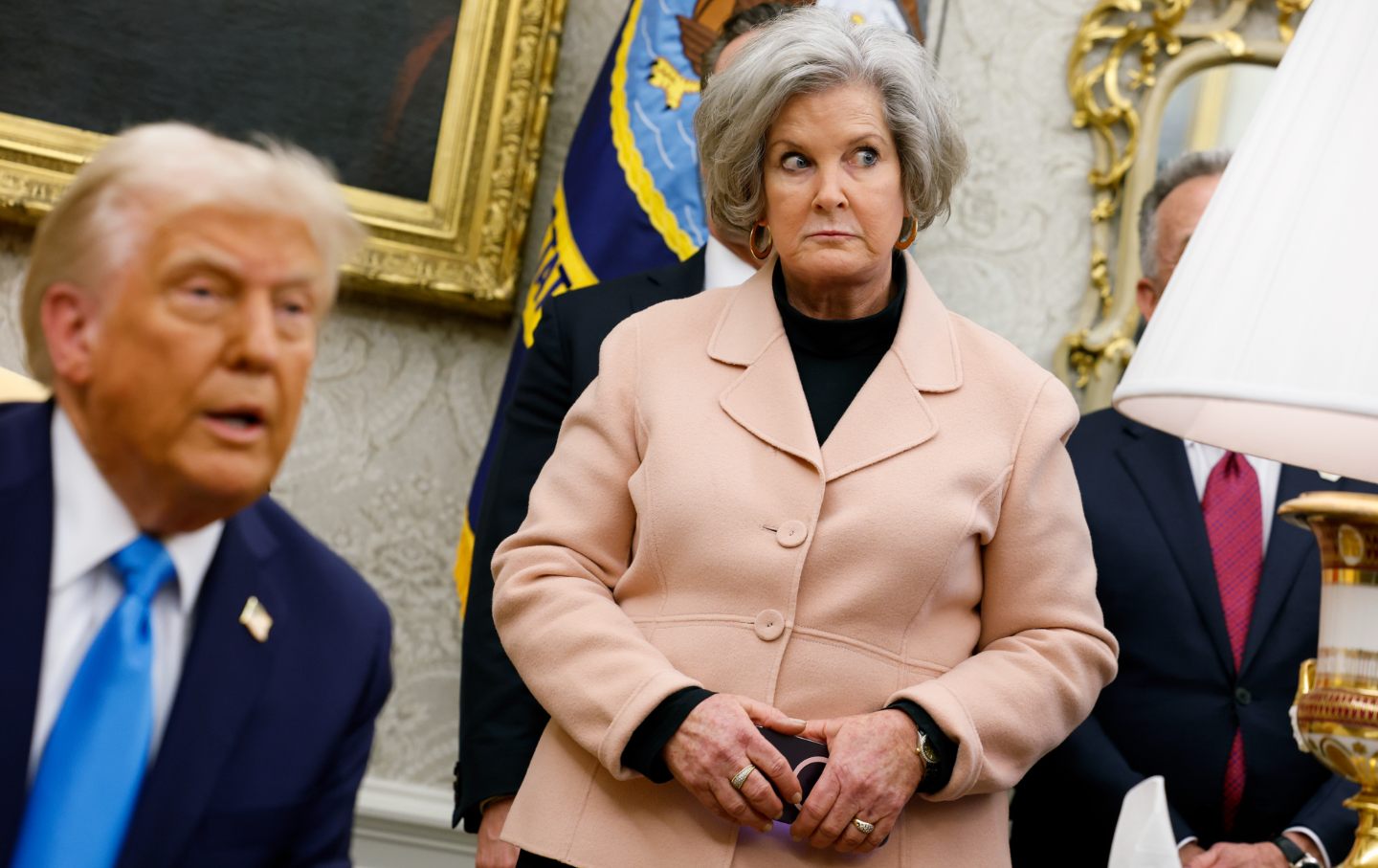
The Shocking Confessions of Susie Wiles The Shocking Confessions of Susie Wiles
Trump’s chief of staff admits he’s lying about Venezuela—and a lot of other things.

The King of Deportations The King of Deportations
ICE’s illegal tactics and extreme force put immigrants in danger.
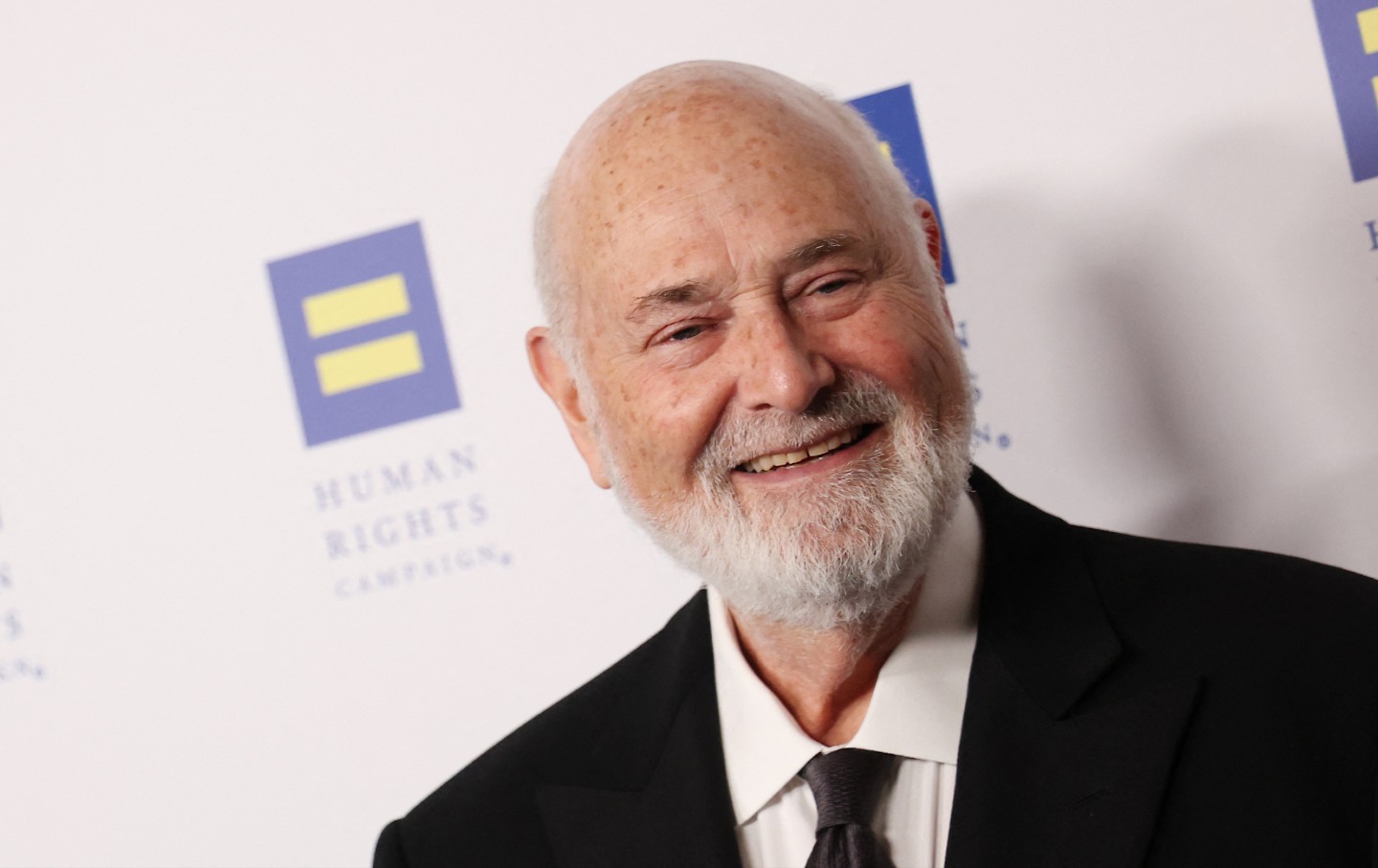
How Rob Reiner Tipped the Balance Against Donald Trump How Rob Reiner Tipped the Balance Against Donald Trump
Trump’s crude disdain for the slain filmmaker was undoubtedly rooted in the fact that Reiner so ably used his talents to help dethrone him in 2020.
The Economy Is Flatlining—and So Is Trump The Economy Is Flatlining—and So Is Trump
The president’s usual tricks are no match for a weakening jobs market and persistent inflation.

Trump’s Vile Rob Reiner Comments Show How Much He Has Debased His Office Trump’s Vile Rob Reiner Comments Show How Much He Has Debased His Office
Every day, Trump is saying and doing things that would get most elementary school children suspended.