The New “Lavender Scare” in America’s Schools
Modern anti-gay legislation mirrors the mass hysteria of the Lavender Scare, when thousands of gay people were fired or forced to resign from their jobs.
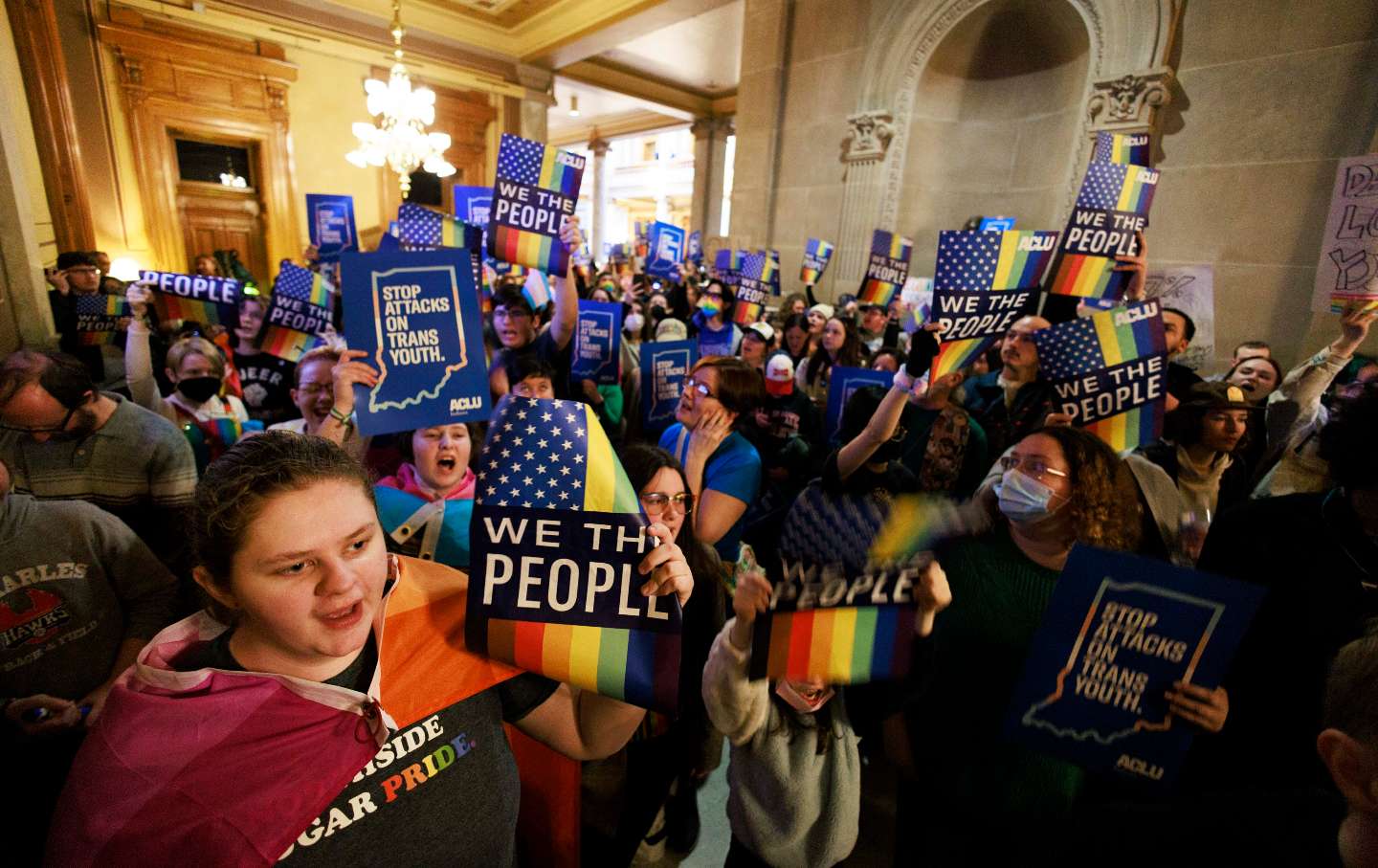
Protesters outside the Indiana House of Representatives during the education committee’s hearing on HB 1608, also known as the “Don’t Say Gay” bill, in Indianapolis.
(Jeremy Hogan / Getty)For this series, five young journalists responded to our calls for articles detailing critical issues that impacted young people this year. The group of high school and young college writers pitched and reported on urgent topics like lack of access to mental health support for homeschooled students, student voices being silenced in schools, book bans, attacks on LGBTQ+ students, and school shootings. Of course, these are just a fraction of the issues that shape the lives, conditions, and experiences of young people—not to mention how these issues intersect with each other. We received more important pitches than we could publish this round. As we close out the year, this package centers the work of young journalists reporting on what affected their schools, communities, and peers in 2023.
—Rainesford Stauffer
It has been 70 years since the Lavender Scare, when thousands of gay people in the US government were fired or forced to resign from their jobs. Now, this same discrimination is driving modern-day legislation. “We’re talking about the systematic, intentional targeting of queer people,” says Jay Jones, the first openly transgender vice president of the Howard University Student Association.
In May of 2023, the Human Rights Campaign tallied over 520 anti-LGBTQ+ bills that have been introduced in state legislatures, along with 70 laws ranging from bans on gender affirming care for transgender youth to the censorship of school curriculum.
A staggering two-thirds of LGBTQ+ youth report that potential state or local laws banning the discussion of queer topics in education has made their mental health “a lot” worse. Acts passed by governments in red states, such as Florida’s controversial HB 1557, commonly referred to as the “Don’t Say Gay or Trans” bill, contest queer inclusion, mirroring the mass hysteria of the Lavender Scare and contributing to the stigmatization of queer youth and educators nationally.
“I think it’s scary. I’m not even gonna lie,” says Jones of legislation methodically targeting LGBTQ+ youth. She explains that she sees Florida’s legislation as a “test,” gauging how far anti-LGBTQ+ legislation can expand as other states adopt similar laws. In June, Jones’s home state of Texas signed into law Senate Bill 17, making it the second state to ban diversity, equity, and inclusion offices at public universities. According to the Human Rights Watch, Texas is also responsible for more than 20 percent of anti-LGBTQ+ bills introduced nationally.
“It’s a scary thing, not only for LGBTQ youth, but also for folks who aren’t knowledgeable and can easily fall into this indoctrination,” says Eshe Ukweli, a transgender digital creator and journalist.
Although southern states have gained the most scrutiny for anti-LGBTQ+ legislation, “it’s occurring everywhere,” according to Matthew Juarez, a queer student activist and executive director of StudentsActNow.
Introduced in early 2023, Pennsylvania’s HB 216 calls for gendered sports teams to be expressly designated by biological sex, ostracizing transgender athletes and students. On March 8, the bill was referred to the Committee on Education, leaving transgender youth fearful for their future in their respective sports.
In Indiana, a state with a Republican stronghold, House Bill 1447 banned “harmful materials” from school libraries, which were considered damaging and unsuitable for minors. Some reports say educators or librarians who share materials deemed “obscene” could face criminal prosecution. Indiana teachers and LGBTQ advocates have mobilized in opposition to the bill, arguing that it sets a dangerous precedent for the future of education and public opinion surrounding LGBTQ literature. Similar to Florida’s “Don’t Say Gay or Trans” bill, the legislation is ambiguous in nature, opening the grounds for personal interpretation. The American Civil Liberties Union of Indiana stated that the amendment’s “vagueness” as “almost certainly meant to ban books about LGBTQ topics and sex education.”
“I think that the best way that we can improve protections is by actually discussing LGBTQ topics in school,” says Juarez. He notes that limiting discussions surrounding LGBTQ+ issues and history in schools furthers conservative efforts to “limit what’s been in schools, from CRT [to] the founding of the United States, erasing all these indigenous cultures and all of that history.” In Juarez’s view, everything revolves around education.
Political attacks on queer youth are a major contributing factor for deteriorating mental health. According to a nationwide survey conducted by the Trevor Project, nearly 1 in 3 LGBTQ young people described their mental health as “poor” most of the time or always due to anti-LGBTQ legislation.
Ukweli describes nationwide anti-LGBTQ+ legislation as “scary,” adding that she wishes she’d learned about queer figures such as Marsha P. Johnson in school”. Yet acknowledgment is futile without establishing meaningful changes. “LGBTQ folks just want to live. LGBTQ youth just want to live. And they not only want to live, they want to thrive.”
The ACLU details the anti-LBGTQ bills that have been enacted across the United States, ranging from limitations on healthcare to laws “restrict[ing] how and when LGBTQ people can be themselves.”
“These policies [are] not eliminating the number of people who are LGBT; [they are] just eliminating the people who are willing to be who they are,” said Juarez.
As the 2024 elections draw near and Republican lawmakers across the country move to enact more anti-LGBTQ+ legislation, young people are pushing back. “The time is now, and the time is not to be silent, nor is it to be quiet,” says Jay Jones. “It’s to be loud.”
Disobey authoritarians, support The Nation
Over the past year you’ve read Nation writers like Elie Mystal, Kaveh Akbar, John Nichols, Joan Walsh, Bryce Covert, Dave Zirin, Jeet Heer, Michael T. Klare, Katha Pollitt, Amy Littlefield, Gregg Gonsalves, and Sasha Abramsky take on the Trump family’s corruption, set the record straight about Robert F. Kennedy Jr.’s catastrophic Make America Healthy Again movement, survey the fallout and human cost of the DOGE wrecking ball, anticipate the Supreme Court’s dangerous antidemocratic rulings, and amplify successful tactics of resistance on the streets and in Congress.
We publish these stories because when members of our communities are being abducted, household debt is climbing, and AI data centers are causing water and electricity shortages, we have a duty as journalists to do all we can to inform the public.
In 2026, our aim is to do more than ever before—but we need your support to make that happen.
Through December 31, a generous donor will match all donations up to $75,000. That means that your contribution will be doubled, dollar for dollar. If we hit the full match, we’ll be starting 2026 with $150,000 to invest in the stories that impact real people’s lives—the kinds of stories that billionaire-owned, corporate-backed outlets aren’t covering.
With your support, our team will publish major stories that the president and his allies won’t want you to read. We’ll cover the emerging military-tech industrial complex and matters of war, peace, and surveillance, as well as the affordability crisis, hunger, housing, healthcare, the environment, attacks on reproductive rights, and much more. At the same time, we’ll imagine alternatives to Trumpian rule and uplift efforts to create a better world, here and now.
While your gift has twice the impact, I’m asking you to support The Nation with a donation today. You’ll empower the journalists, editors, and fact-checkers best equipped to hold this authoritarian administration to account.
I hope you won’t miss this moment—donate to The Nation today.
Onward,
Katrina vanden Heuvel
Editor and publisher, The Nation
More from The Nation
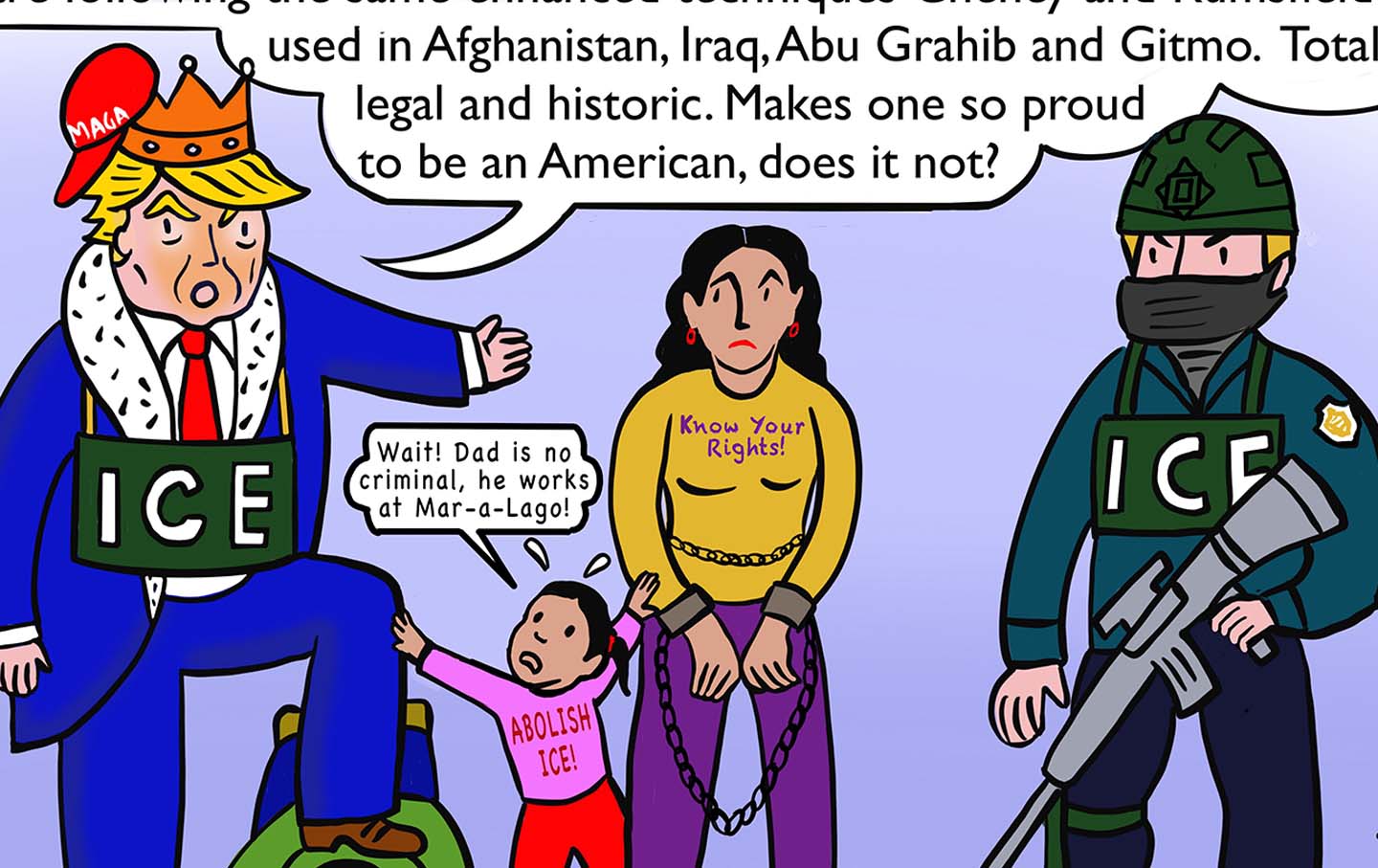
The King of Deportations The King of Deportations
ICE’s illegal tactics and extreme force put immigrants in danger.
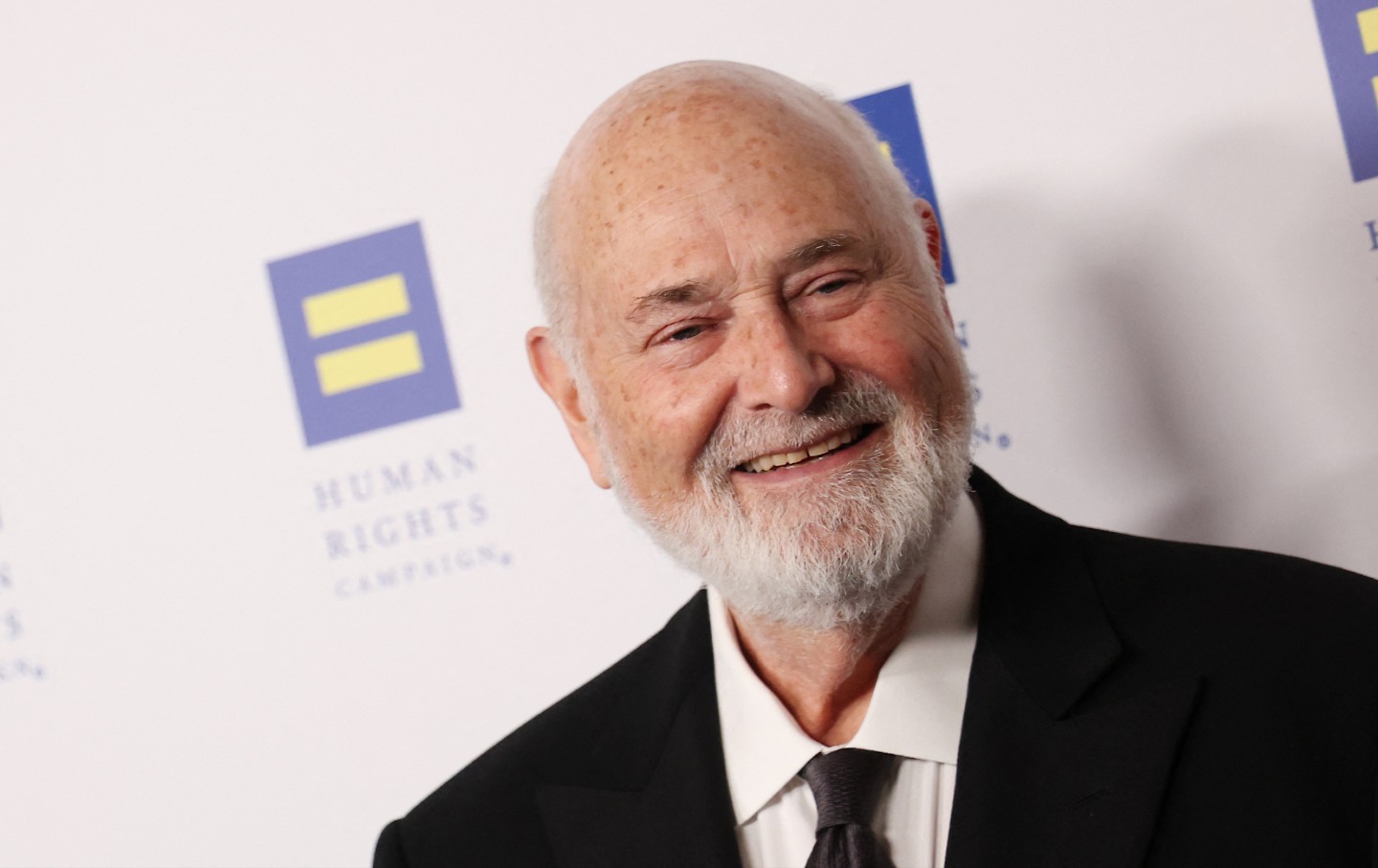
How Rob Reiner Tipped the Balance Against Donald Trump How Rob Reiner Tipped the Balance Against Donald Trump
Trump’s crude disdain for the slain filmmaker was undoubtedly rooted in the fact that Reiner so ably used his talents to help dethrone him in 2020.

The Economy Is Flatlining—and So Is Trump The Economy Is Flatlining—and So Is Trump
The president’s usual tricks are no match for a weakening jobs market and persistent inflation.

Trump’s Vile Rob Reiner Comments Show How Much He Has Debased His Office Trump’s Vile Rob Reiner Comments Show How Much He Has Debased His Office
Every day, Trump is saying and doing things that would get most elementary school children suspended.
From Aftyn to Zohran: A Road Map for Democratic Victory From Aftyn to Zohran: A Road Map for Democratic Victory
This year, progressive young Democrats sketched a path to meaningful wins in 2026. Is the party paying attention?

