
Walz Defended Reality—Even as Vance Took Full Advantage of CBS’s Failure to Fact-Check
In a debate where JD Vance lied and lied and lied, Tim Walz did double duty. In addition to making his own case, Walz had to defend the truth.
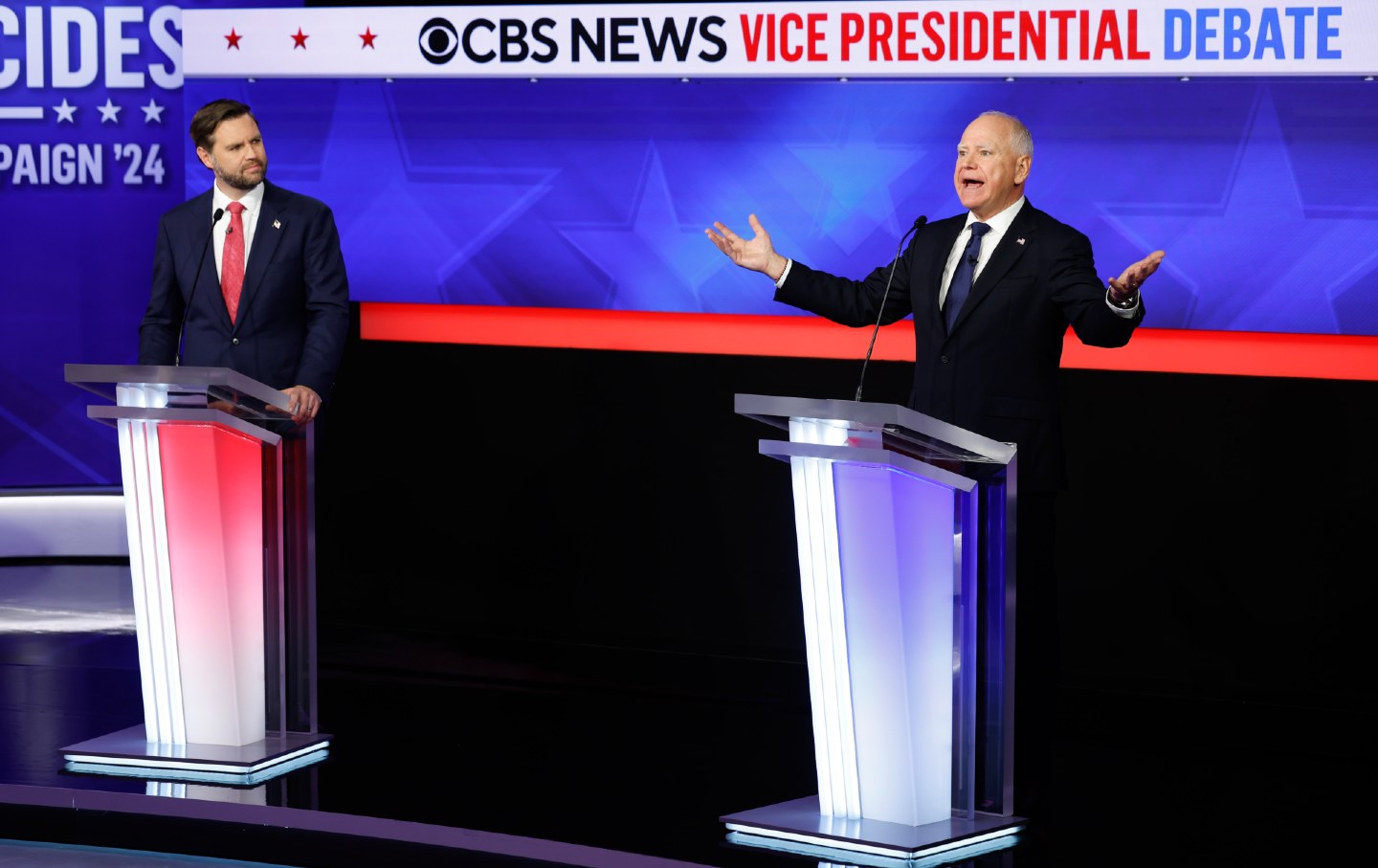
Republican vice presidential candidate Senator JD Vance and Democratic vice presidential candidate Minnesota Governor Tim Walz participate in a debate at the CBS Broadcast Center on October 1, 2024, in New York City.
(Chip Somodevilla / Getty Images)
JD Vance began his assault against reality with his response to the first question in what will probably be the only vice-presidential debate of the 2024 campaign. When asked whether he would support a preemptive Israeli strike on Iran, the senator from Ohio blamed the Democratic administration of Joe Biden and Kamala Harris for the violence in the Middle East and the rest of the world. Then, he announced that, during his running mate’s one term as president, “Donald Trump actually delivered stability in the world.” Trump, Vance claimed, ”consistently made the world more secure.”
That was a jaw-dropping pronouncement about a scandal-plagued former president who cozied up to dictators, cheered on the spread of right-wing extremism across Europe, and supported vile attacks on refugees at home and abroad.
It was a laughable assertion that Democratic vice-presidential nominee Tim Walz correctly identified as “revisionist history.”
But why didn’t the moderators immediately challenge Vance and focus the debate on realistic assessments of the issues? That would not have been a radical intervention; that would have been a service to the voters, like the services performed by past moderators in previous presidential and vice-presidential debates.
The issue was that prior to Tuesday night’s debate, the moderators—CBS Evening News anchor Norah O’Donnell and Face the Nation host Margaret Brennan—made a commitment to allow Vance to lie. CBS announced that the responsibility for correcting falsehoods would fall on the candidates, though it promised the moderators would “facilitate those opportunities” to set things straight during rebuttals. O’Donnell and Brennan did try to frame the rebuttals in ways that nudged the candidates closer to the truth. But they gave Vance—a notorious fabricator, who has acknowledged making up stories about cats and dogs being served up for dinner in Springfield, Ohio—a wide lane for promoting false premises. Too wide.
Why? While CBS promised that fact-checking would occur on its live blog and social media, the moderators adopted a cautious approach in obvious deference to Republicans, who objected to ABC moderators David Muir and Linsey Davis’s correcting blatant lies by former president Donald Trump in his September 10 debate with Vice President Kamala Harris. After Trump clearly lost the debate to Harris, the former president tried to blame the ABC moderators for his failure, claiming, “We had a deal with ABC that there will be no corrections of any kind, and they violated the deal. Why? Because they’re bad people, and they’re fake news.” So furious was the Republican nominee that, within days of the debate, he was ranting, “They should fire everybody at ABC Fake News, whose two lightweight ‘anchors’ have brought disgrace onto the company!”
Popular
“swipe left below to view more authors”Swipe →CBS could have stood up for the premise that journalists who moderate debates have a responsibility to the voters to call out absurd statements in real time. Instead, the network agreed to have the moderators pull their punches. That decision favored Vance, because, as Press Watch editor Dan Froomkin explained, “debates without live fact-checking are a gift to the serial liar.”
Once the debate began, Vance took full advantage of the opening CBS had given him. Author Don Winslow observed midway through the evening that “JD Vance is up there lying and lying and lying again and again and again and it’s going 95 percent unchecked. This was the road to hell in 2016.”
With the moderators stepping to the sidelines at critical junctures, Walz was at a disadvantage. While Vance lied with impunity, the Minnesotan was racing to assert the truth. New to the national debate stage, Walz stumbled a few times early in the night. But the Democrat gained traction when he challenged Vance’s lies about his previous support for a national ban on abortion and his refusal to acknowledge that Trump lost the 2020 election.
Overall, Walz proved up to the task of fact-checking Vance. He responded deftly to that claim from Vance that Trump had “delivered stability in the world” by saying, ”Look, our allies understand that Donald Trump is fickle. He will go to whoever has the most flattery or where it makes sense to him.” Walz had already highlighted the damage done to America’s credibility “when our allies see Donald Trump turn towards Vladimir Putin, turn towards North Korea, when we start to see that type of fickleness about holding the coalitions together.” And he told viewers, “It’s those that were closest to Donald Trump that understand how dangerous he is when the world is this dangerous. His chief of staff John Kelly said that he was the most flawed human being he ever met, and both of his secretaries of defense and his national security advisers said he should be nowhere near the White House.”
Walz delivered the facts, pointing out that when Trump was in office he could have worked with “a coalition of nations that had boxed Iran’s nuclear program.” Instead, Walz explained, “Donald Trump pulled that program and put nothing else in its place. So Iran is closer to a nuclear weapon they were before because of Donald Trump’s fickle leadership.”
Walz has a well-deserved reputation for being “Minnesota nice.” But, as anyone who has ever been to Minnesota knows, the niceness has limits. After all, it was Walz who first suggested that Vance was “creepy” and “weird as hell.”
Vance has confirmed that assessment with a campaign that NPR argues has “been overshadowed by self-made controversy”—not least his false claim that Haitian immigrants were stealing the pets of their neighbors in Springfield. In the debate, the Republican tried his best to appear reasonable, and post-debate analyses gave him some credit for that.
But when that issue of the lies about Springfield came up in the debate, the candidates clashed. Walz delivered a stinging critique of the lies Trump and Vance have told about Haitian immigrants who are legally in Springfield and who are credited by honest Republicans, such as Ohio Governor Mike DeWine, with having revitalized the community. The Democrat rightly accused Vance of seeking to “dehumanize and villainize other human beings.”
Vance responded by spreading more misinformation, claiming that he stirred up all the controversy regarding Springfield because he was worried about “the American citizens who have had their lives destroyed by Kamala Harris’s open border.” When Walz pushed back and tried to bring clarity to the debate, CBS muted the microphones, as the moderators said they wanted to move on to other issues.
The debate covered lots of additional territory—with exchanges highlighting Vance’s extreme stances on reproductive rights, healthcare, childcare, and a host of other issues, including the threat Donald Trump poses to democracy—but it finally returned to immigration. When Vance repeated the wild claim that Harris is responsible for chaos at the nation’s southern border, the Democrat clarified that border crossings have, in recent months, been down compared to when Trump left office.
It was in that exchange that Walz stated the obvious: “I guess we agreed not to fact-check. I’ll fact-check it.”
More from The Nation
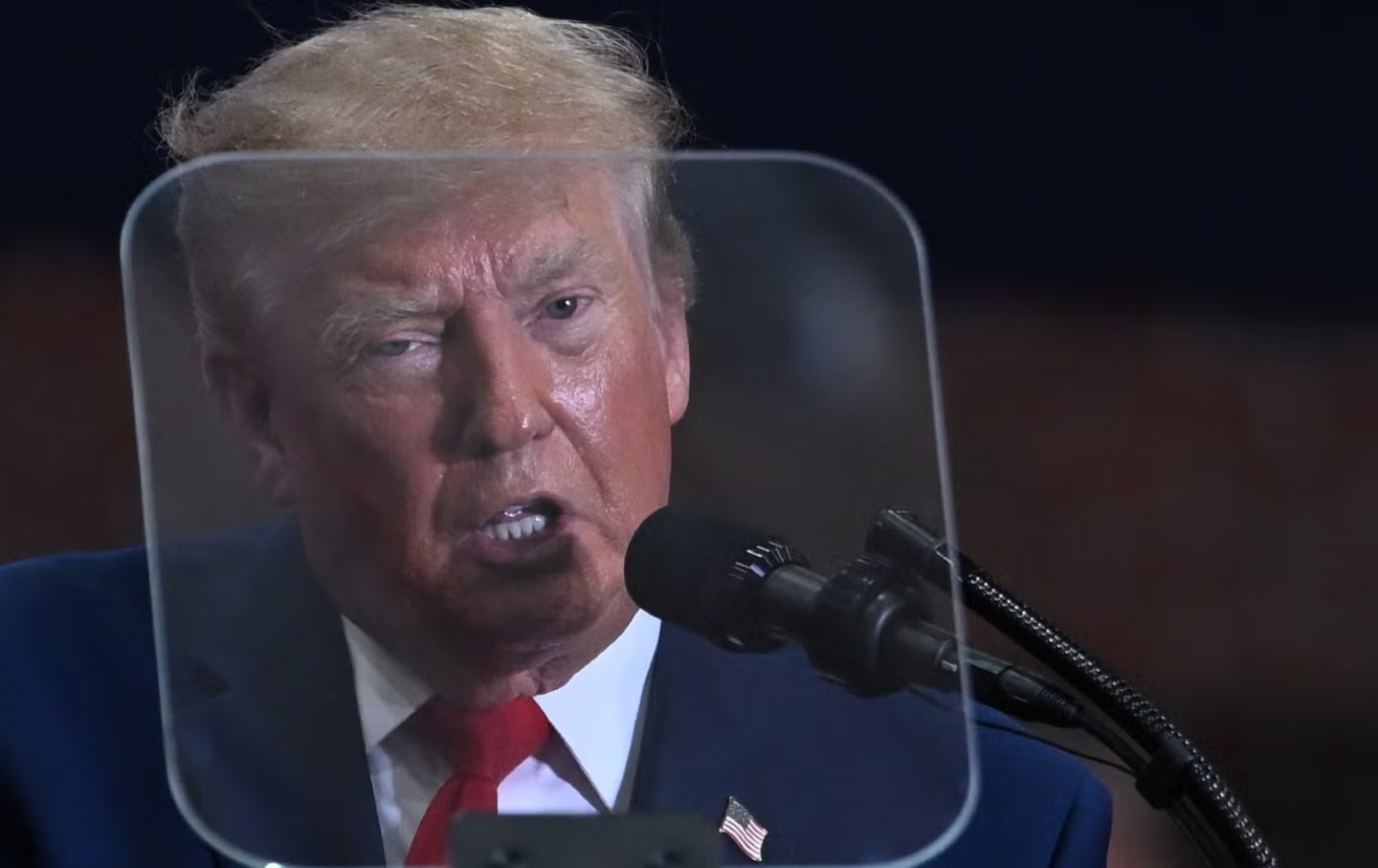
Donald Trump Is Bad at Politics Donald Trump Is Bad at Politics
The president's flailing midterms campaign underscores a truth we should be acknowledging more often: he kind of sucks at this.
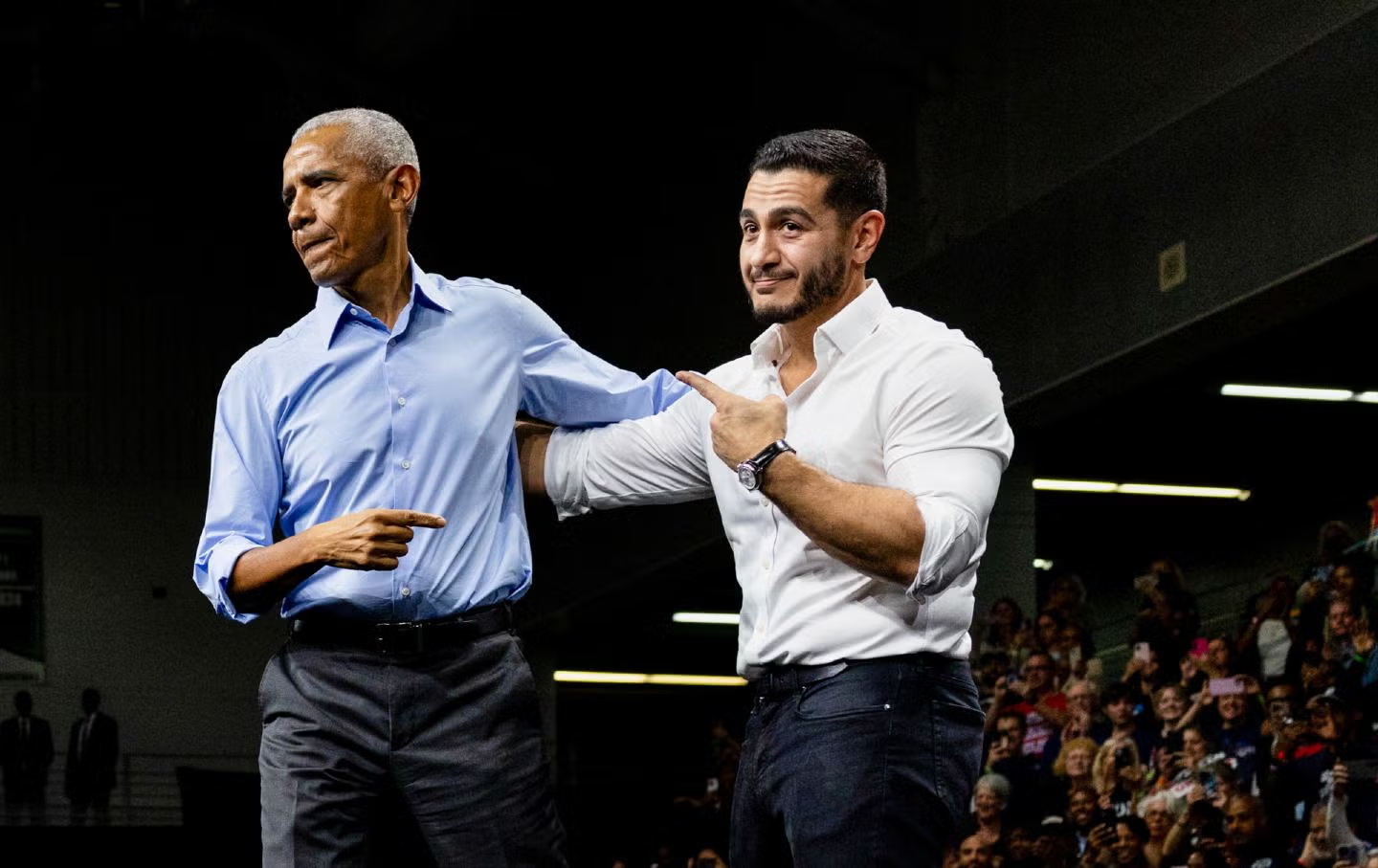
Obama Delivers a Scorching Rebuke to Trump—and Centrist Dems Obama Delivers a Scorching Rebuke to Trump—and Centrist Dems
Unlike other establishment figures, the former president isn’t scared to associate with the party’s left flank.
Elon Musk’s Mortal Threat to Democracy Elon Musk’s Mortal Threat to Democracy
The world’s richest man—saying he’s “wised up” to the fiction of self-government—is leveraging his wealth to sway elections, threaten Congress, and alter the global balance of pow...
Michigan Students Are All In for Abdul El-Sayed Michigan Students Are All In for Abdul El-Sayed
The progressive Senate candidate has won over students with his politics—and, in at least one case, his protein intake.
What Are Democrats Prepared to Do if Trump Rigs the Election? What Are Democrats Prepared to Do if Trump Rigs the Election?
In this week’s Elie v. U.S, our justice correspondent challenges Democrats' lack of a plan if Trump steals the midterms. Plus: the most racist, and honest, AI add ever.

