Trump’s FCC Chief Brendan Carr Is Acting More Like a Mob Enforcer Than a Federal Regulator
With a new GOP majority, the incoming FCC boss aims to punish criticism, reward obedience—and screw the public.
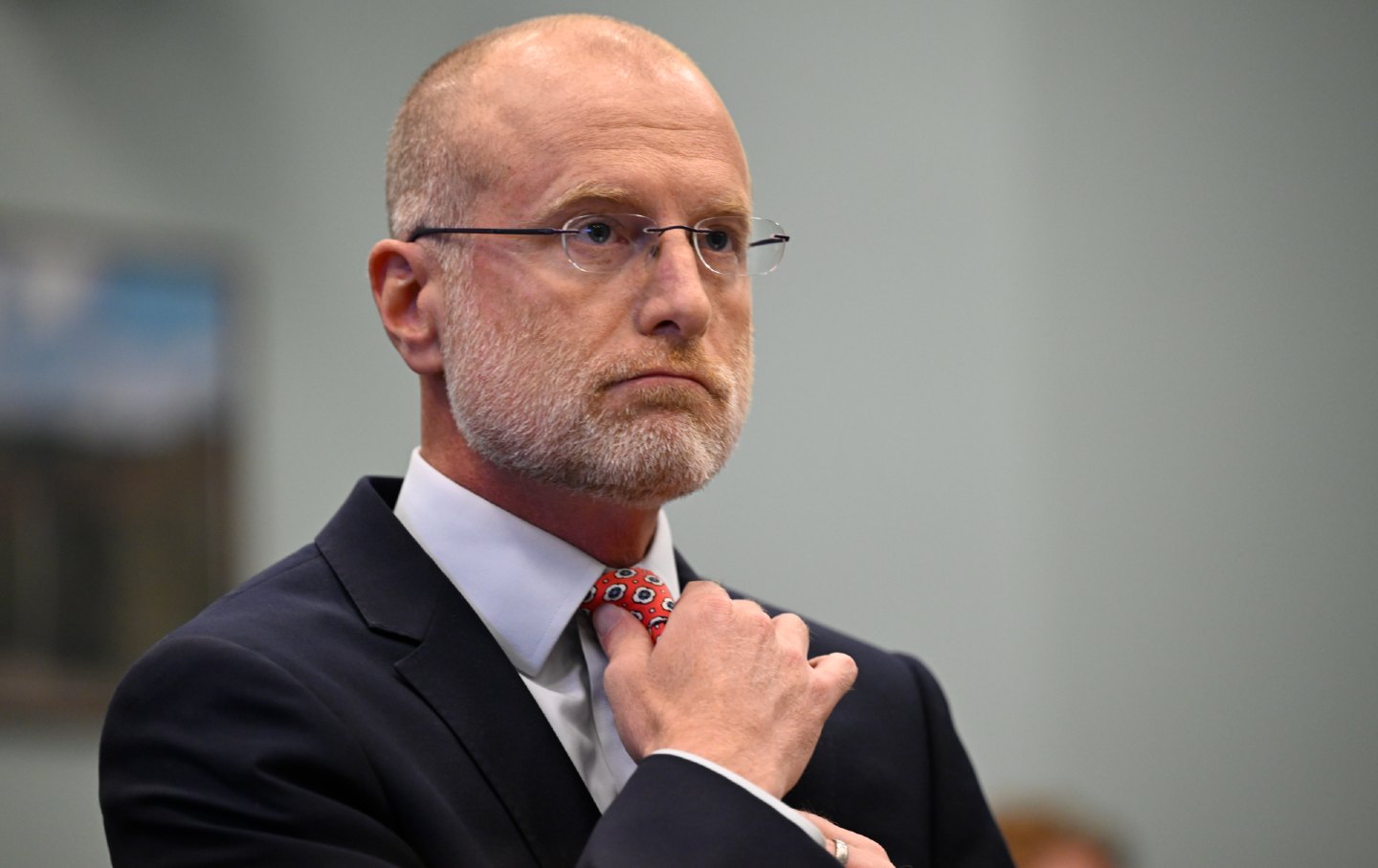
When the Federal Communications Commission meets on Thursday in Washington, DC, the agency will have undergone a drastic transformation in just five months. Once a wonky telecom regulator that mostly avoided politics, the FCC is now at the leading edge of President Donald Trump’s crusade to turn the federal government into an instrument of his own will.
Since January, Trump’s FCC chief Brendan Carr has weaponized the agency to intimidate news organizations and media companies by threatening their broadcast licenses and launching sham investigations into their business practices and diversity programs. Carr is also racing to roll back FCC regulations, eliminate consumer protections, and unleash further media consolidation. Last week, the Senate confirmed former GOP congressional staffer Olivia Trusty to the agency, giving Carr the majority he needs to forge full-steam ahead with his MAGA agenda.
Free speech advocates call Carr’s actions a blatant violation of the First Amendment and federal law, and an egregious and unprecedented abuse of the agency’s power. A bipartisan group of former FCC commissioners recently accused Carr of turning the agency into the “White House’s personal censor.” In addition to cracking down on disfavored speech, the agency has already begun offering favors like merger approvals to media companies in exchange for their loyalty to the president.
“This is the most corrupt FCC in the agency’s history,” Victor Pickard, a professor of media policy at the University of Pennsylvania, told The Nation. “What we’re seeing now is outright Mafia-style behavior where the FCC is trying to shake down corporations and entire industries to carry out Trump’s agenda.”
In a baldfaced attempt to harass PBS and NPR, long despised by conservatives, Carr earlier this year launched an investigation into the fundraising practices of the public broadcasters, whose local affiliates provide reliable news, cultural programming, and critical information during emergencies. That investigation, which free speech advocates call a sham pretext to defund public media, formed the basis for Congress’s recent vote to rescind $1.1 billion in already-approved funding for the Corporation for Public Broadcasting, which supports NPR and PBS stations across the country.
Carr has also threatened Comcast, which owns MSNBC, with the loss of its broadcast licenses because Trump was offended by the network’s coverage of Kilmar Abrego Garcia, the Maryland man the administration admits was mistakenly sent to a prison in El Salvador. And he’s launched an investigation into CBS after Trump repeatedly called for the cancellation of the network’s broadcast licenses and demanded that the FCC impose “maximum fines and punishment” over a disputed 60 Minutes broadcast.
“The idea that we would revoke a broadcast license based on editorial decisions is antithetical to the First Amendment,” Anna M. Gomez, the FCC’s lone Democratic commissioner, told The Nation. “We need the FCC to honor the Constitution, to comply with the Communications Act prohibition against censorship, and to stand up to these types of attempts to weaponize the agency in order to retaliate against broadcasters.”
It’s quite a turnabout for Carr, who in 2021 declared that “a newsroom’s decision about what stories to cover and how to frame them should be beyond the reach of any government official, not targeted by them.”
For nearly a century, the FCC operated mostly outside the realm of politics, regulating the nation’s airwaves, licensing TV and radio stations, and promoting competition and diversity across the media landscape. Although FCC commissioners are nominated by the president, Congress designed the agency to act independently from White House influence, and for the most part, FCC chiefs treated that independence as essential to ensuring free speech and diversity over the nation’s airwaves.
Trump and Carr’s complete disregard for that principle is evident in their campaign of coercion against 60 Minutes, which has infuriated the president with its critical coverage of his hostility to Ukraine and imperial ambitions for Greenland. In an apparent attempt to bolster Trump’s bogus $20 billion lawsuit over last summer’s disputed Kamala Harris segment, Carr launched a “news distortion” investigation into CBS and has slow-walked approval of its parent company Paramount’s merger with Skydance Media. Paramount, in turn, has reportedly begun influencing 60 Minutes news coverage, leading to the resignation of two senior executives.
Carr, who has recently taken to wearing a gold Trump-head lapel pin, is also doing his part as a loyal MAGA minion by pressuring media giants like Comcast and Disney to join Trump’s anti-diversity crusade and abandon their DEI hiring policies. He’s threatened to block merger proposals from companies that fail to do so. In an abject display of corporate capitulation, Verizon dutifully obliged in order to win approval of its $20 billion buyout of Frontier Communications.
The Trump FCC’s assault on the First Amendment has been so shocking that it has diverted attention from Carr’s extreme pro-business, anti-consumer agenda. In April, Carr launched what he called a “massive deregulatory initiative” that public interest group Free Press described as “a brazen attempt to roll back consumer safeguards on a widespread scale for industry’s convenience.” The pro-consumer FCC policies on the chopping block amount to a big-business wish list that includes eliminating broadband label and truth-in-billing requirements, rolling back restrictions on scam robocalls and texts, and watering down digital discrimination rules that encourage equitable broadband deployment.
Popular
“swipe left below to view more authors”Swipe →Earlier this month, Carr launched a proceeding aimed at eliminating FCC broadcast ownership caps that limit how many TV stations a single corporate entity can own. These rules, which are designed to foster diversity, competition, and local service across the national media landscape, have long been in the crosshairs of conglomerates like Nexstar, Sinclair and Gray Television, which together control 40 percent of all local news stations in the United States. Public interest groups warn that scrapping these rules would allow a handful of already-powerful corporate giants to further consolidate at a time when independent local news outlets are vanishing across the country.
Last week’s confirmation of Trusty violated a long-standing FCC practice in which the president simultaneously nominates candidates from both parties to fill vacancies at the agency. Given Trump’s illegal firing of two Democratic commissioners at the FTC, public interest advocates warn that Trump could fire Gomez, the remaining Democratic FCC commissioner, while elevating recently departed GOP commissioner Nathan Simington’s former chief of staff, 31-year-old MAGA ideologue Gavin Wax, who once declared that Trump’s reelection would be a “time for retribution.”
Wax would fit right in. If President Trump behaves like a Mafia boss, then Carr is acting like a MAGA enforcer, threatening Trump’s media enemies while doling out favors for corporate interests with little regard for the collateral damage done to the rule of law or the public interest. It’s a familiar Trump formula: weaponize the federal government to punish criticism, reward obedience—and screw the American public.
Disobey authoritarians, support The Nation
Over the past year you’ve read Nation writers like Elie Mystal, Kaveh Akbar, John Nichols, Joan Walsh, Bryce Covert, Dave Zirin, Jeet Heer, Michael T. Klare, Katha Pollitt, Amy Littlefield, Gregg Gonsalves, and Sasha Abramsky take on the Trump family’s corruption, set the record straight about Robert F. Kennedy Jr.’s catastrophic Make America Healthy Again movement, survey the fallout and human cost of the DOGE wrecking ball, anticipate the Supreme Court’s dangerous antidemocratic rulings, and amplify successful tactics of resistance on the streets and in Congress.
We publish these stories because when members of our communities are being abducted, household debt is climbing, and AI data centers are causing water and electricity shortages, we have a duty as journalists to do all we can to inform the public.
In 2026, our aim is to do more than ever before—but we need your support to make that happen.
Through December 31, a generous donor will match all donations up to $75,000. That means that your contribution will be doubled, dollar for dollar. If we hit the full match, we’ll be starting 2026 with $150,000 to invest in the stories that impact real people’s lives—the kinds of stories that billionaire-owned, corporate-backed outlets aren’t covering.
With your support, our team will publish major stories that the president and his allies won’t want you to read. We’ll cover the emerging military-tech industrial complex and matters of war, peace, and surveillance, as well as the affordability crisis, hunger, housing, healthcare, the environment, attacks on reproductive rights, and much more. At the same time, we’ll imagine alternatives to Trumpian rule and uplift efforts to create a better world, here and now.
While your gift has twice the impact, I’m asking you to support The Nation with a donation today. You’ll empower the journalists, editors, and fact-checkers best equipped to hold this authoritarian administration to account.
I hope you won’t miss this moment—donate to The Nation today.
Onward,
Katrina vanden Heuvel
Editor and publisher, The Nation
More from The Nation
The Longest Journey Is Over The Longest Journey Is Over
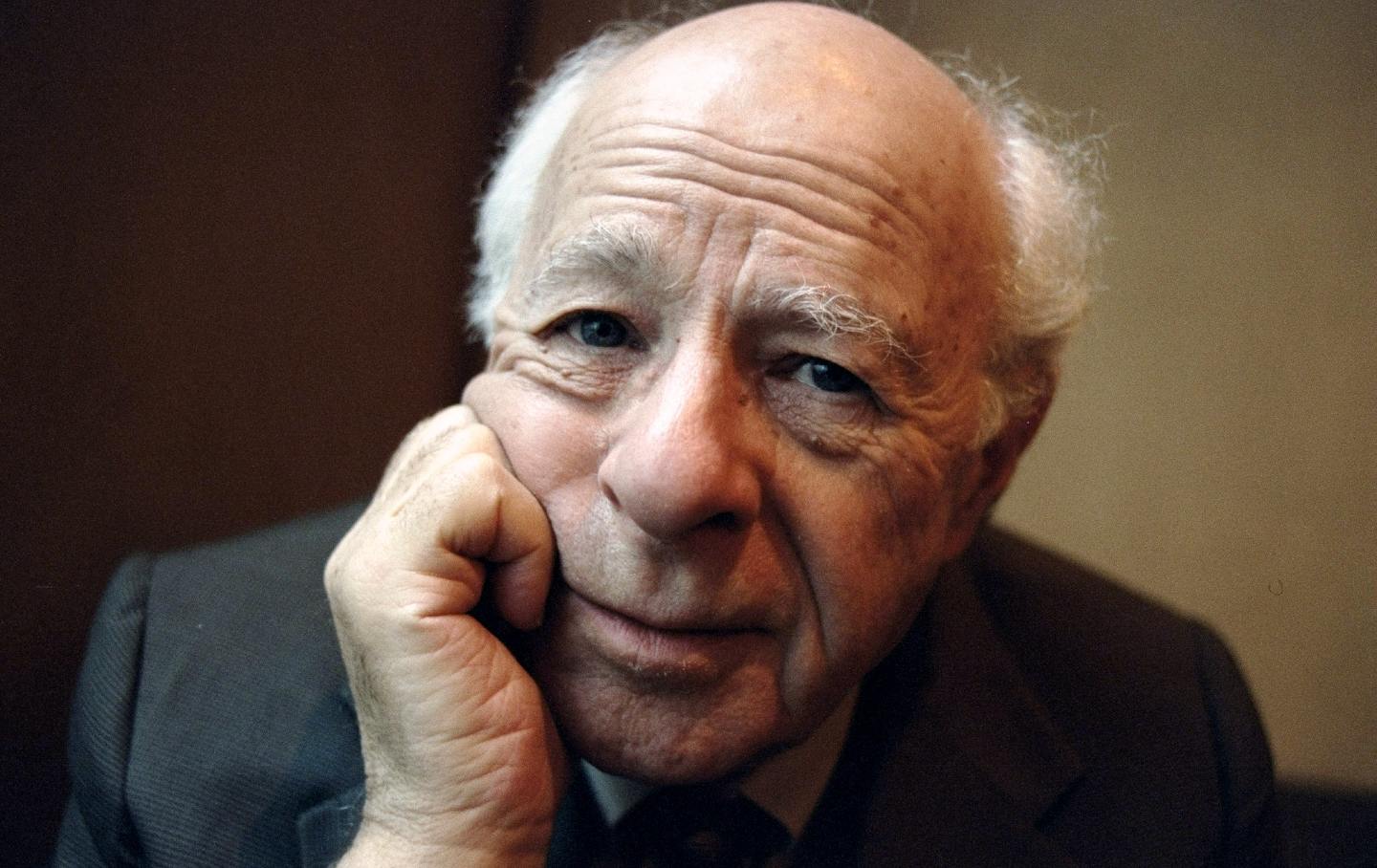
With the death of Norman Podhoretz at 95, the transition from New York’s intellectual golden age to the age of grievance and provocation is complete.
The Fight to Keep New Orleans From Becoming “Everywhere Else” The Fight to Keep New Orleans From Becoming “Everywhere Else”
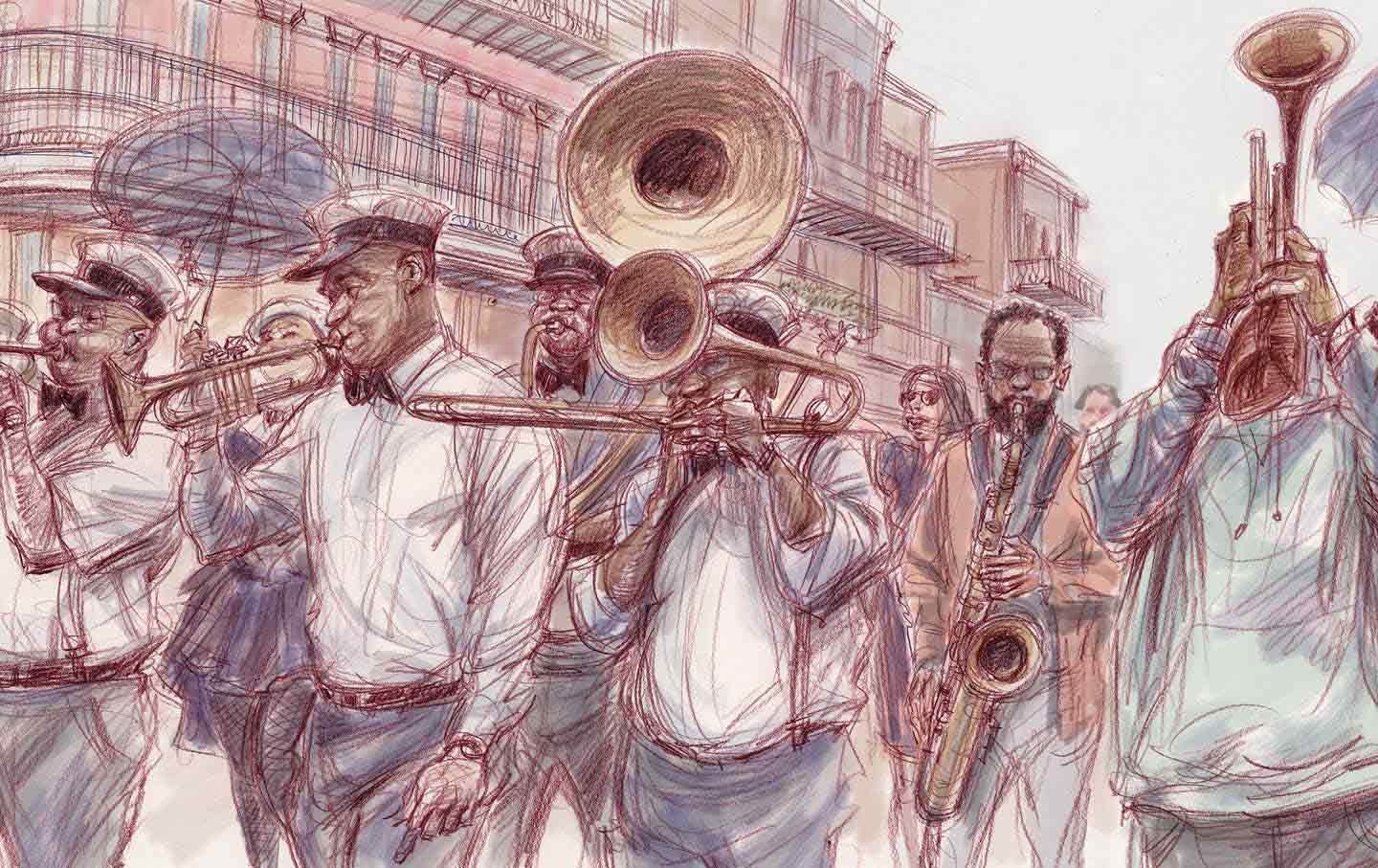
Twenty years after Katrina, the cultural workers who kept New Orleans alive are demanding not to be pushed aside.

Breaking the LAPD’s Choke Hold Breaking the LAPD’s Choke Hold
How the late-20th-century battles over race and policing in Los Angeles foreshadowed the Trump era.

Mayor of LA to America: “Beware!” Mayor of LA to America: “Beware!”
Trump has made Los Angeles a testing ground for military intervention on our streets. Mayor Karen Bass says her city has become an example for how to fight back.
Organized Labor at a Crossroads Organized Labor at a Crossroads
How can unions adapt to a new landscape of work?
The Epstein Survivors Are Demanding Accountability Now The Epstein Survivors Are Demanding Accountability Now
The passage of the Epstein Files Transparency Act is a big step—but its champions are keeping the pressure on.

