Parts of LA Are Not Going to Be Habitable
Insurers have figured out that risk is too high in parts of California. We need to re-conceive how people are housed, and fast.
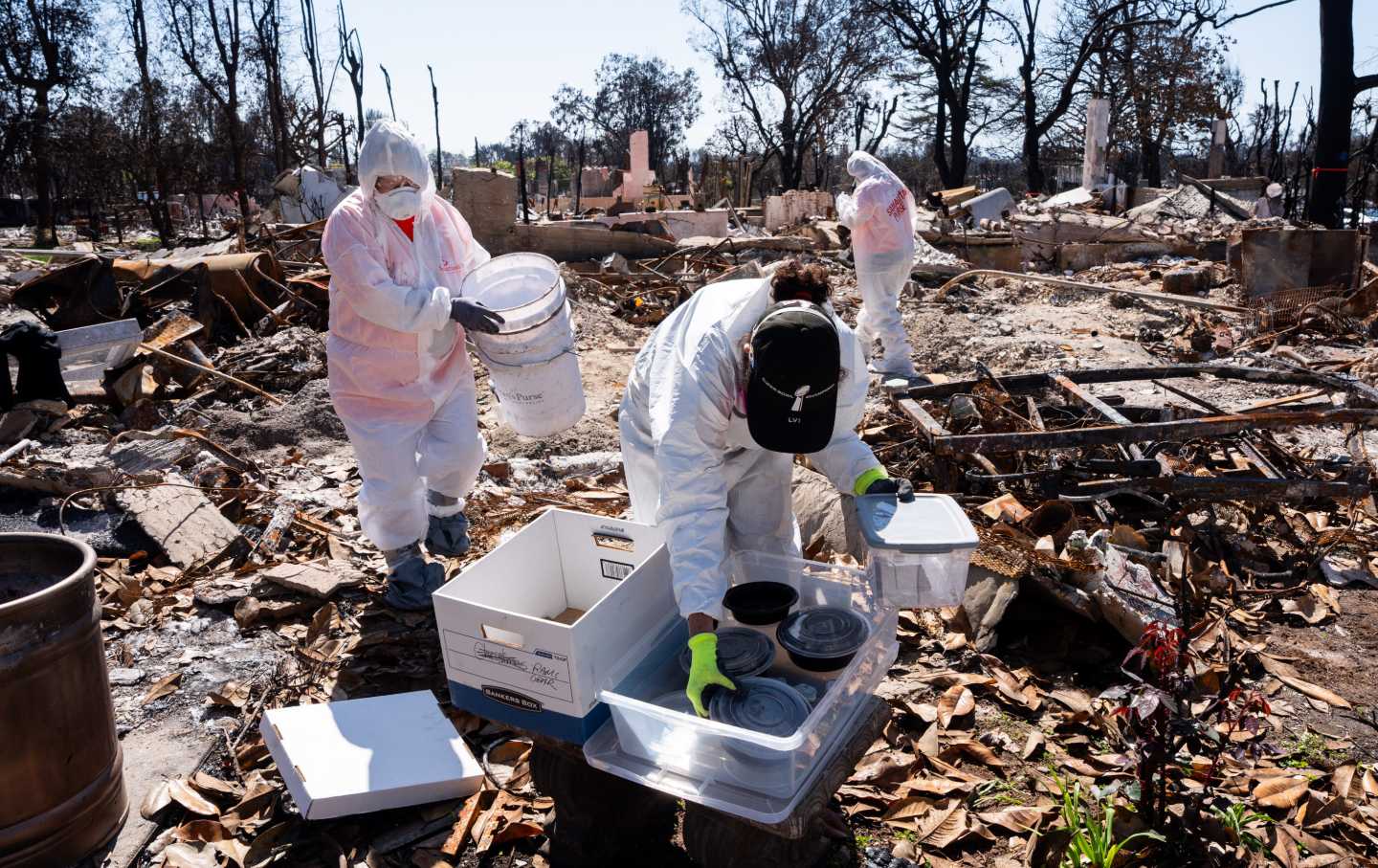
The numbers coming out of Los Angeles County are staggering: More than 16,000 buildings destroyed, some 2,000 structures damaged, and over 150,000 people ordered to evacuate. Whole swaths of Pacific Palisades and Altadena have been wiped off the map. Obliterated along with them: basic shelter; countless families’ primary source of wealth; and the incalculable loss of memories, sensations, routines, possessions, and a sense of normalcy.
Whenever something like this happens, the vultures of displacement and development start circling. Mike Davis put it succinctly during the Woolsey Fire of 2018 when he was asked what he expected to see after the flames died down: “Bigger mansions…. What tends to disappear is rental properties, trailer parks, people who don’t have adequate insurance.” In other words, the poor and working classes suffer first—and often permanently—while the rich can just keep building. Davis’s famous essay “The Case for Letting Malibu Burn” not only decried overdevelopment in a fire-prone ecosystem but reminded us that the overdevelopment was paid for by pilfering from funds intended for public use. He first made that case back in 1995, and he’s only been proven more right ever since.
As firefighters struggled to contain the Palisades and Eaton fires, landlords in the surrounding area jacked up rents. This form of price gouging is illegal under California law, but in the absence of enforcement, citizens took it upon themselves to report the violating landlords. The state and local authorities, meanwhile, including Governor Gavin Newsom and LA Mayor Karen Bass, were more concerned with denouncing the alleged looting taking place and dispatched the National Guard as well as the LAPD to menacingly surveil the immolation of people’s possessions.
California, along with Florida, now finds itself at the epicenter of an insurance crisis that has the potential to trigger a 2008-caliber financial collapse, as climate-driven disasters threaten to overwhelm insurers. Many insurers want to exit high-risk areas and are canceling policies en masse, including in Pacific Palisades. In California, FAIR—a state-created insurance program that offers coverage when traditional insurers won’t—has been picking up the slack where private companies pulled out. But as Bloomberg predicted almost a year ago, questions are arising as to how much Californians can or will pay in the face of a catastrophe. One thing remains as clear as it was when Davis articulated it 30 years ago: It is neither fiscally nor environmentally sustainable to keep building single-family homes in extremely risky areas.
Many of the houses affected in the recent fires were built in the mid-20th century, a time when growth seemed limitless and land was cheap. As that changed, the houses grew and grew in value and became repositories of wealth that could be passed down to the next generation—many members of which are now unable to afford new housing of similar quality. They also often can’t afford the outrageous insurance premiums, and what insurance they do have doesn’t always pay out in full what a house is worth on the market. So what was once a repository for wealth on the basis of its exchange value is reduced to what it actually is: a house on land that’s prone to fire.
The heart of this problem is not only climate change but the commodification of housing itself, which turned a simple concept (basic shelter) into a nest egg at best and a risky financial asset at worst. The 20th-century ideal of the house as the most stable asset—one whose value will surely go up, up, up—may seem unassailable if you browse Zillow. But California is only the start of the other shoe dropping. Almost 100 years ago, Herbert Hoover invoked homeownership as the pinnacle of prosperity, a patriotic American’s ultimate goal. But it’s no longer a plausible goal for most of us and won’t be again anytime soon. We have yet to face that fact; we are not socially or politically ready for the evaporation of so much wealth so quickly. One can easily see a slide further into revanchism: either in the form of “I already got mine, and the state should pay for it,” or by shifting the blame for these crises from the people and policies responsible for climate change to our neighbors. We are already seeing sensational social media outrage linking the fires to DEI programs, the homeless, and drug users.
It’s ugly, but insurance companies will continue to flee California. Insurance is profitable only when the risk is offset, and right now there is too much risk. Although the state will be pressured to keep the carriers there or insure these properties itself, this strategy can only work for so many more fires before the futility becomes obvious and the risk becomes systemic. The housing system is already under tremendous strain from a lack of supply and from landlord collusion. Rents rose over 20 percent during Joe Biden’s presidency, and mass displacement and homelessness are swallowing more and more families. As much as market-based solutions are touted, they do not work for the most vulnerable among us, because building supportive or truly affordable housing is not and never will be profitable. This is not to say that we shouldn’t build more market-rate housing—by all means, build, build, build; upzone, upzone, upzone. But state intervention, which has long been lavished on single-family houses and now on the insurance of a way of living that is no longer feasible, will be necessary to house people safely.
Housing is the most obvious sector in society in which the choice is between socialism or barbarism. The people who have lost everything in the LA fires deserve to be treated with dignity and support and instead are being surveilled, price-gouged, and left holding the bag. But we cannot go back to 20th-century ideas of planning, growth, and wealth accumulation. If we do not start organizing for a new way of building and living together—one that is environmentally resilient and insulated from market shocks; one that will ease the inevitable mass relocations as more and more disasters make places unlivable—we will truly reach the end of the line.