Photo Essay / March 11, 2026

Why Meatpacking Workers, Some Facing Deportation, Voted to Strike

The workers at the JBS plant in Greeley, Colorado, voted overwhelmingly for a strike last month.
Mary Anne Andrei
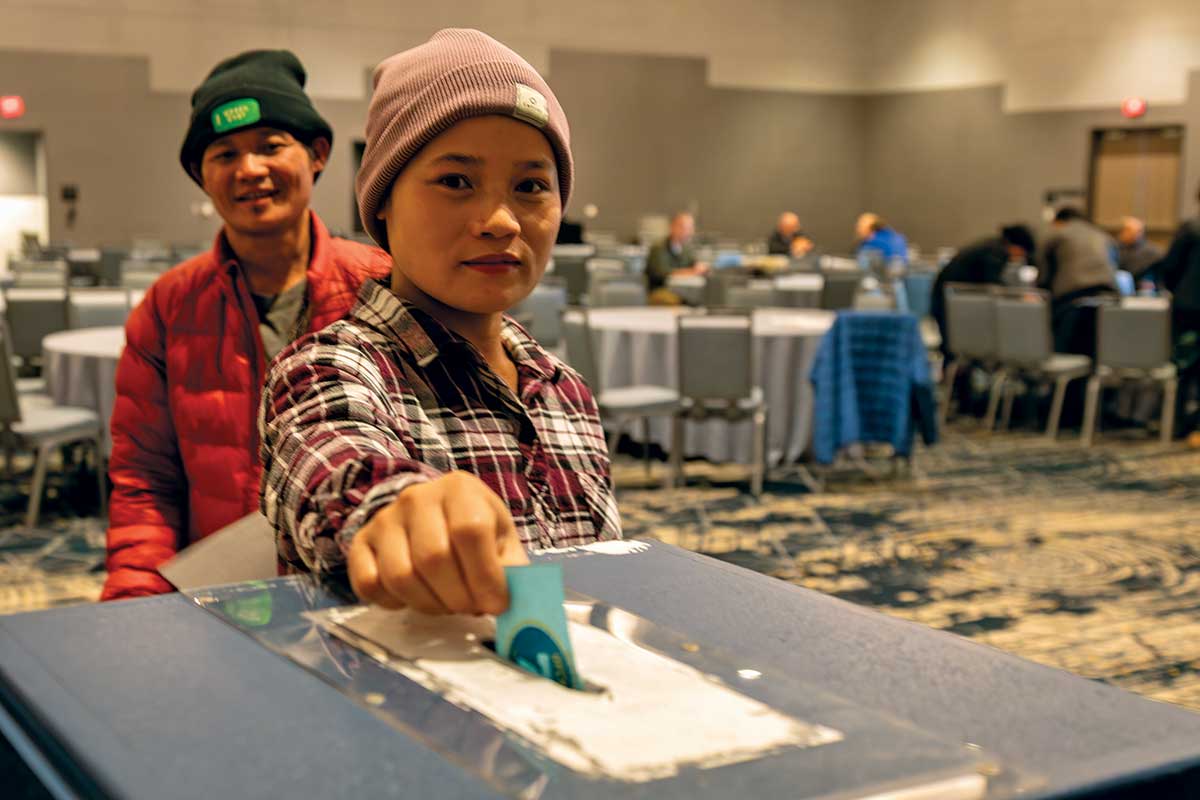
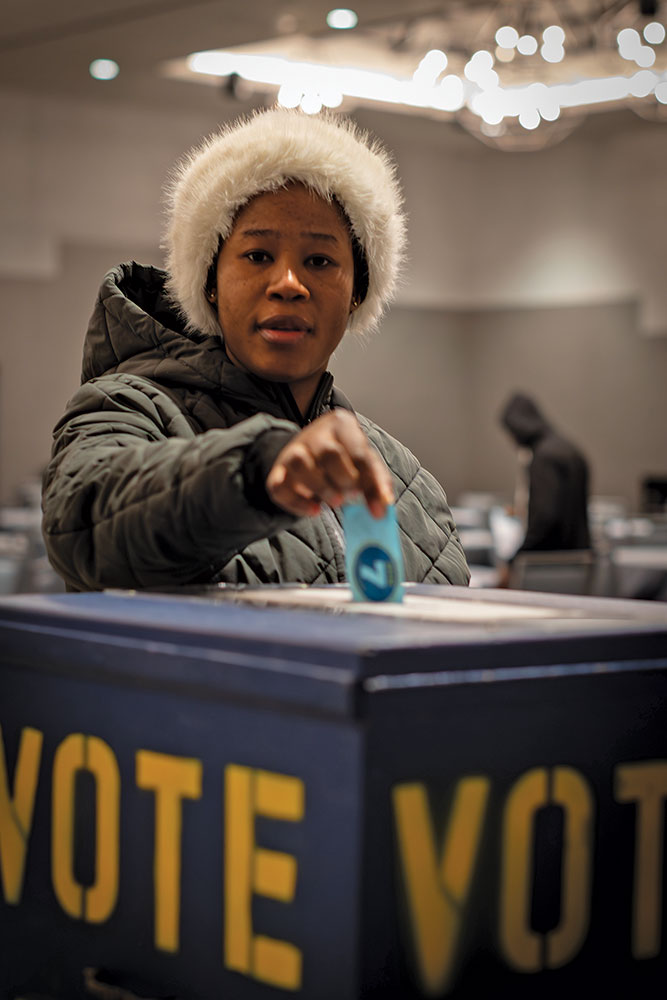
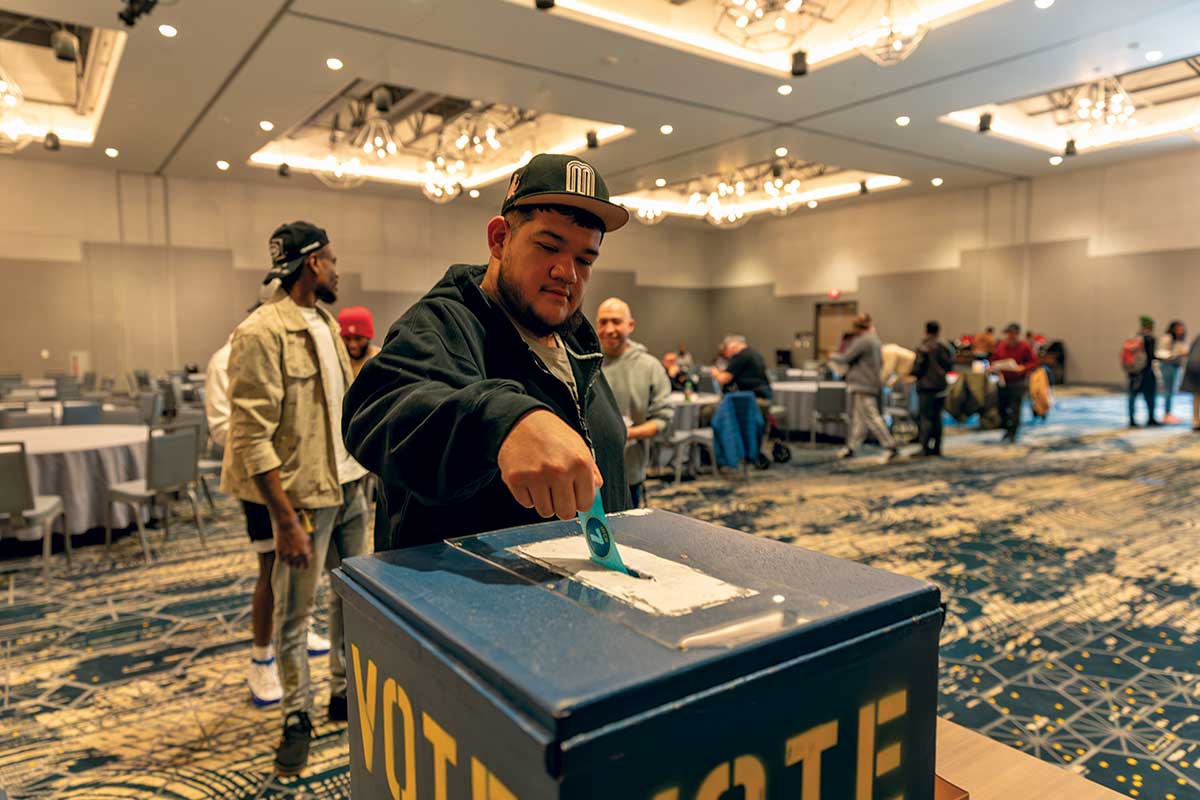
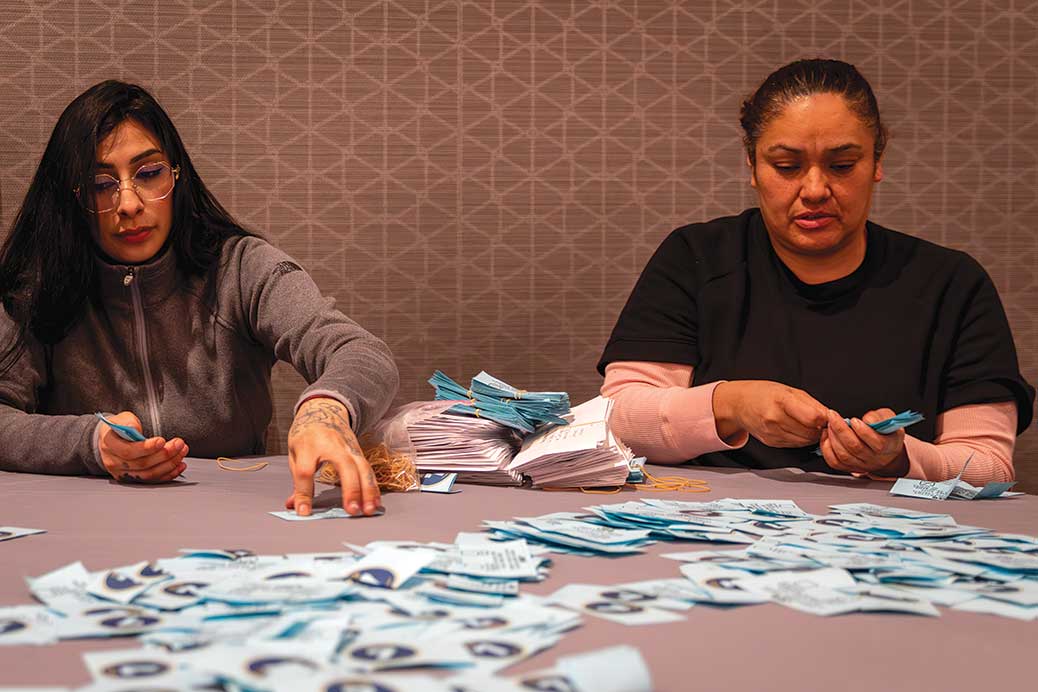
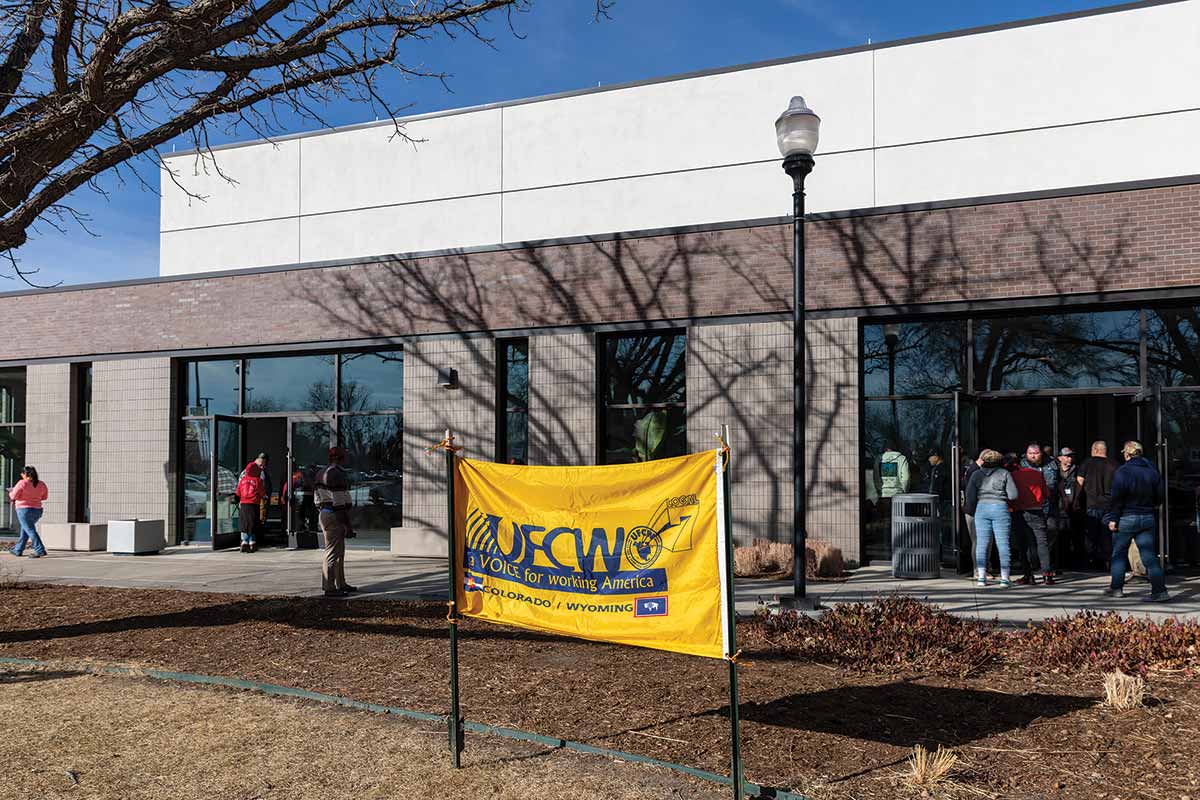
In the lobby of the hotel, workers were given a blue slip of paper with a simple choice: “Strike / Huelga” or “No Strike / No Huelga.”

In early February, more than 1,000 Haitian migrants employed at the unionized JBS meatpacking plant in Greeley, Colorado, faced imminent deportation, as the Trump administration fought in federal court to revoke their temporary protected status. Many of the Haitians say they were brought to JBS as part of a human-trafficking scheme concocted by a supervisor in the company’s HR department. (A JBS spokesperson told me there was no evidence tying the company to the union’s claims.)

Among them is Carlos Saint Aubin, who fled from the gangs in Port-au-Prince to Brazil, where he began a harrowing journey on foot—across the Darien Gap between Panama and Colombia, north to the US border. He came to Colorado after seeing TikTok videos promising jobs and housing. Instead, he ended up among the hundreds of Haitians packed more than six to a room at a roadside motel after working long hours. Now Saint Aubin is one of the lead plaintiffs in a class-action lawsuit alleging that the Haitians on the evening shift there were forced to work as much as 50 percent faster than those on the daytime crew.

On February 4, less than 48 hours after a federal judge blocked their deportation, 99 percent of the United Food and Commercial Workers Union members at the facility voted to strike in what could become the first sanctioned walkout at a major meatpacking plant in decades.      —Ted Genoways
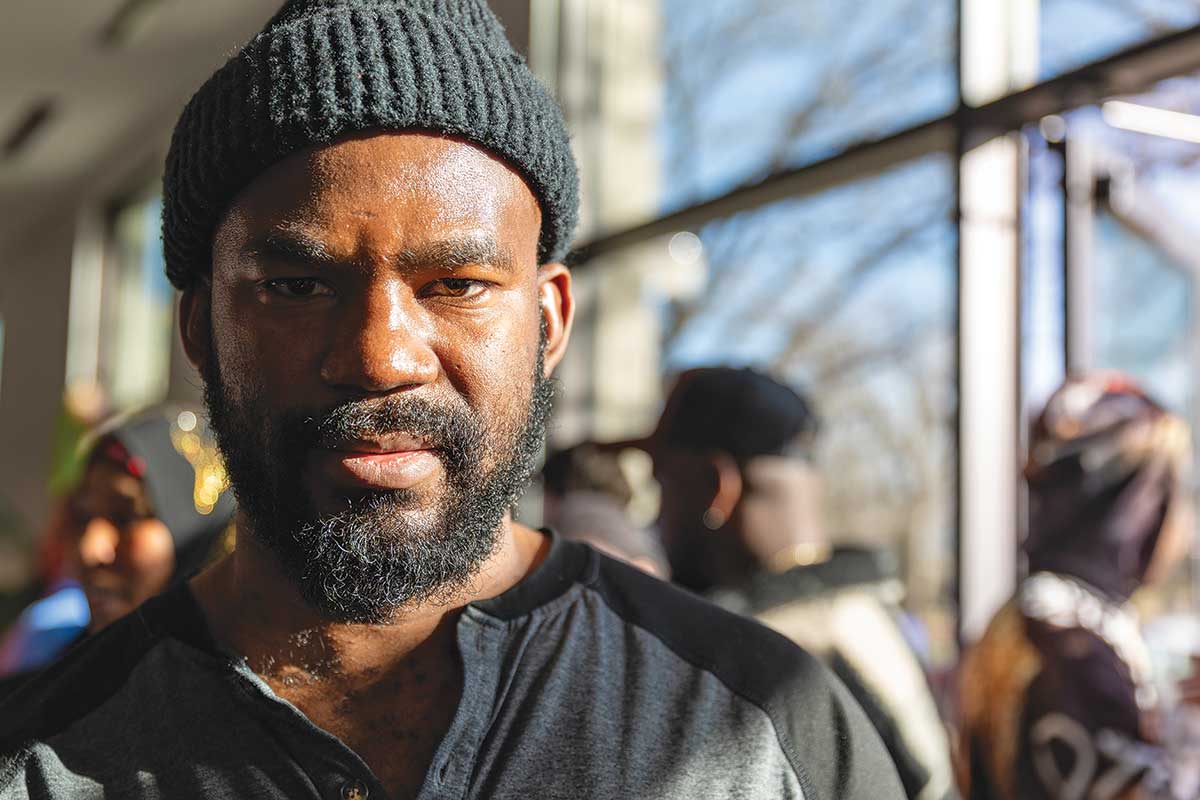
 

After casting his ballot, Carlos Saint Aubin chatted with fellow workers in the lobby outside the ballroom of the DoubleTree hotel where the vote was held.
Some 90 percent of the workers at JBS’s Greeley plant are migrants. Beyond Haiti, they are from Burma, Somalia, West Africa, and Latin America.
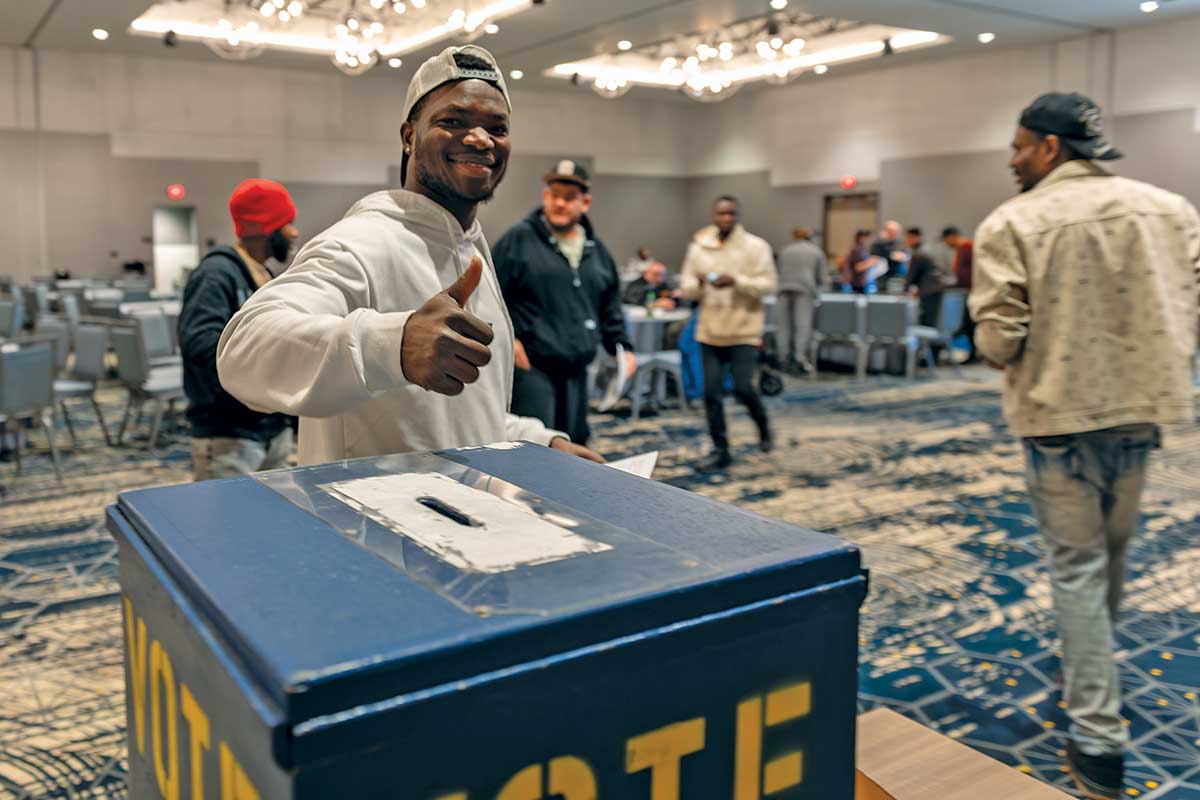
Despite facing threats from ICE—and the anxieties of a potential strike—workers greeted each other with hugs and handshakes.
Rumors circulated that unmarked white vans had been seen circling outside the hotel, raising fears of an ICE raid, but the vote was held without disruption.
Local 7 and JBS resumed talks on February 20 in hopes of avoiding a walkout, but the workers had already assembled 4,000 picket signs.
Members of Local 7 arrived just before 7 pm to count the votes. Out of the more than 2,000 workers who cast ballots, roughly 25 voted against a strike.

Support The Nation’s June Fundraising Campaign

With the midterm elections now firmly upon us, the question is whether Democratic candidates will do more than merely occupy ballot lines as mild alternatives to the red-hot crisis that is Donald Trump.

As Trump spends over $1 billion a day on a globally destabilizing war on Iran and admits that he doesn’t “think about Americans’ financial situation,” millions across the country are struggling with the surging costs of essentials. Democrats must seize this moment and advance bold, small-“d” populist ideas—not settle for cynical caution that once again snatches defeat from the jaws of victory.

The Nation elevates progressive ideas, movements, and elected officials achieving real change across the country into the national conversation. At the same time, our journalists are exposing how crypto and AI-funded super PACs are spending hundreds of millions of dollars to knock out candidates they oppose, reporting on the devastating impact of the Supreme Court’s evisceration of the Voting Rights Act, and sounding the alarm on attempts by red states to quickly redraw electoral maps, disenfranchising Southern Black voters.

We can play this critical role because of support from readers like you. This June, we’re raising $20,000 to power The Nation’s independent journalism in the run-up to November’s immensely consequential elections.

It’s in our power to build a more just society, and your support at this critical moment brings us closer to that bold vision. I hope you’ll donate today.

Onward,

Katrina vanden Huevel
Editor and Publisher, The Nation
Mary Anne Andrei

Mary Anne Andrei is a freelance multimedia journalist.

More from The Nation

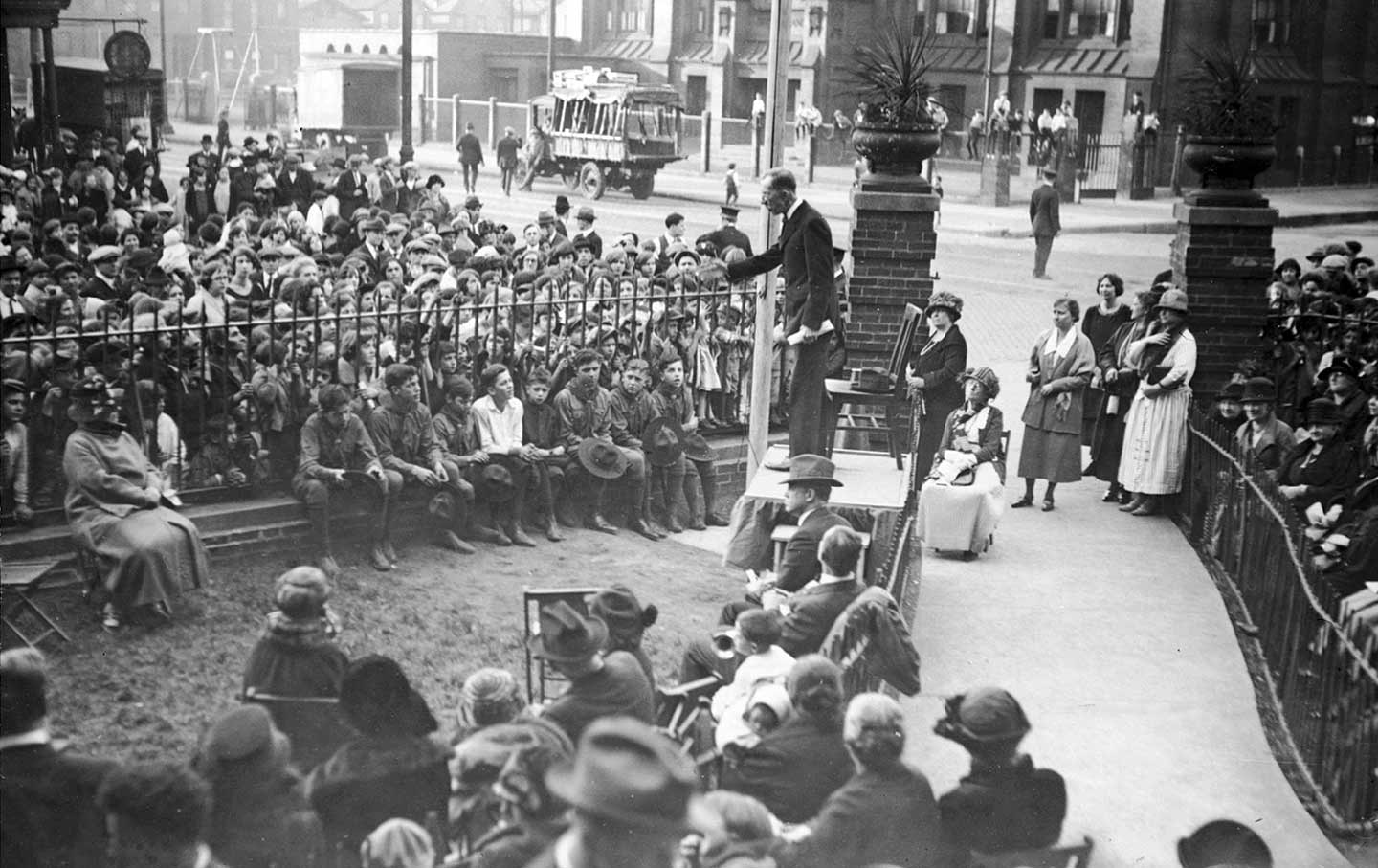
The minister and reformer Graham Taylor, shown here addressing a crowd in Chicago in 1924, was one of the many activists who have sought to push this nation toward greater justice.

America Is Due for a Deep Clean America Is Due for a Deep Clean

This country cannot deliver on its promises until we collectively act to to ensure equal protection for all.

Feature / Rev. Dr. William J. Barber II

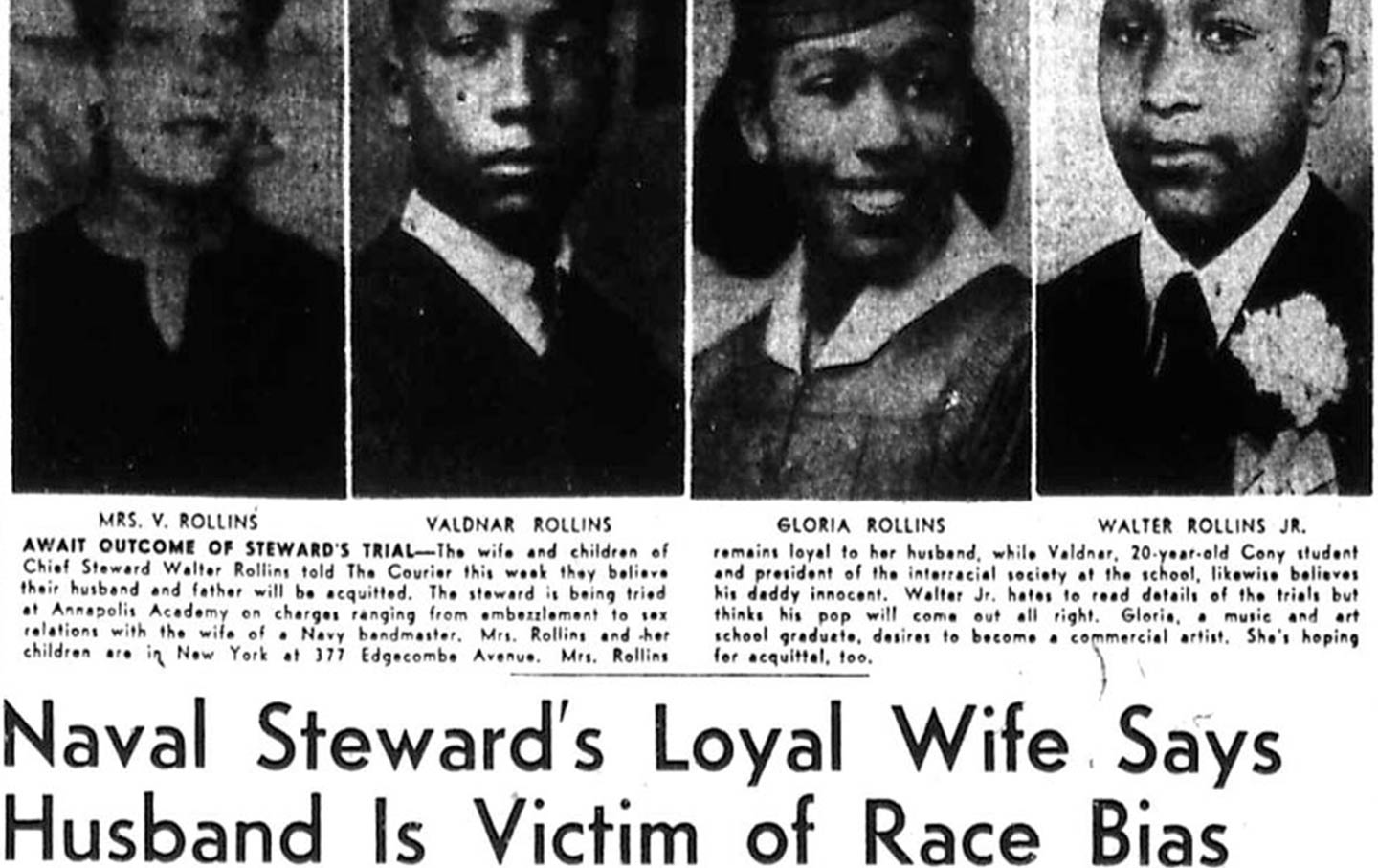
Sonny Rollins’s first appearance in print, at age 15 (pictured at right), was in an article about his father’s case.

Sonny Rollins Lived to See Justice for His Wrongly Convicted Father Sonny Rollins Lived to See Justice for His Wrongly Convicted Father

The jazz legend fought for nearly 80 years to clear his father of racially motivated charges.

Aidan Levy

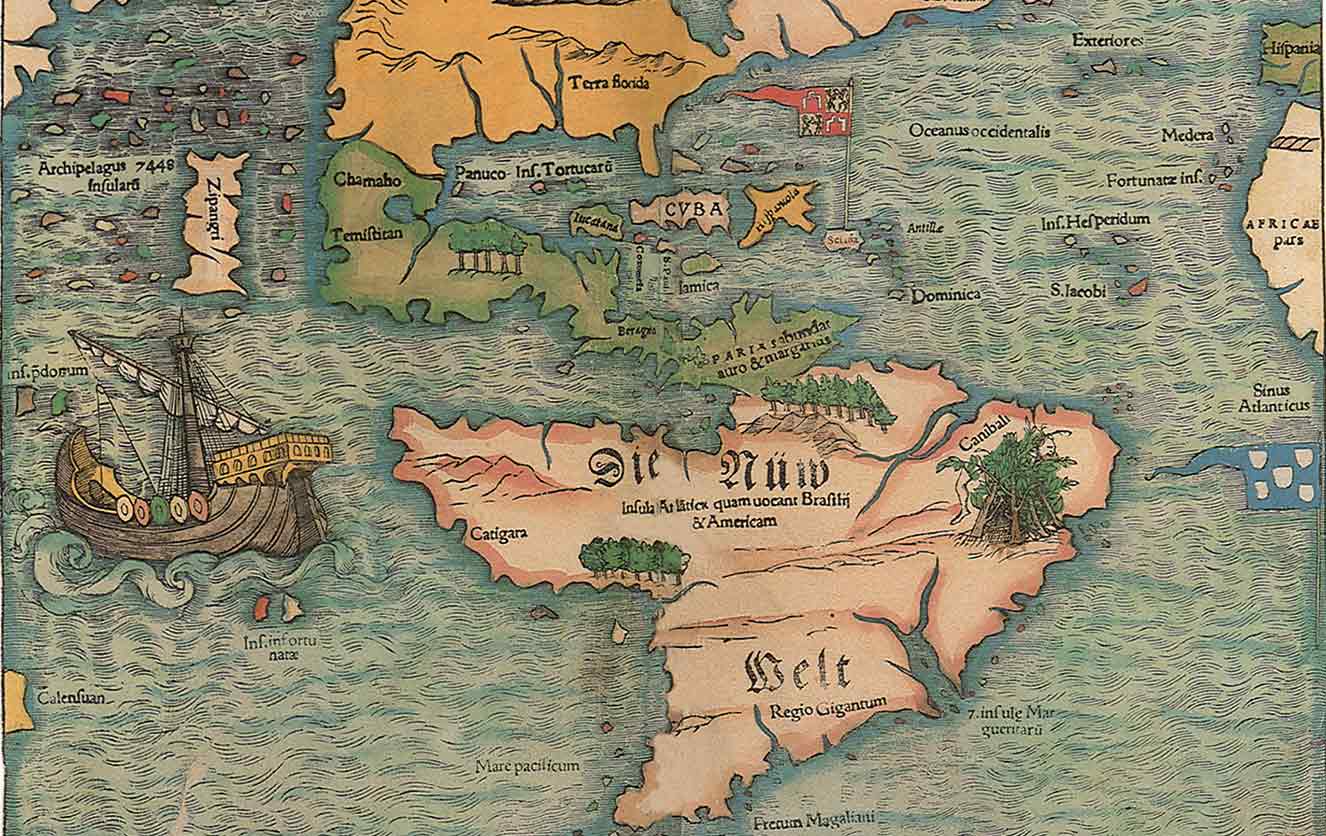
“The New World,” c. 1546.

The Entwined History of Capitalism and Race in the Americas and Beyond The Entwined History of Capitalism and Race in the Americas and Beyond

Better to start the history of the United States in 1492 than in 1776.

Books & the Arts / Bill Fletcher Jr.

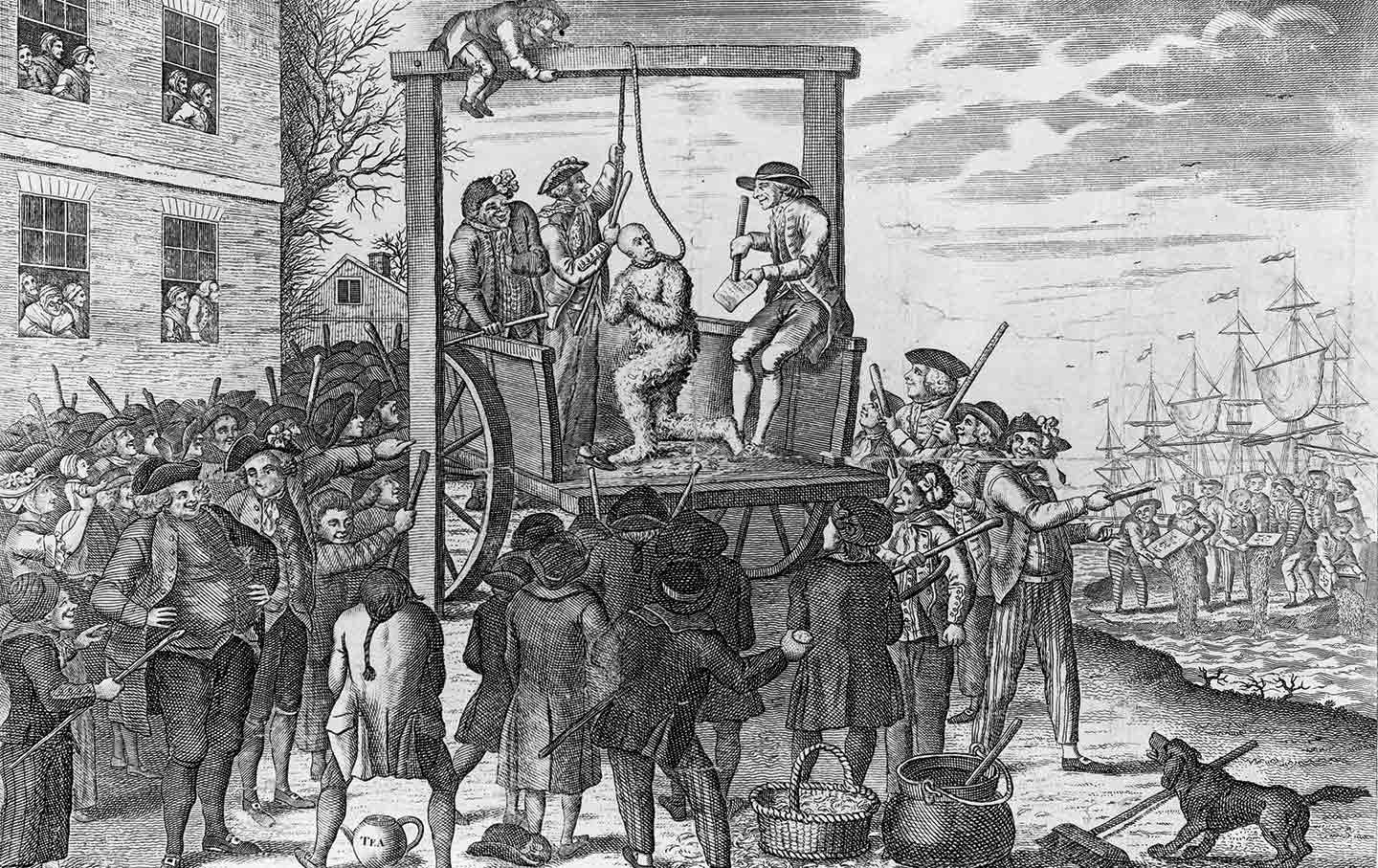
A depiction of the tarring and feathering of a British Customs commissioner in Boston.

The Contradictions of 1776 The Contradictions of 1776

From the outset the United States was founded to protect both freedom and slavery.

Books & the Arts / Gerald Horne

Gen Z’s Ability to Detect AI Is Far Lower Than You’d Expect

Gen Z’s Ability to Detect AI Is Far Lower Than You’d Expect Gen Z’s Ability to Detect AI Is Far Lower Than You’d Expect

A new poll revealed that young people are overly confident in their ability to identify AI content.

StudentNation / Jack Dozier

Crews work at Oaklawn Cemetery during an excavation while searching for bodies from the 1921 Tulsa Race Massacre, October 27, 2022, in Tulsa, Oklahoma.

Tulsa at a Crossroads Tulsa at a Crossroads

Reparations and restoration on Tulsa Race Massacre Observance Day.

Kristal Brent Zook