
The Billionaire Oligarchs Are Coming for Your Pets
And they want to make bigger profits.
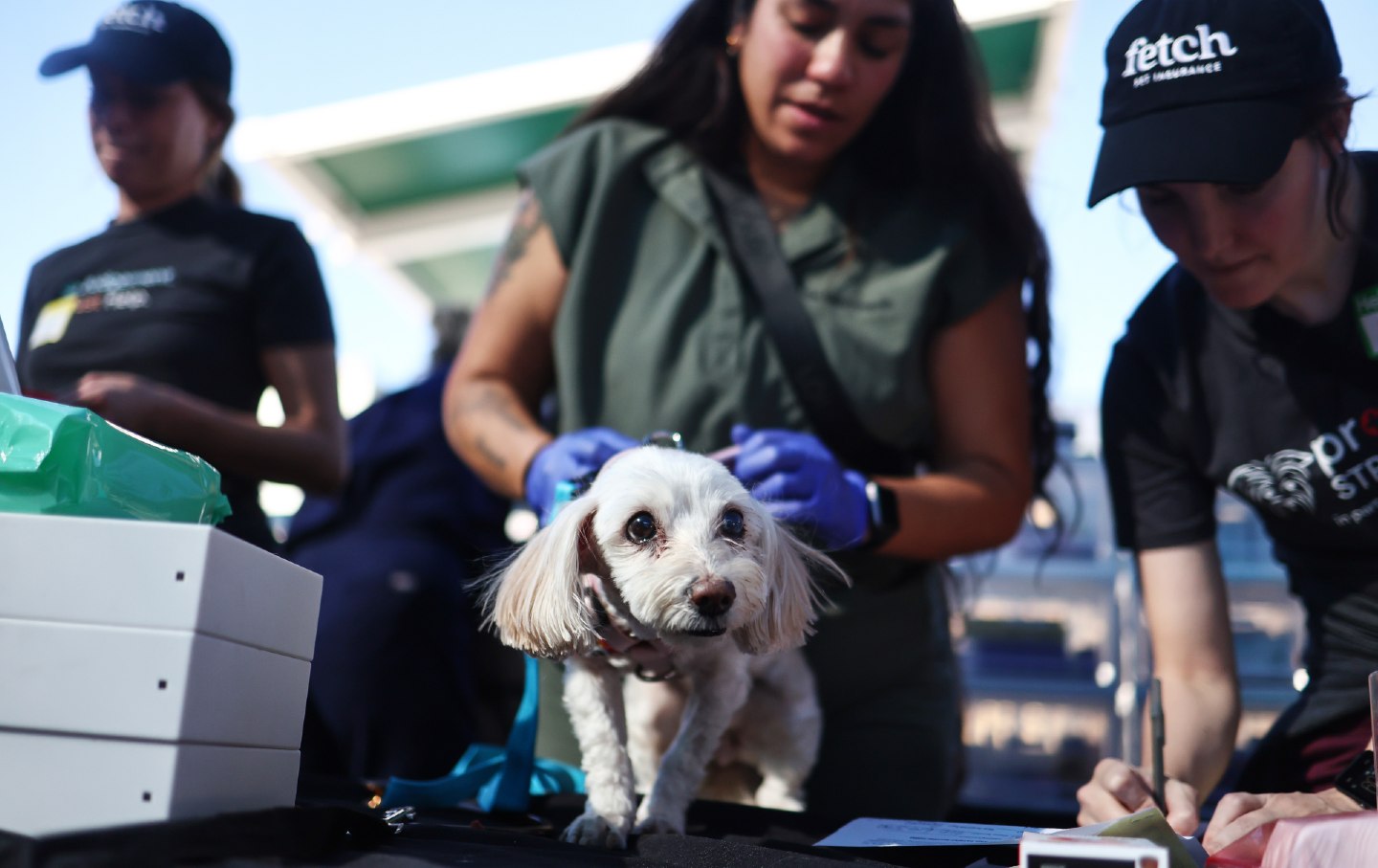
The billionaires know you love your furry family members, and they’d like profit from your affection.
Have you had to seek veterinary attention for a beloved pet in recent years? Have you noticed higher costs for vaccines and routine exams? Do you occasionally need a pet-sitter and wish to purchase services from an on-line service? I’ve got bad news for you: the billionaires have fixed their sights on you and on every corner of the pet care economy, with the goal of squeezing more money out of you.
Pet ownership was on the rise even before the Covid-19 pandemic; today roughly 70 percent of US households have at least one pet. The share of household income spent on pets has risen significantly, with an estimated $123 billion in 2021. While pet insurance is available, few pet owners have it. Yet many are willing to take on enormous debt for high-priced medical services. In a recent article in The New York Times about the rising cost of pet care, Katie Thomas writes:
A generation ago, pet owners with a seriously ill animal may have had little choice but to opt for euthanasia if they wanted to relieve their pet’s suffering. Now, they must choose between extending the animal’s life and going into what can be debilitating debt or letting an animal die.
Thomas spoke to pet owners who were still paying off credit card debt years after their animals had died. She reports animal welfare groups are finding pet owners relinquishing their animals to shelters when they can’t afford veterinary bills.
For many people, their relationships with animals are more steadfast than their connections with humans. With a growing percentage of people saying they have only one or two people they can depend on, if any, the unconditional love of a pet plays an important role in our lives. “Pets are filling a gap,” observed Greg Hartmann, CEO of Veterinary Centers of America (VCA), one of the largest for-profit veterinary medical enterprises. He noted that young adults are waiting until later in life to get married and have children, if they have children at all. “We’re seeing now the younger generation, millennial and Gen Z, own nearly half of the pets in the US, and their spending behaviors seem to be outpacing the preceding generations.”
These trends have not been lost on billionaire wealth extractors, who are looking for the opportunities to siphon income off every corner of the pet-provisioning sector. As a result, there has been an unprecedented concentration of ownership over the last decade in pet food, pet stores, and veterinary care, and pet services, like Rover.com. The biggest players in the pet economy include dynastic billionaire families like the Mars candy clan and the German-Reimann family (JAB industries), along with billionaire-backed private equity firms that are snatching up companies in the pet sector.
VETERINARY CARE
One of the most startling areas of consolidation is in veterinary care. An estimated 25 percent of all general veterinary services are now owned by billionaires and private equity firms, up from 5 percent a decade ago. And the wealth aggregators own an estimated 75 percent of specialty veterinary clinics and hospitals, the most profitable segment of the sector. It is no coincidence that over the last decade, the cost of veterinary care has risen by more than 60 percent, dramatically outpacing inflation. I suspect this is largely due to the impact of private investor consolidation in the sector.
The single biggest owner of pet-care products is the Mars family, the third-generation candy making dynasty worth an estimated $117 billion, making them the second wealthiest family in the US after the Waltons of Walmart. The Mars family and their notoriously secretive, privately held company own 2,500 pet-care facilities including BluePearl and VCA. They also own several pet-food companies, an online pet pharmacy, and a kitty-litter company.
The second largest consolidator of pet health care is National Veterinary Associations or NVA, with 1,100 clinics and hospitals. They are known for buying up local mom and pop practices, keeping the same name, signage, and veterinarians—such that you may not know that your pet care is coming from a global conglomerate. NVA is owned by the Reimann family, the second-richest family in Germany, with a dark Nazi past, and owners of JAB Holding Company.
As with human health care, billionaire consolidators aim to extract big coin on veterinary services, pushing expensive tests and pricey interventions, instituting aggressive billing and collection, and focusing on cost-cutting on the service side, including squeezing wages from employees.
Four major private equity buy-outs of veterinary care. Billionaires and their private equity firms are interested in these businesses because they are high consumer demand, largely cash pay, and buffered from the business cycle—along with historically being a less regulated corner of health care. These vulture investors typically collect management fees on all transactions, strip out profitable assets (including real estate), call the shots in terms of major decision-making in the practice, and charge fees for monitoring them, even as some of the companies they acquire spiral into bankruptcy. “It’s like setting the fire, being paid to put out the fire, and collecting the insurance on the fire all at the same time,” quipped Stephen Dubner, host of Freakonomics Radio.
Consolidation and the monopoly power it produces allows a smaller number of pet-care providers to raise prices and suppress wages for veterinary workers, especially in localities without a lot of choices of provider.
PET SERVICES
My friend Katherine earns a little extra income walking dogs. Recently she started finding clients through an online platform called Rover.com. “Rover takes 20 percent for making the match,” Katherine told me. “They’re just an app, taking a fifth of my earnings. And they charge the pet owner an 11 percent booking fee, capped at $50.”
Rover charges a pet care provider $49 to put a profile up on their account. In addition to matchmaking, Rover offers a guarantee to both parties and back-up insurance, claiming in their motto, “We’re here for you.” But when Katherine encountered a dangerous dog situation—and reached out with some urgency—the company failed to respond to requests for help. “Meanwhile, the person providing services is on the hook for any liabilities,” Katherine said, sharing the fine print of the service agreement. “Rover absolves itself of responsibility for just about everything. Pet owner and service provider beware.”
Popular
“swipe left below to view more authors”Swipe →In November 2023, the billionaire-backed private equity firm Blackstone, with over $1 trillion in assets, acquired Rover for $2.3 billion in cash. They see nothing but growth in the pet care space.
Katherine went on to describe the cost of veterinary care for her late dog, Princess Lucy. “You walk into that clinic, and they swipe your credit card, and you know you won’t be walking out of there for less than $1,000 and probably much more.” And let’s not even talk about pet stores and pet food. The 1,500-store Petco company is owned by the Luxembourg-based private equity firm CVC Capital Partners. And an estimated 95 percent of the common pet food brands are owned by six global conglomerates, with number one being the Mars family, followed by Nestlè Purina, Smucker’s, Colgate-Palmolive, Diamond, and General Mills.
Be careful what you love, because the billionaires are paying attention; they will figure out how to siphon as much of what you’re willing to spend on your passion as they can.
More from The Nation
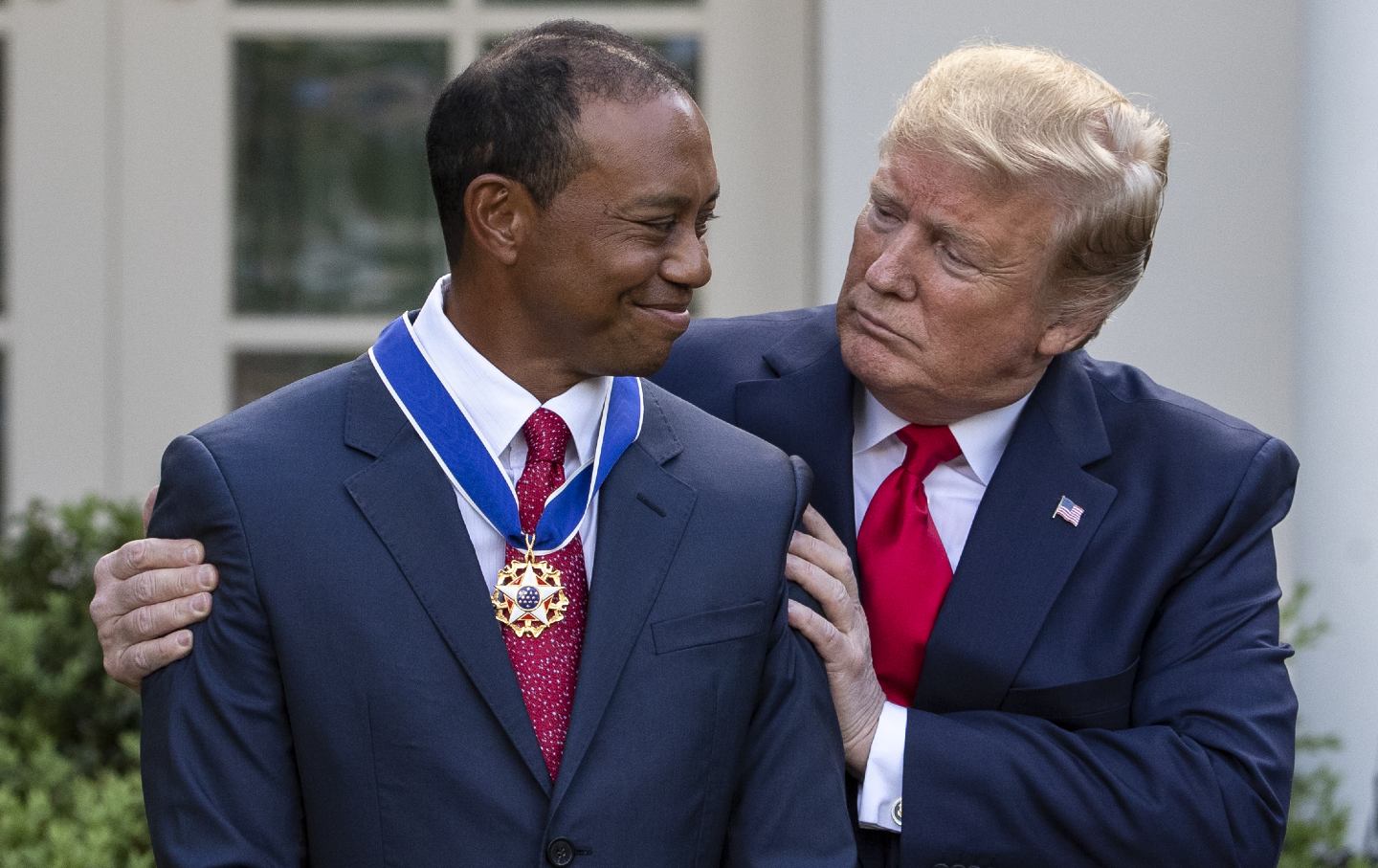
Tiger Woods Plus Donald Trump: A Tragedy Made in the USA Tiger Woods Plus Donald Trump: A Tragedy Made in the USA
Woods and Trump’s famous friendship is built on a shared knack for accumulation, vacuousness, and power worship. It’s as American as apple pie.

The Cost of the Iran War The Cost of the Iran War
“It takes money to kill bad guys,” Defense Secretary Pete Hegseth said as he sought $200 billion in funding for the Iran war in March. But the cost far exceeds money.
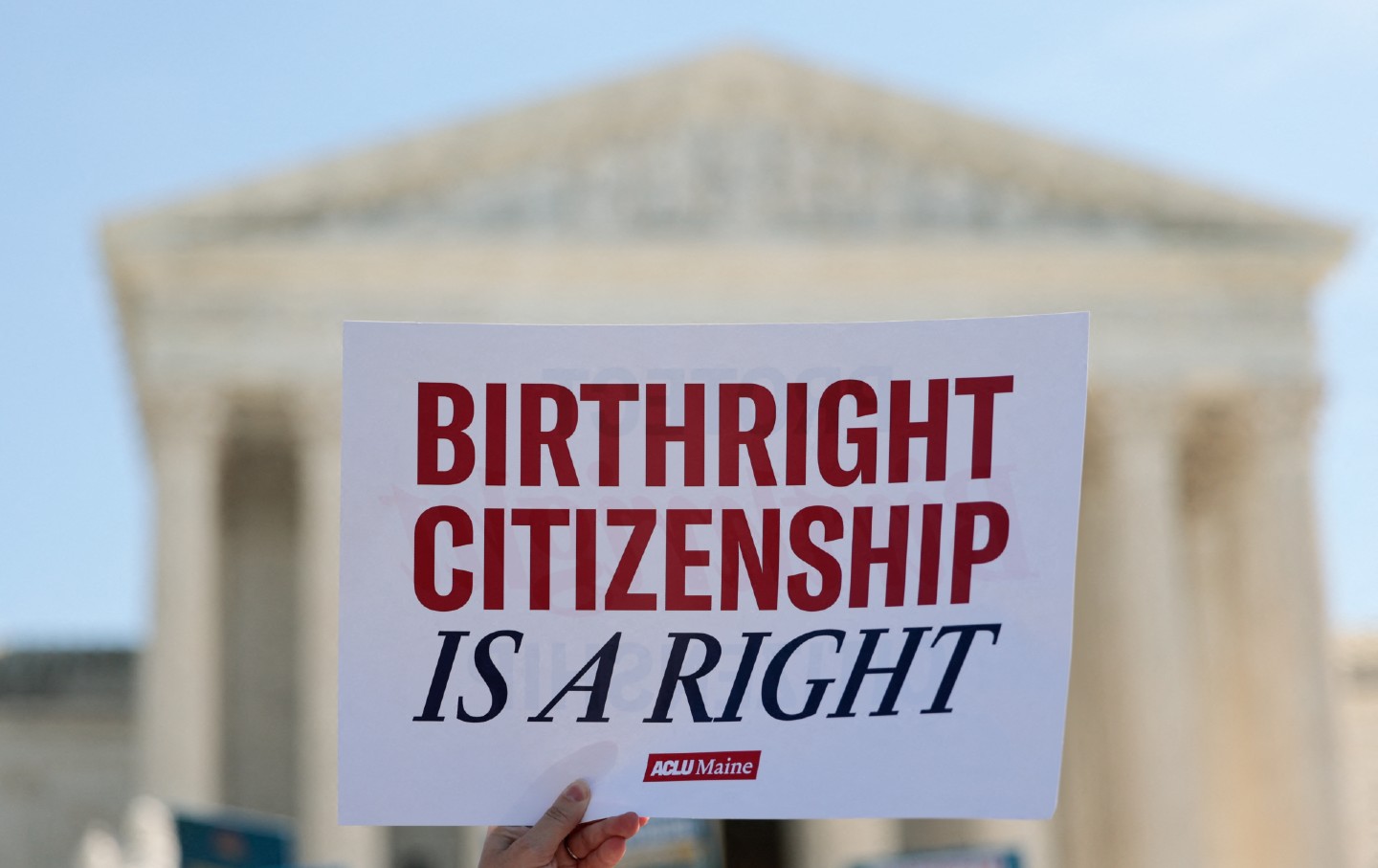
The Supreme Court Absolutely Shredded Trump’s Birthright Citizenship Case The Supreme Court Absolutely Shredded Trump’s Birthright Citizenship Case
But this also begs the question: why is this facially unconstitutional case before the court in the first place?

Why Black People Can’t Earn Our Way Out of Racism in Maternal Care: A Q&A With Khiara Bridges Why Black People Can’t Earn Our Way Out of Racism in Maternal Care: A Q&A With Khiara Bridges
In her new book, Bridges found that healthcare provided through private markets leaves more room for discrimination and unequal care to take root than in a public program like Med...

The Olympics Is Repeating One of Its Worst Mistakes The Olympics Is Repeating One of Its Worst Mistakes
The IOC’s new anti-trans testing regime revives some of the most discredited and discriminatory policies in the history of the games.

My Years-Long Fight to Say “They” My Years-Long Fight to Say “They”
Over and over again, I would use the pronoun in my writing. Over and over again, editors would try to remove it.

