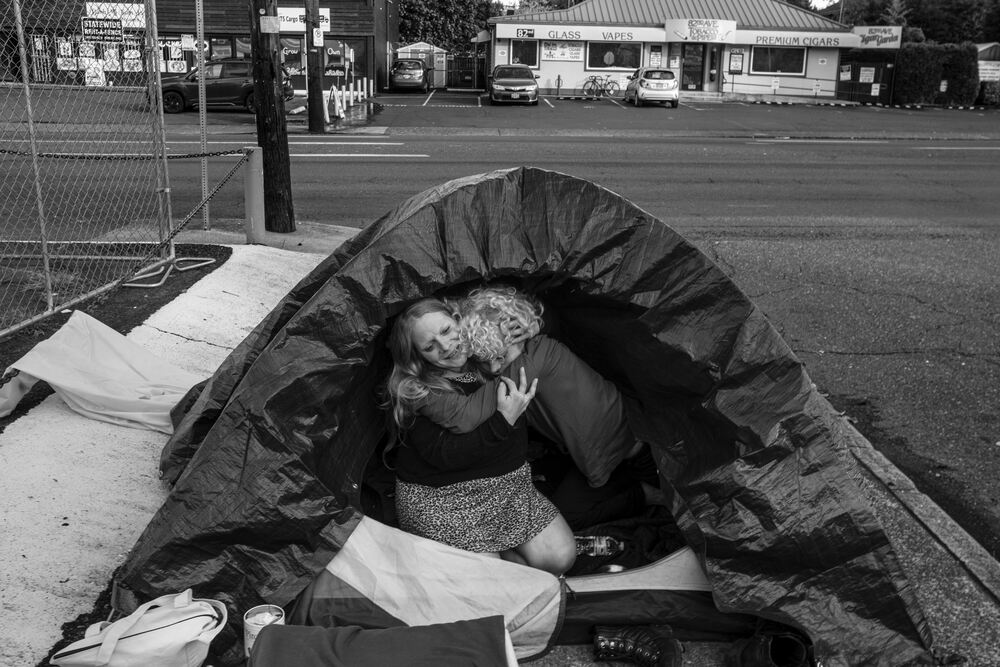
Gavin Kelly and his mother Amanda hug, inside the tent they live in, off a side road in a SE neighborhood of Portland, Ore., on November 1, 2022. (Photo by Jordan Gale)
Photo Essay / August 18, 2023

An American Crisis

An Intimate Look at Portland’s Housing Crisis

The ongoing housing crisis in Portland, Ore., has desensitized us to the real people who have been affected.

Jordan Gale

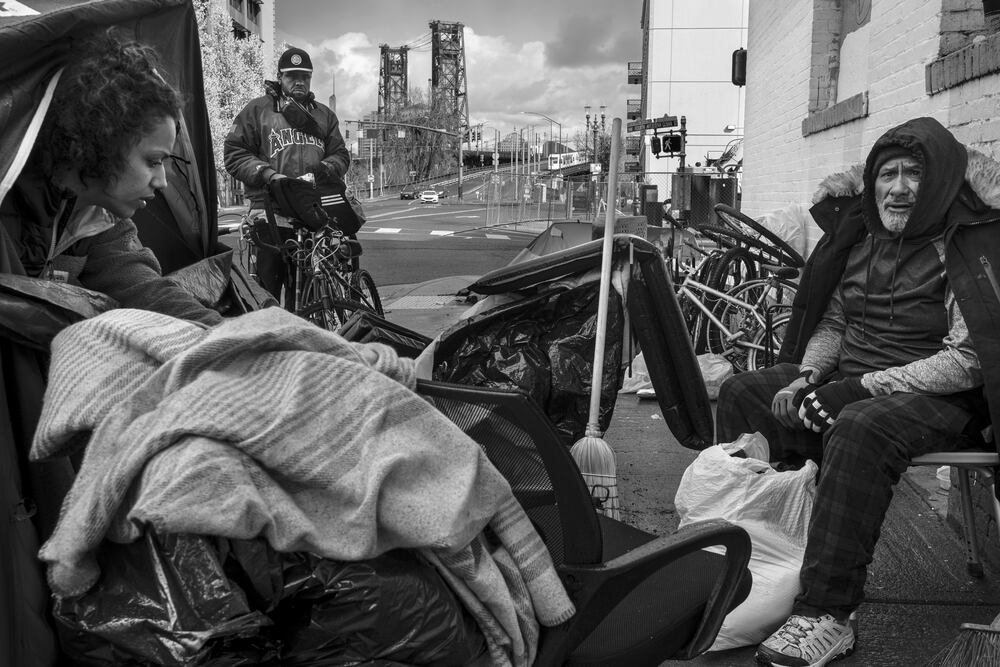
Since 2021, the photographer Jordan Gale has been documenting the worsening housing crisis in Portland. The city was once a crown jewel of the Pacific Northwest, hailed as a destination for the upper middle class eager to escape the West Coast’s crowded metropolises. But as Portland’s population increased, driving up housing prices, its unhoused population ballooned. Oregon has a dire housing gap: The state currently needs 140,000 additional units, and that number could reach over 440,000 in the next 20 years unless drastic efforts are made. When such crises become large enough to affect thousands of families every day, individual stories get lost in the blizzard of statistics. Over the past two years, Gale’s work chronicling his home city’s plight has expanded to incorporate portraiture and handwritten testimony, increasingly becoming a collaboration between the photographer and the people most affected. The result is a project that succeeds in highlighting the otherwise overlooked individuals whose lives have been forever altered by this devastating crisis.

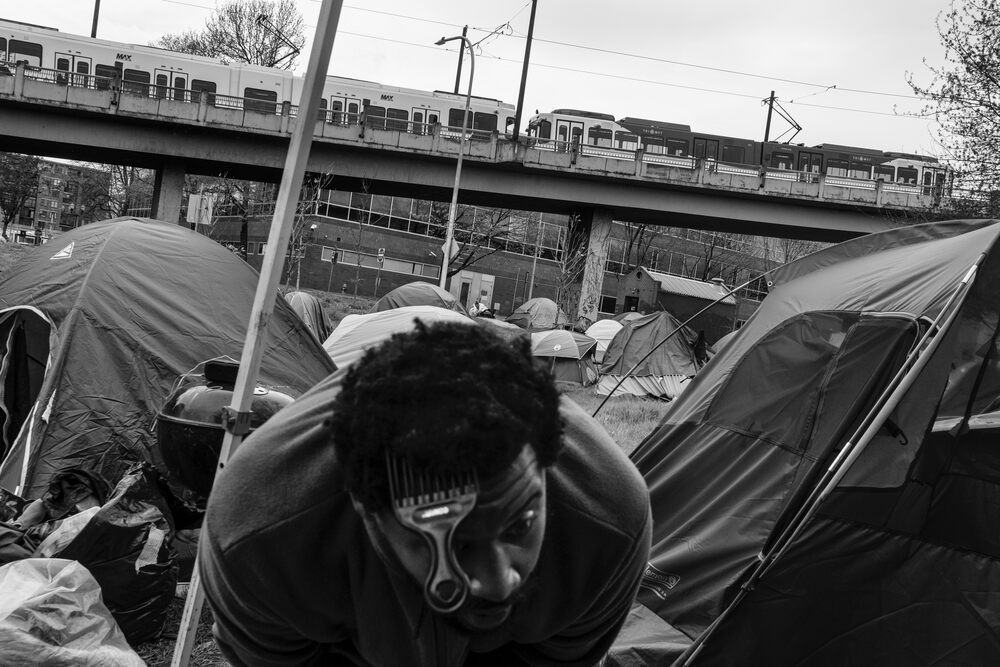
Jason laying on the sidewalk outside an encampment he lives at in Portland, on September 9, 2022.
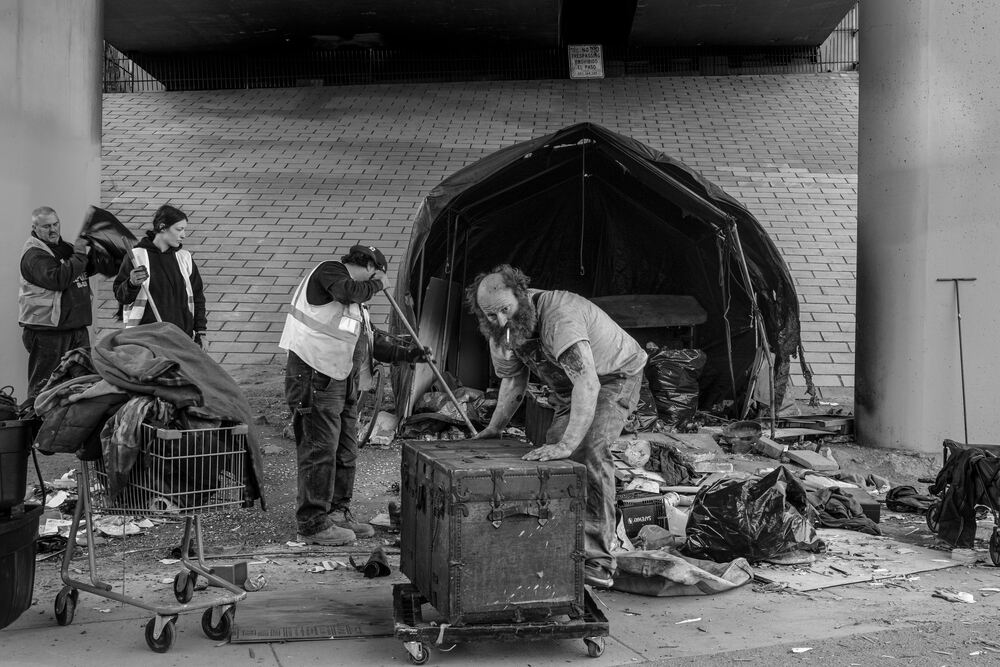
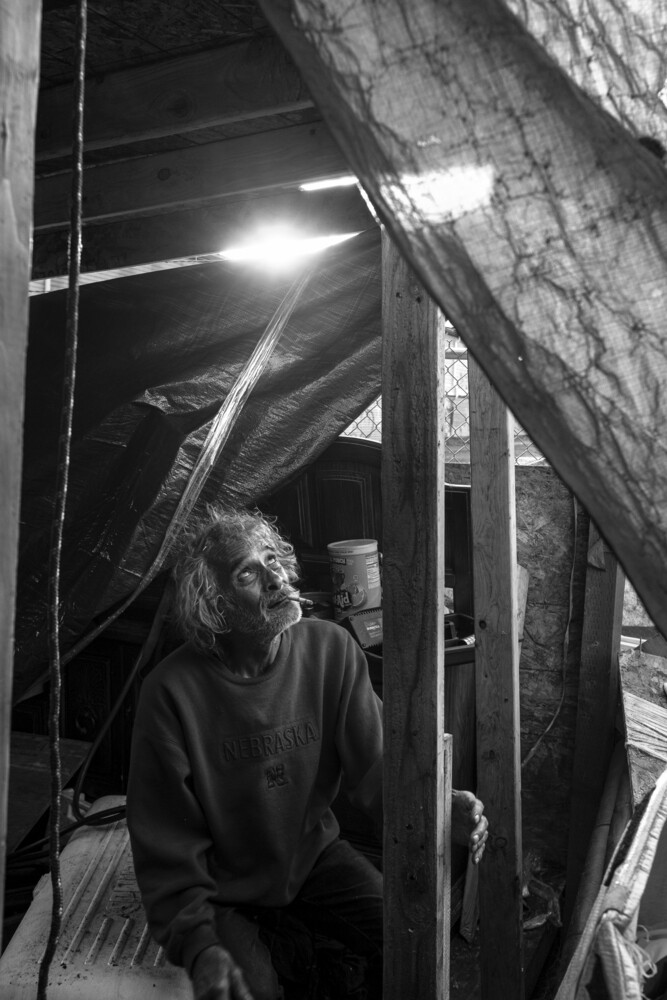
Pat constructing a shelter for himself off an Interstate-84 entrance ramp in Portland, on October 22, 2022.
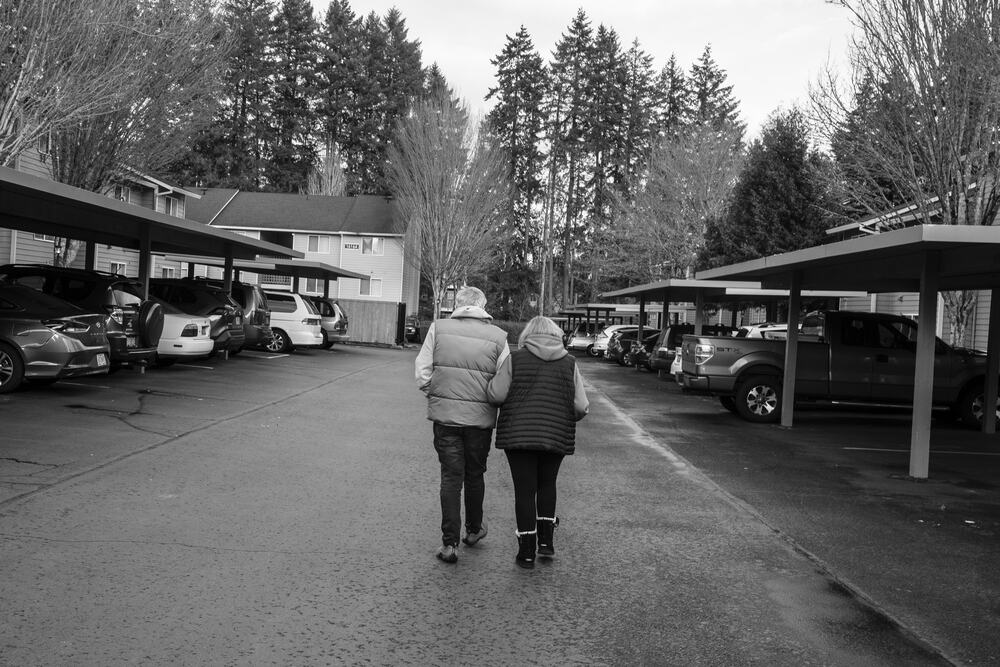
Two residents of Woodspring Apartments, a senior citizens’ affordable housing complex in Tigard, a city in the Portland metro area, walk through the complex’s parking lot, hand in hand, on March 6, 2023.
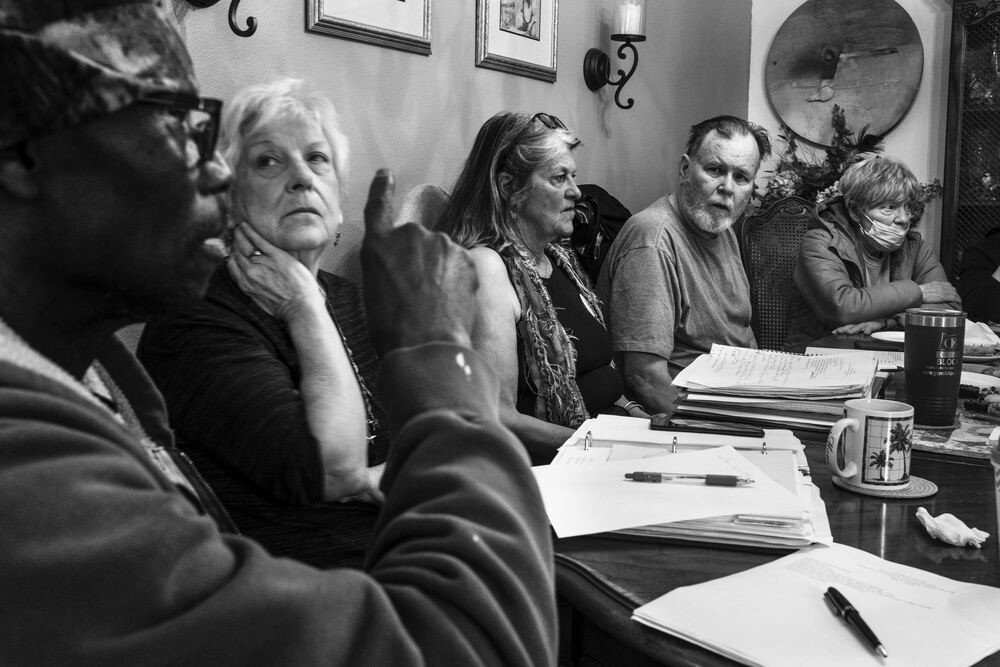
Tenants at Woodspring Apartments meet on March 6, 2023, to discuss legal options, after it was announced that the complex’s rent would be raised to market level rates. The contract that the complex was founded on expires at the end of 2023, letting the current owners raise rents to market rate. With most residents already spending more than 50 percent of their fixed income on rent, many are worried they’ll be forced to find new housing elsewhere. It was recently announced that the county was in talks to buy the property, in order to stop rent prices from increasing.
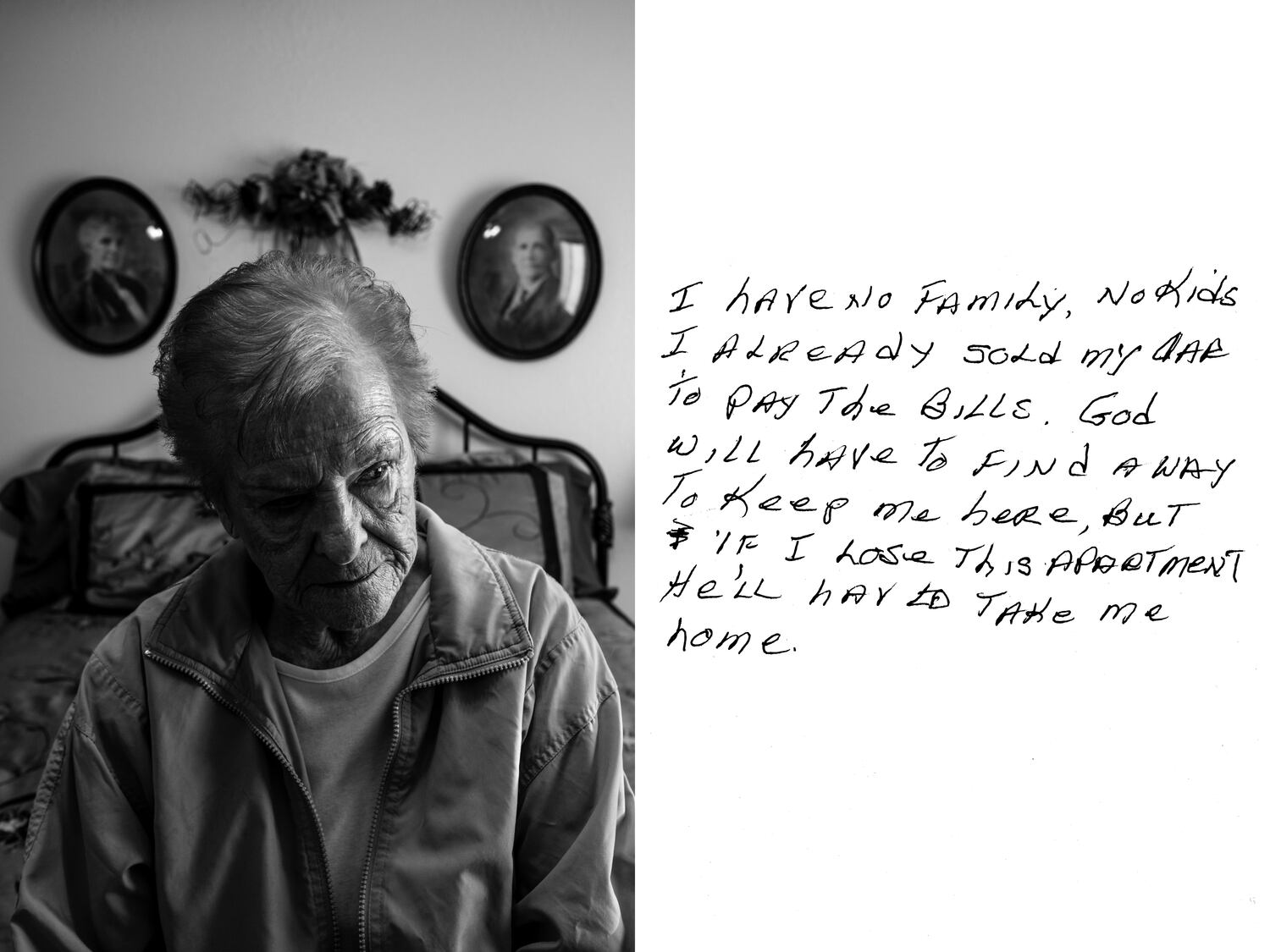
Portrait of Sandra Frying in the bedroom of her Woodspring Apartments, on March 8, 2023. Fry: “I have no family, no kids, I already sold my car to pay the bills. God will have to find a way to keep me here, but if I lose this apartment, he’ll have to take me home.
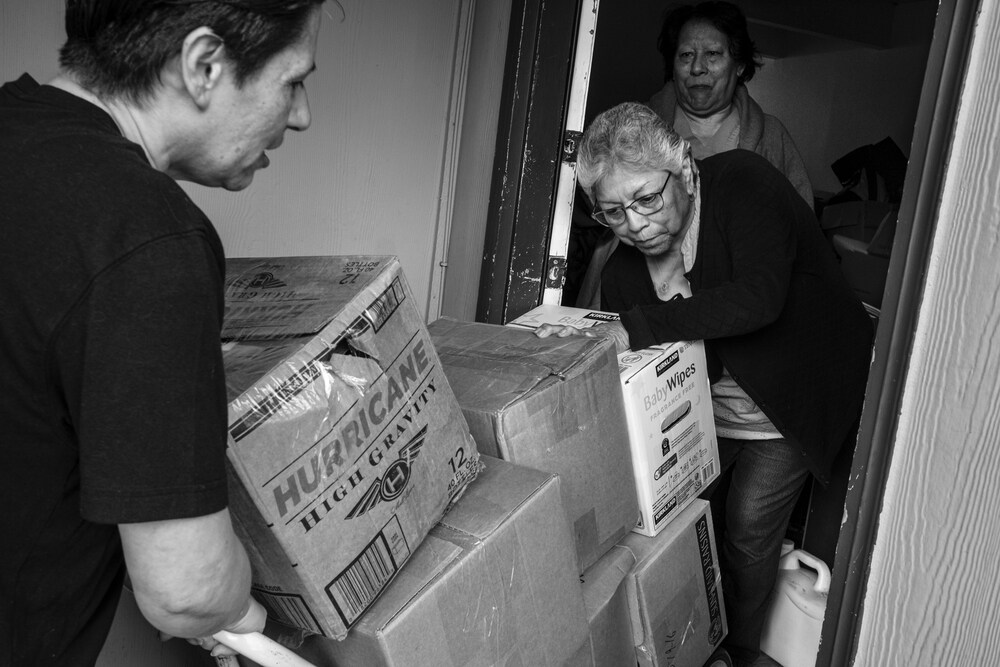
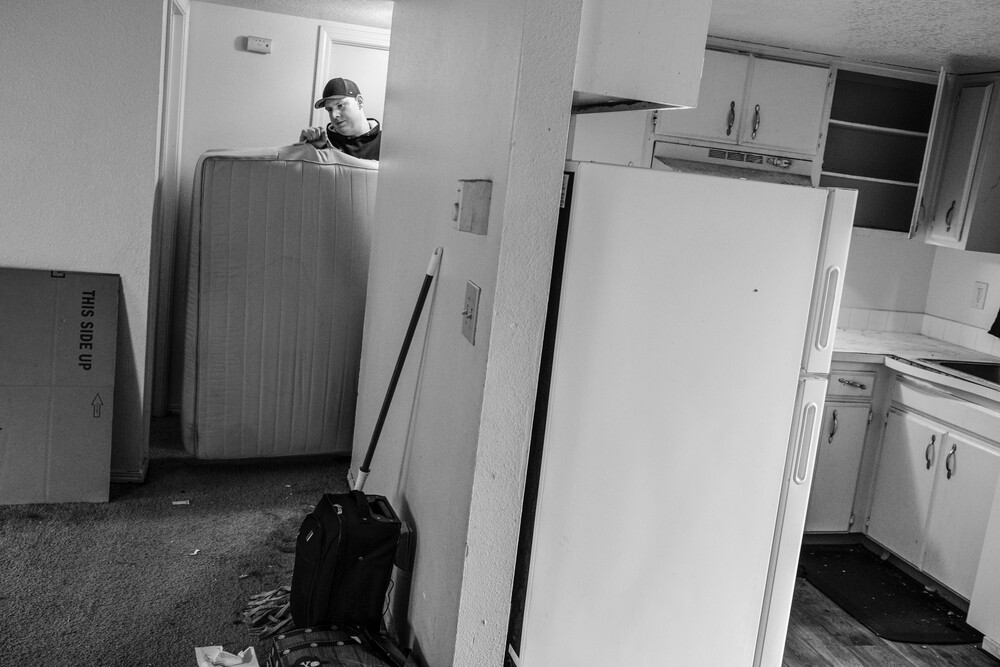
Priscilla Clark and her family carry boxes out of her apartment at La Hacienda Apartment Complex in Portland, on March 25, 2023. La Hacienda is a low income housing complex, but all tenants were given a 90-day eviction notice just before Christmas 2022, so that the owning nonprofit, Relay Resources, could demolish the property, in a bid for 2024 state housing funds. Most if not all tenants were given little to no rehousing assistance from Relay.
Left -behind property is removed from an evicted apartment unit at La Hacienda Apartment Complex on March 31, 2023.
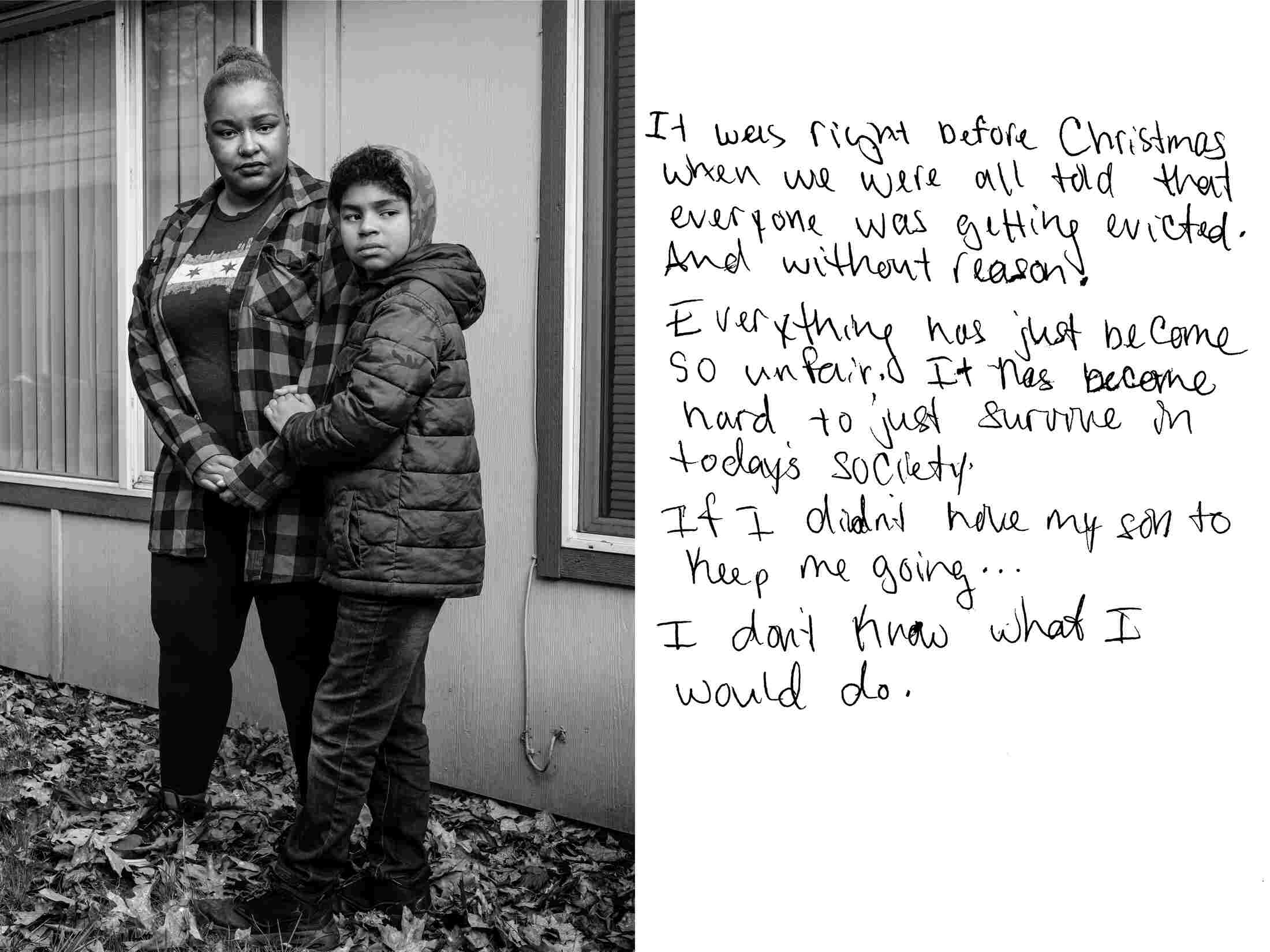
Portrait of Rebekah Thompson and her son Miguel, outside their apartment at the La Hacienda on March 26, 2023. Thompson: “It was right before Christmas when we were all told that everyone was getting evicted. And without reason! Everything has just become so unfair. It has become hard to just survive in today’s society. If I didn’t have my son to keep me going, I don’t know what I would do.
A local unhoused encampment near Portland’s downtown waterfront, commonly referred to as “The Pit,” on April 21, 2023.
On March 27, 2023, a rapid response team clears an illegal campsite in Portland that had caught fire.
Mikeasha Shep and a group of friends begin to collect their belongings during an illegal camping sweep by rapid response teams in Portland on April 3, 2023.
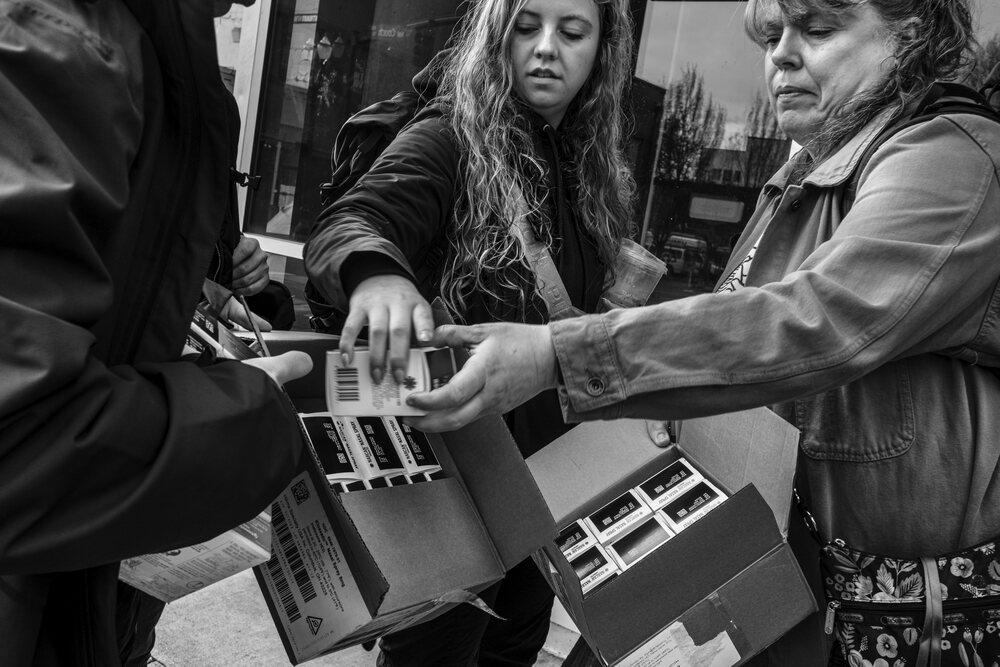
The Central City Concern outreach team pass out Narcan to one another while making their morning rounds with resources for those experiencing homelessness in the Old Town district of Portland, on April 5, 2023.
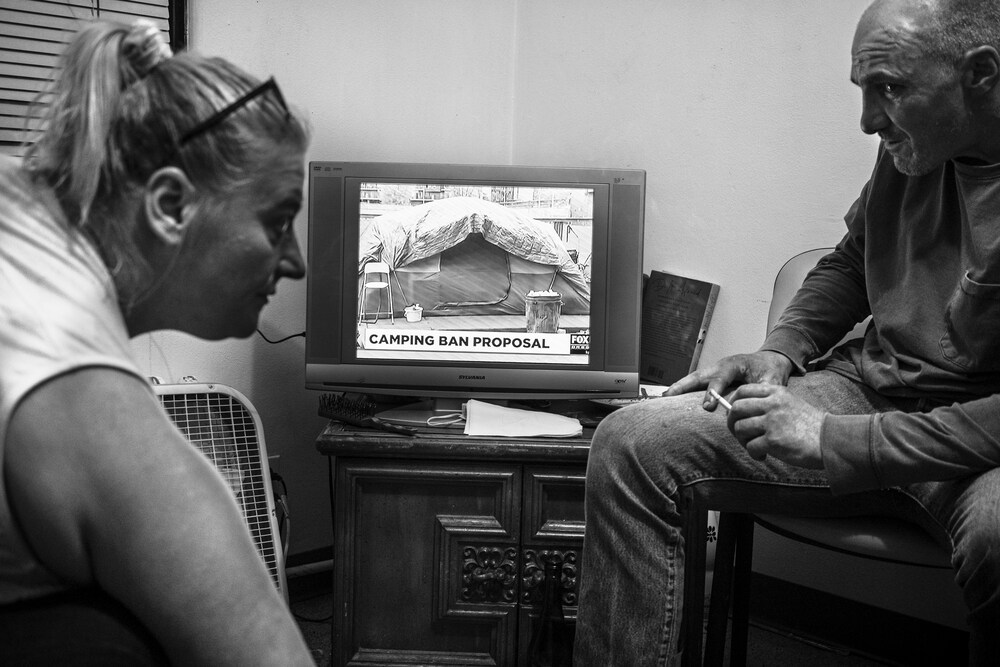
ICE and Rob sharing a cigarette in the single room occupancy that they’ve been squatting at in Portland, on October 26, 2022. After the original occupant died of a drug overdose, no family member or representative from the apartment complex came to remove the belongings. ICE saw it as the perfect opportunity to find shelter off the streets before the winter.
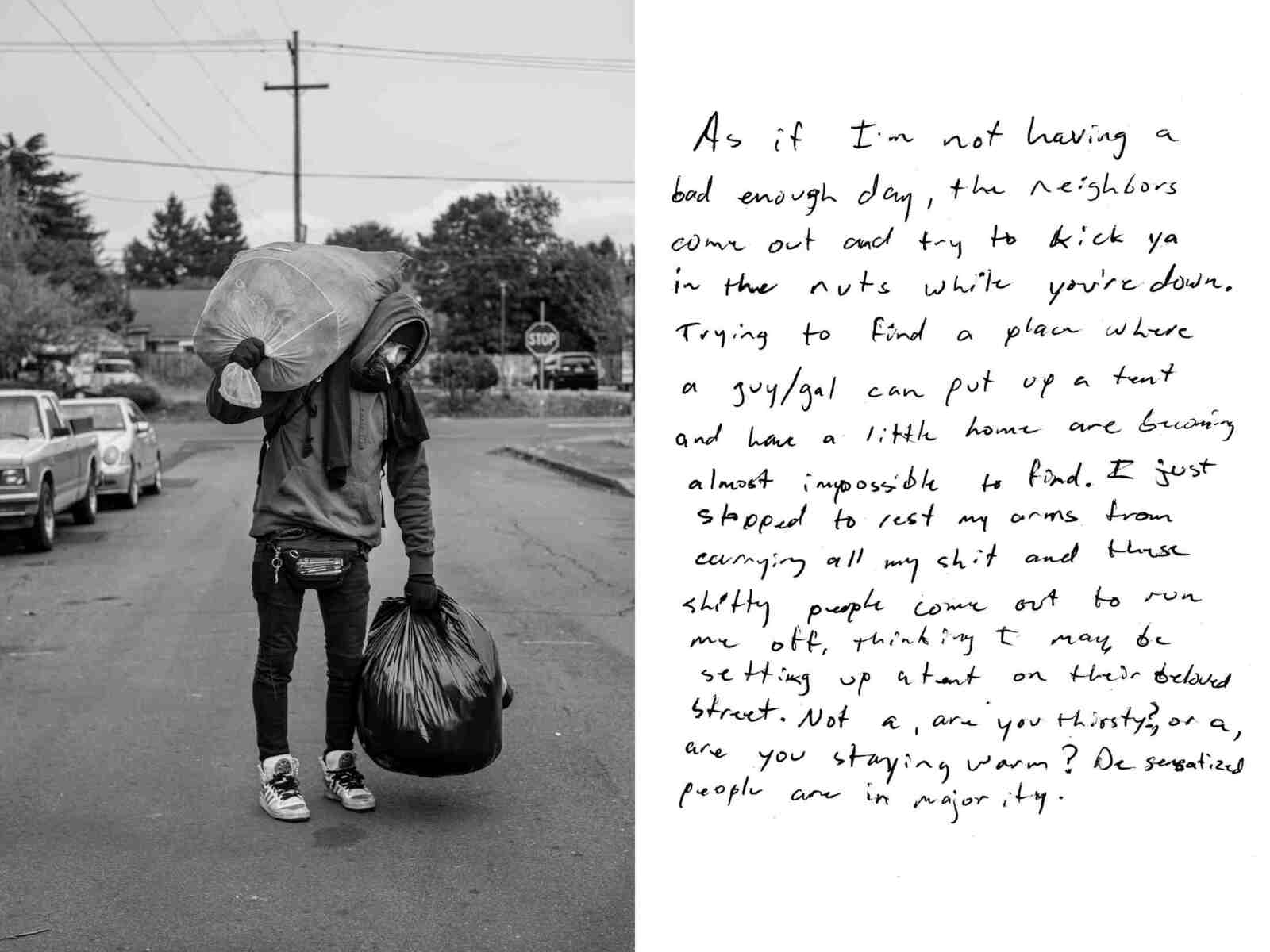
Portrait of Noah, while moving his belongings to a new campsite in SE Portland on November 26, 2022. Noah: “As if I’m not having a bad enough day, the neighbors come out and try to kick ya I the nuts while you’re down. Trying to find a place where a guy/gal can put up a tent and have a little home are becoming almost impossible to find. I just stopped to rest my arms from carrying all my shit and these shitty people come out to run me off, thinking I may be setting up a tent on their beloved street. Not a ‘Are you thirsty?’ or a ‘Are you staying warm?’ Desensitized people are in the majority.

Disobey authoritarians, support The Nation

Over the past year you’ve read Nation writers like Elie Mystal, Kaveh Akbar, John Nichols, Joan Walsh, Bryce Covert, Dave Zirin, Jeet Heer, Michael T. Klare, Katha Pollitt, Amy Littlefield, Gregg Gonsalves, and Sasha Abramsky take on the Trump family’s corruption, set the record straight about Robert F. Kennedy Jr.’s catastrophic Make America Healthy Again movement, survey the fallout and human cost of the DOGE wrecking ball, anticipate the Supreme Court’s dangerous antidemocratic rulings, and amplify successful tactics of resistance on the streets and in Congress.

We publish these stories because when members of our communities are being abducted, household debt is climbing, and AI data centers are causing water and electricity shortages, we have a duty as journalists to do all we can to inform the public.

In 2026, our aim is to do more than ever before—but we need your support to make that happen. 

Through December 31, a generous donor will match all donations up to $75,000. That means that your contribution will be doubled, dollar for dollar. If we hit the full match, we’ll be starting 2026 with $150,000 to invest in the stories that impact real people’s lives—the kinds of stories that billionaire-owned, corporate-backed outlets aren’t covering. 

With your support, our team will publish major stories that the president and his allies won’t want you to read. We’ll cover the emerging military-tech industrial complex and matters of war, peace, and surveillance, as well as the affordability crisis, hunger, housing, healthcare, the environment, attacks on reproductive rights, and much more. At the same time, we’ll imagine alternatives to Trumpian rule and uplift efforts to create a better world, here and now. 

While your gift has twice the impact, I’m asking you to support The Nation with a donation today. You’ll empower the journalists, editors, and fact-checkers best equipped to hold this authoritarian administration to account. 

I hope you won’t miss this moment—donate to The Nation today.

Onward,

Katrina vanden Heuvel 

Editor and publisher, The Nation
Jordan Gale

Jordan Gale is an American photographer based in Portland.

More from The Nation

Norman Podhoretz

The Longest Journey Is Over The Longest Journey Is Over

With the death of Norman Podhoretz at 95, the transition from New York’s intellectual golden age to the age of grievance and provocation is complete.

Obituary / David Klion

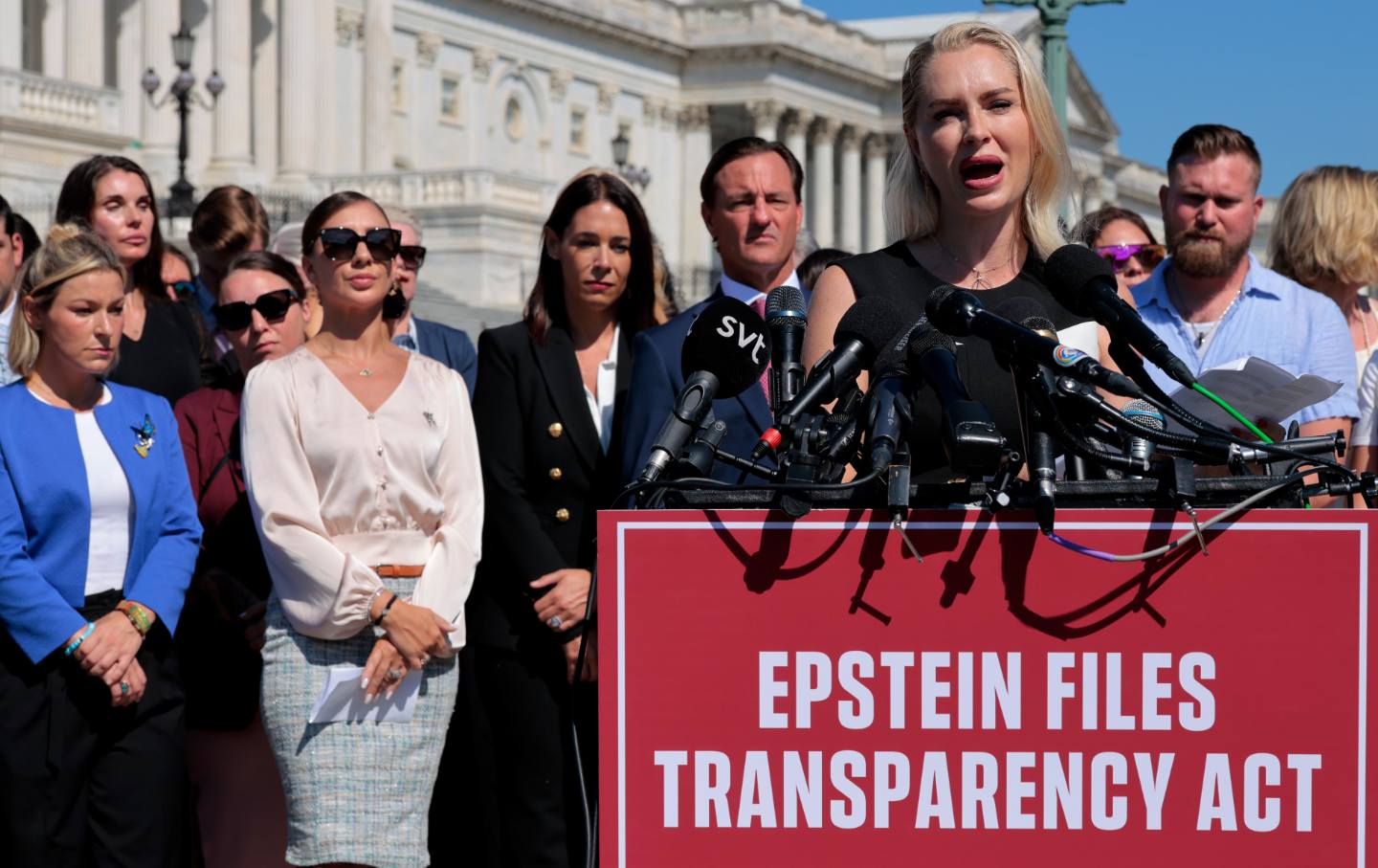
The Epstein Survivors Are Demanding Accountability Now

The Epstein Survivors Are Demanding Accountability Now The Epstein Survivors Are Demanding Accountability Now

The passage of the Epstein Files Transparency Act is a big step—but its champions are keeping the pressure on.

The Editors

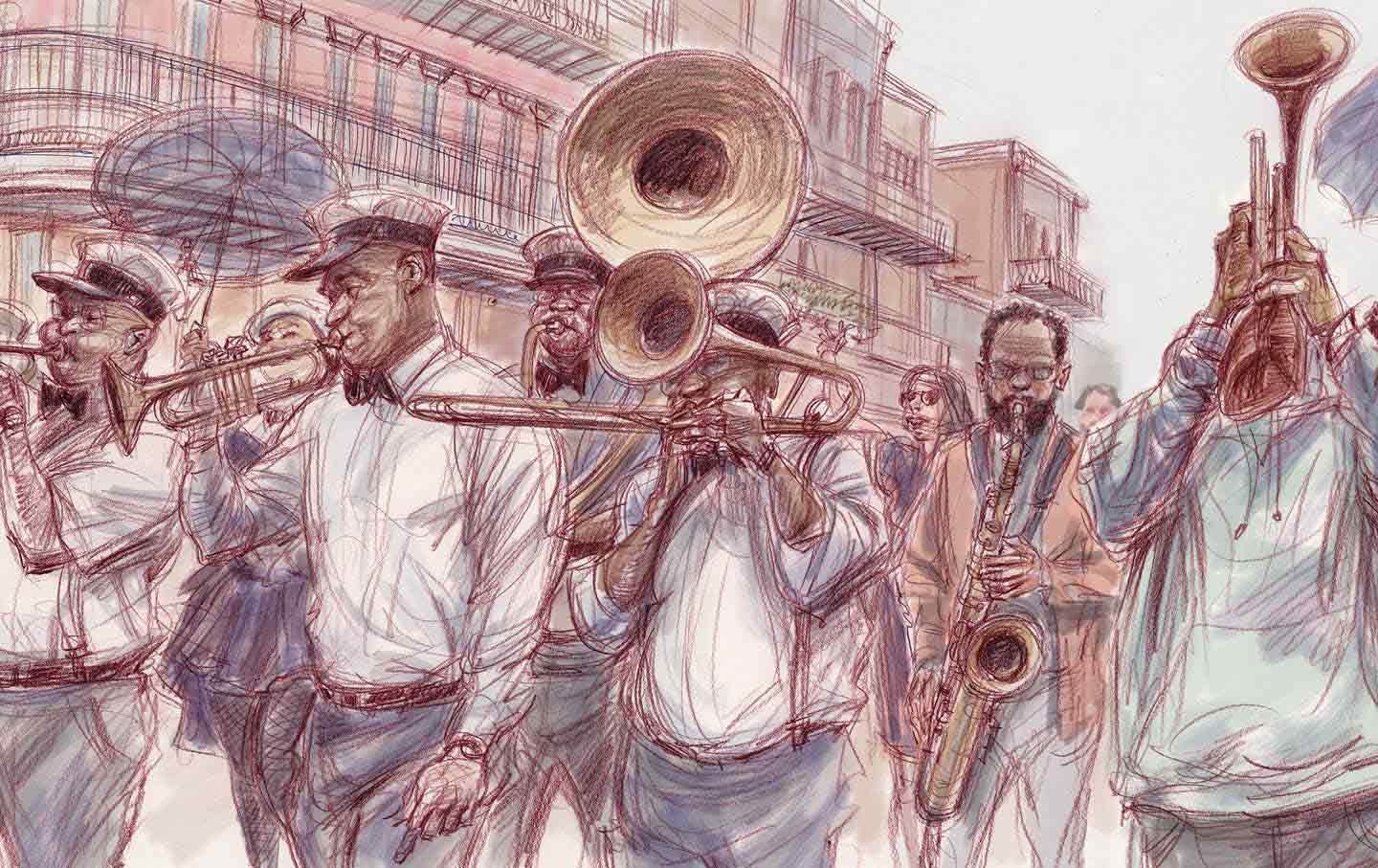
The Fight to Keep New Orleans From Becoming “Everywhere Else”

The Fight to Keep New Orleans From Becoming “Everywhere Else” The Fight to Keep New Orleans From Becoming “Everywhere Else”

Twenty years after Katrina, the cultural workers who kept New Orleans alive are demanding not to be pushed aside. 

Feature / Larry Blumenfeld

A still from the video of the 1992 police beating of Rodney King. LAPD chief Daryl Gates defended the department’s racist police regime until he was forced out in the wake of King’s beating.

Breaking the LAPD’s Choke Hold Breaking the LAPD’s Choke Hold

How the late-20th-century battles over race and policing in Los Angeles foreshadowed the Trump era.

Feature / Danny Goldberg

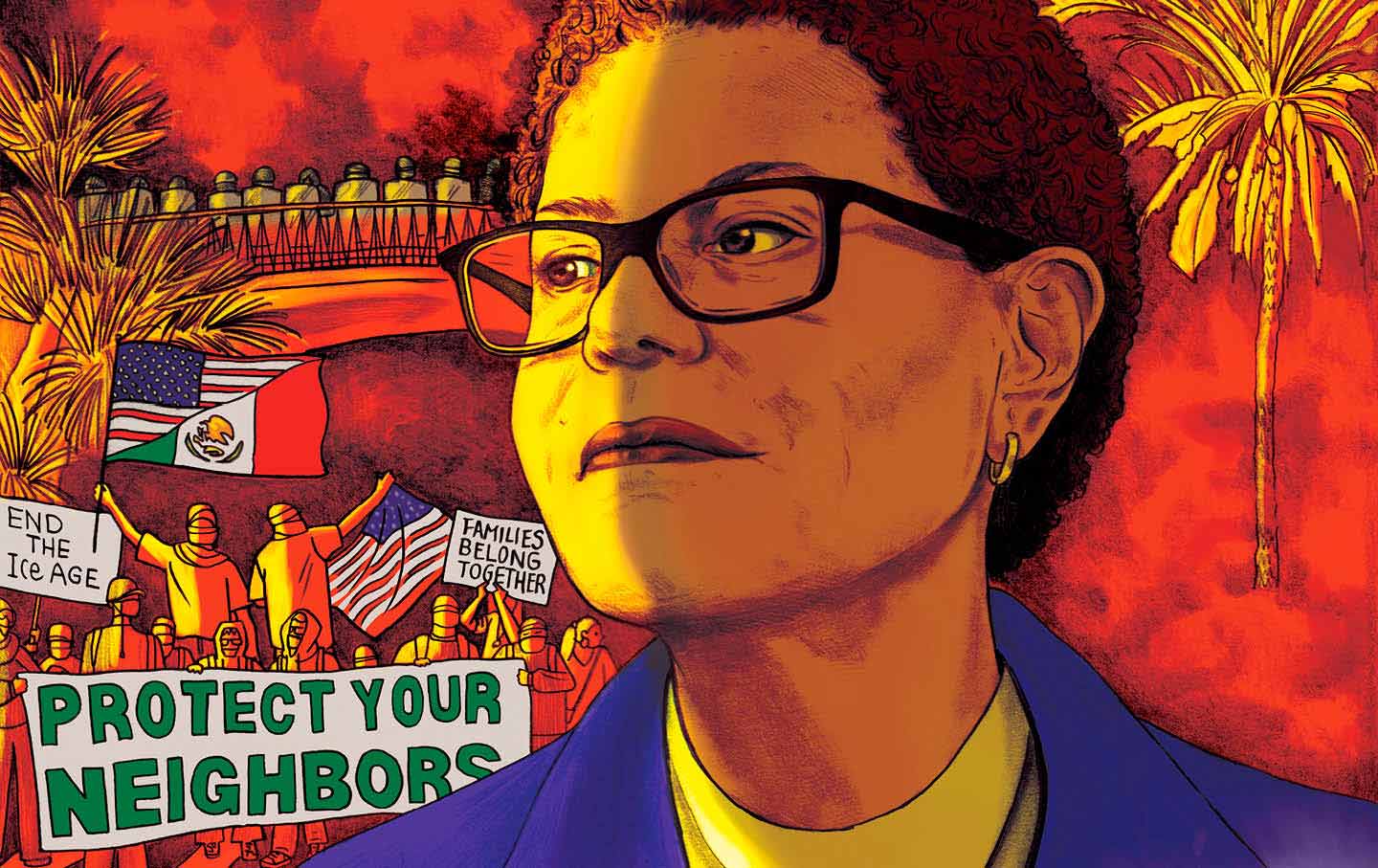
Mayor of LA to America: “Beware!”

Mayor of LA to America: “Beware!” Mayor of LA to America: “Beware!”

Trump has made Los Angeles a testing ground for military intervention on our streets. Mayor Karen Bass says her city has become an example for how to fight back.

Feature / Gail Reed

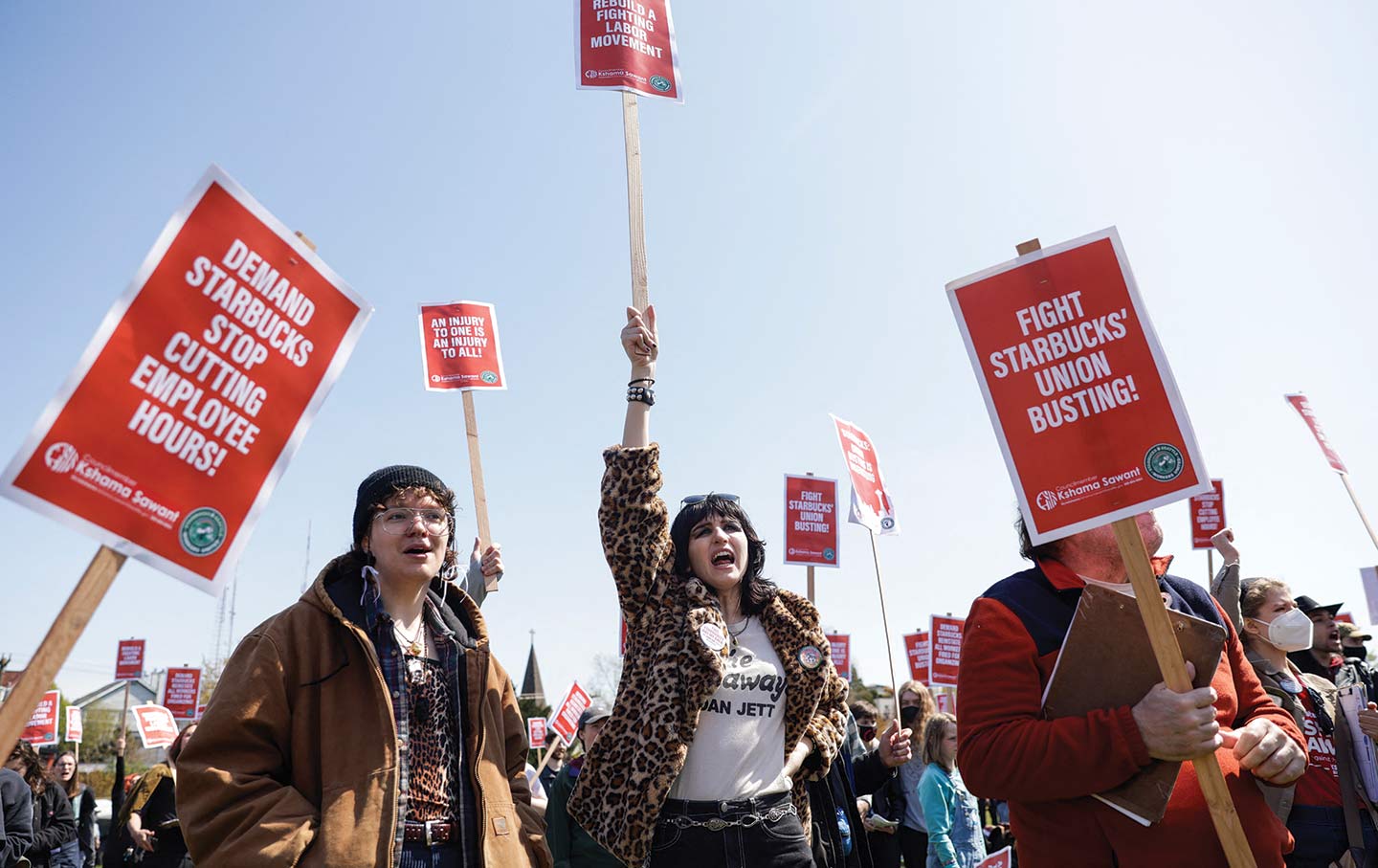
Seattle, Washington, 2022.

Organized Labor at a Crossroads Organized Labor at a Crossroads

How can unions adapt to a new landscape of work?

Books & the Arts / Nelson Lichtenstein