Trump Deserves Sympathy—but Not Support for His Candidacy
Getting shot does not ennoble the target or transform victims into moral leaders.
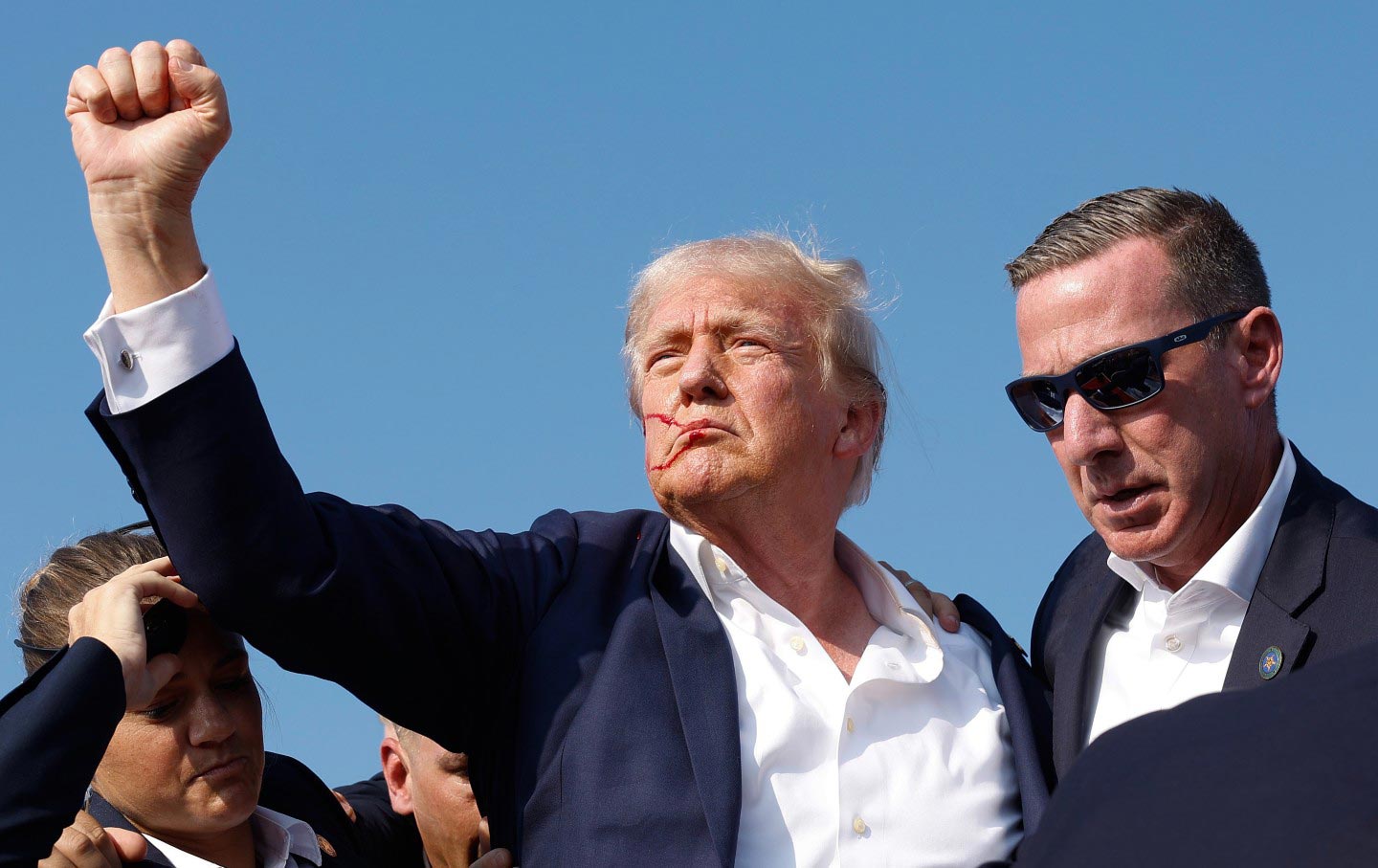
I was on the phone with my daughter when e-mails started streaming through. “Trump has been shot.” She teared up, asking in a fearful and trembling voice: “What does this mean for our country?”
What it means, I think, is that we have entered a moment when, more than ever, we need perspective, context, history, and clarity about the threat of political violence in a time so charged as this.
Being the victim of a shooting is terrifying. Donald Trump and those wounded and killed deserve our sympathy and concern. We should not forget the risks that political leaders take in a society as polarized and as gunned-up as this one.
The shooting at Trump’s rally in Pennsylvania yesterday—which authorities have labeled as an assassination attempt on the ex-president—ended with two people critically injured and two killed: a rally attendee and the shooter himself, 20-year-old Thomas Matthew Crooks. Trump crouched down immediately, having suffered a wound to his ear.
In this era of 24/7 propaganda, the incident was quickly turned into campaign grist. Fox News suggested Trump’s reaction made him into a hero, a symbol of American strength and courage. MAGA zealots—most vociferously Ohio Senator J.D. Vance, a suitor of Trump for the vice presidential nomination—blamed Biden’s criticism of Trump for spurring the shooting. Vance ignored the reality that no one has done more to coarsen our political dialogue than Trump, whose language has grown ever more violent and divisive over time. It was Trump who called on Iowans to vote for him and defeat “all of the liars, cheaters, thugs, perverts, frauds, crooks, freaks, creeps,” just as it was Trump who slandered political opponents and immigrants as “vermin.”
It is not an exaggeration to note that Trump has gloried in the language of political violence for more than a decade. He has configured his campaign around a paranoid martyrdom. He shares a strong currency of violence with his followers—during this and previous elections.
What should we take from this horror? We should begin by decrying all political violence as unacceptable. President Biden has condemned the shooting ardently and unequivocally. So too did prominent Democrats who fundamentally disagree with the former president. Hopefully, leaders from across the political and ideological spectrum will join in these condemnations. Just as, one hopes, they will condemn the growing threats of violence that public officials from the president to poll volunteers to judges and jurors now receive.
But this is about more than politics and public life. This country has too much gun violence and too many guns. Most of the victims are not famous, or powerful. With children in grade schools now forced to take part in active shooter drills, it is long past time for all of us to get serious about curbing gun violence.
But surely, we also recognize that when a former president is shot at, this stirs up our already agitated politics. While we condemn political violence, we should understand that getting shot does not ennoble the target or transform victims into moral leaders. A presidential race is not a WWE wrestling drama. Trump should be assessed, as anyone who would lead this country, based on his behavior, his character, and his agenda. That responsibility does not disappear because someone took a shot at him. The prospect of a Trump presidency was as deeply unsettling before Saturday’s shooting incident, and it remains so after it.
With his instinct for vaudeville and venom, and the Republican Convention about to convene, Trump is likely to use this dangerous moment and event for political advantage.
No one should be fooled. Donald Trump deserves sympathy for the attack he experienced. That does not, however, make him an acceptable candidate for the presidency.