
Let Them Eat Spreadsheets
How the EU is contributing to the rise of Europe’s far right.
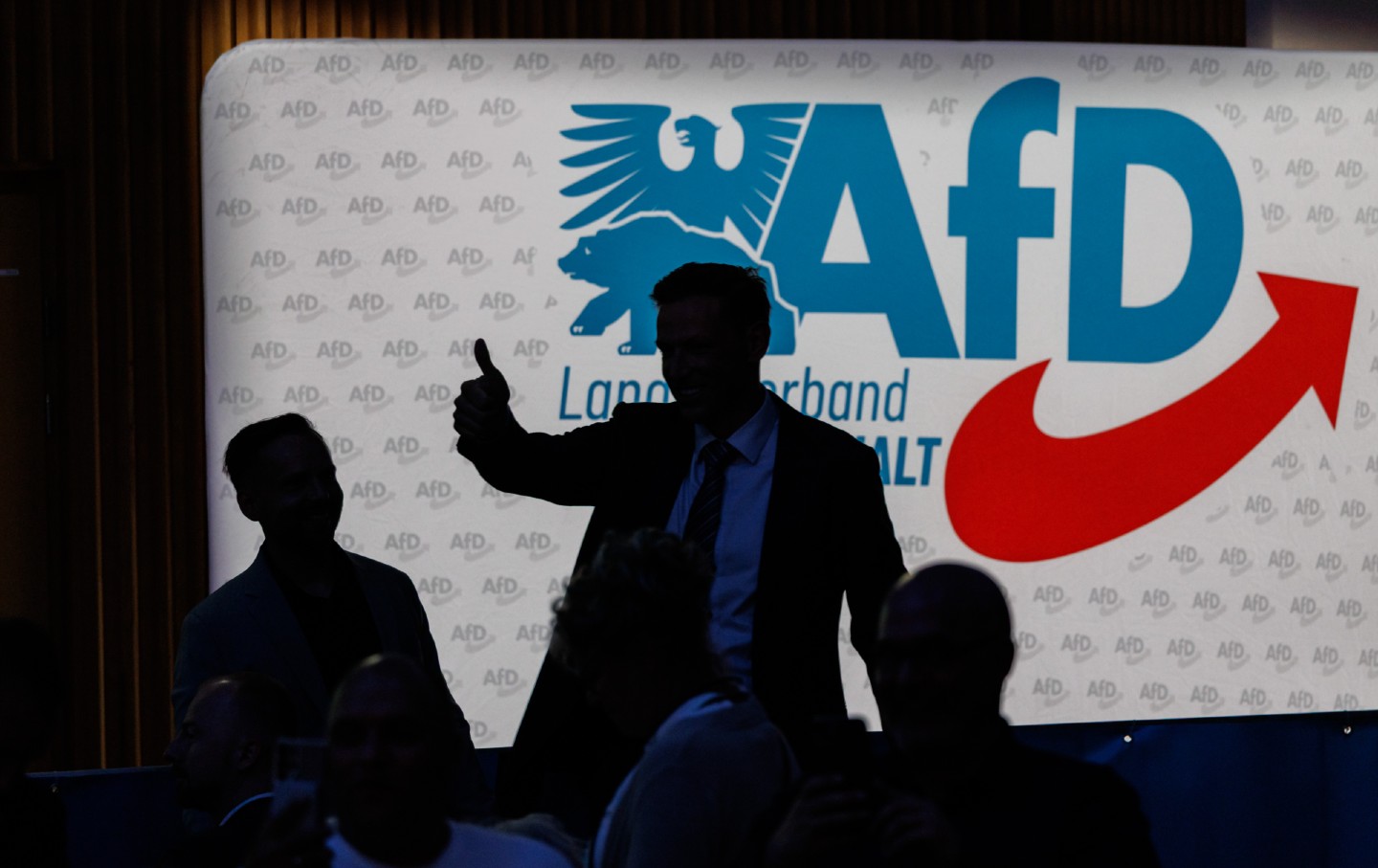
A far-right party in control of Germany? Alternative for Germany’s stunning success in last Sunday’s election brought the previously unthinkable closer to reality, leaving mainstream politicians asking: How could this be happening in the European Union?
The answer is an unpleasant one. Indeed, it may be time to consider that the far-right surge across Europe is happening not despite but at least partially because of the EU. The alliance isn’t holding back fascism; on the contrary, it’s buoying the far right from Poland to Portugal.
The reaction of two senior EU leaders to the AfD’s victory indicates the problem. “Only idiots or traitors can rejoice at the triumph of the far-right AfD in Germany,” sneered Polish Prime Minister Donald Tusk.
It’s a bit like Hillary Clinton’s infamous “basket of deplorables” remark. You can taste the sludge of disdain toward the rabble from the prime minister tasked with understanding and protecting them.
There’s no available poll on the AfD’s popularity in Poland, but a 2025 survey found a third of the 2.2 million Poles who live in Germany preferred the far-right party. How might they feel to learn they’re “idiots or traitors”?
Then there’s Germany’s Friedrich Merz, who, while admitting, “We are all deeply shocked. We did not expect it to turn out this way,” ruled out stepping down as chancellor, proclaiming, “Giving up is not an option for me.”
The sheer hubris of a man who has presided over the real possibility that Germany will see its first far-right party rule since the Third Reich—and somehow makes it about himself.
Fascism spreads when the establishment—the people who are supposed to be the adults in the room—are unable to address the needs of the nation; when they are, in fact, unable to comprehend their own blindness. Over the years, as the Tusks and Merzes preached about a Europe united against Russia and the need to adhere to a nebulous pan-European identity, the fascists began to sound like the sensible ones.
The reality is that much of Europe’s core mindset doesn’t extend beyond the horizon. When asked, “Who are you?,” an American will say, “I’m American.” An Italian will tell you what city he’s from; an ambitiously cosmopolitan Italian might tell you the region. Italians won’t even use the same playing cards as the town down the road (there are 16 regional decks in Italy)—and you expect them to identify as citizens of Europe, whatever that even means?
And yet for the past decade or so, European technocrats have been demanding that Italians and Hungarians, Spaniards and Poles sacrifice kitchen-table concerns and embrace unchecked migration and anti-Russia sanctions—all in the name of the EU.
The idea that every EU nation must share responsibility for taking in migrants failed as soon as it was announced. Member states like Poland, Hungary, and Czechia simply closed their borders and refused to comply, daring the EU to do something about it. The only repercussion was a toothless verdict from the European Court of Justice informing these countries that they broke EU law.
Popular
“swipe left below to view more authors”Swipe →Then there’s the colossal damage from the push by Brussels to maintain sanctions on Moscow. Sanctions are a two-way street, and the counter-sanctions imposed by the Kremlin have wreaked havoc on farmers across the continent as well as on German industry.
All this belt-tightening is being asked in order to support Ukraine against Russia’s invasion. But the shine from Ukraine wore off years ago; the stories coming out of Kyiv are of endless corruption scandals from Volodymyr Zelensky’s inner circle, seasoned with videos of press gangs kidnapping Ukrainian men off the streets to send them to the front.
For Europe’s ultranationalists, Brussels’s demands to accept migrants, hold the line against Russia, and continue to funnel money to Zelensky are manna from heaven. Is it any wonder far-right demagogues have successfully constructed the narrative that it is they, and not EU technocrats, who care for their people? Is it any wonder the ultranationalists could position themselves as the only politicians in the country who aren’t chumps?
Unfortunately, the response from EU leaders all too often mirrors that of Tusk and Merz—disdain and inability to admit failure. The arrogance has been especially pervasive when discussing former East German states, the AfD’s stronghold. Article after article insists that the mentality of former East Germans has been so corrupted by decades of Soviet rule that they can’t understand European values. Servile love of dictatorship is in their soil, we’re told. It’s in their DNA.
What gets mentioned less often is that wages in the former East Germany remain 18 percent lower than in the former West Germany. The simplest explanation for the AfD’s popularity may be that the people of the region crave neither totalitarianism nor the pablum of European values but food on their table. There’s a Greek-tragedy aspect to this: While EU leaders invoke lofty ideals, the fascists come off as the compassionate ones. The best way for the Tusk and Merz group to help stop the growth of Europe’s far right is by admitting failure and getting out of the way, leaving room for the rise of real alternatives to ultranationalism. Humility is the value Europe could use right about now.
Become a Sustaining Donor This September
Between the reemergence of right-wing red-baiting and Donald Trump’s use of the chilling National Security Presidential Memorandum–7 to criminalize left political organizing, we’re seeing McCarthyism reborn before our eyes.
This assault on democracy cannot be ignored or wished away. Resisting it requires bravery in the face of threats and repression, a steadfast commitment to the truth, and the unwavering belief that we can—and will—overcome this darkness.
We must have an independent media that sets the record straight, unearths corruption and abuses of power, and advances a politics of justice and dignity for all if we’re to win this fight.
That’s why I’m writing to you today. This September, The Nation needs to add 100 monthly donors to sustain our progressive journalism. Your contribution makes the next investigative report, the next truth-speaking column, and the next pathbreaking essay all possible.
I hope you’ll support our work with a recurring donation today. If you donate $10 or more a month, we’ll send you a brand new “Hands Off the Free Press!” sticker to recognise your commitment to our cause. Please, donate today.
Onward,
Katrina vanden Heuvel
Editor and Publisher, The Nation
More from The Nation

Accountability for the Gaza Genocide Can’t Focus on Netanyahu Alone Accountability for the Gaza Genocide Can’t Focus on Netanyahu Alone
Getting rid of one bad leader won’t bring justice.
How the AfD Benefits Politically From the Ukraine War’s Backlash How the AfD Benefits Politically From the Ukraine War’s Backlash
No election result is monocausal, and there are clearly many factors that have converged to make the AfD Germany’s most popular party.

Cuba: The “Pandora’s Box” of US Humanitarian Assistance Cuba: The “Pandora’s Box” of US Humanitarian Assistance
As the US strangles Cuba economically, Marco Rubio is running a $100 million “hearts and minds” program on the island.
The Palestine of Soraya Antonius and Annemarie Jacir The Palestine of Soraya Antonius and Annemarie Jacir
In The Lord and in Palestine ’36, the story of Mandatory Palestine comes into focus.

The German Far Right’s Shocking Victory in Saxony-Anhalt Is a Warning for Germany The German Far Right’s Shocking Victory in Saxony-Anhalt Is a Warning for Germany
The Alternative for Germany just shattered the political firewall meant to keep the party out. Now the country’s establishment is scrambling to stop the rise of the far right.

