More Than 100 Journalists Come Together With Their Fellow Journalists in Palestine and Against US Complicity in Their Killing
A coalition has sent a letter to Secretary of State Antony Blinken calling on the US to impose an arms embargo immediately.
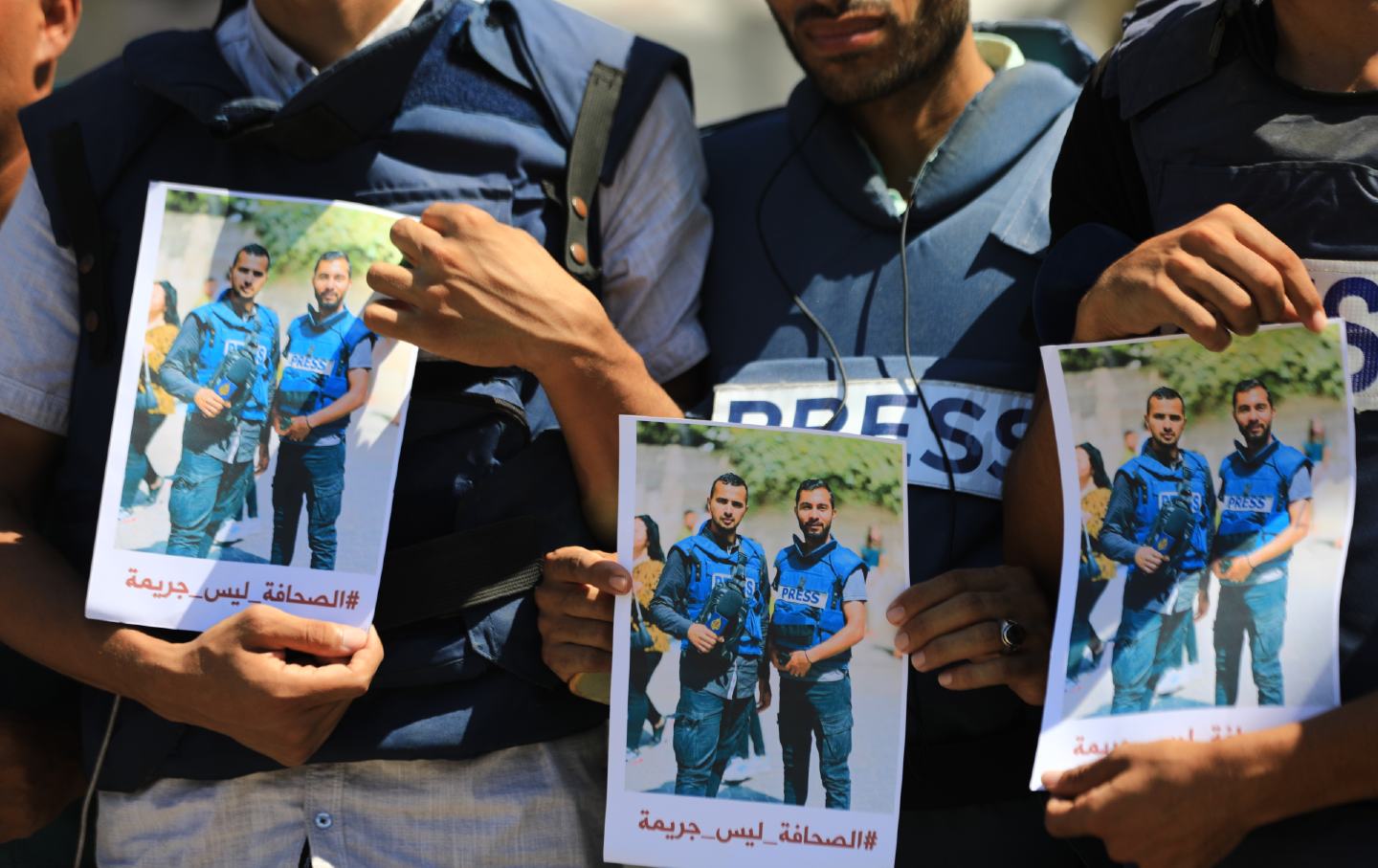
On July 31, 2024, Al Jazeera’s Ismail al-Ghoul was reporting from the Shati refugee camp in Gaza. Israel had just assassinated Ismail Haniyeh, head of Hamas’s political bureau and a negotiator in the Gaza ceasefire talks, in Iran. Israel’s killing left many bracing for a regional war, and the reporter headed to Haniyeh’s former home along with cameraman Rami al-Rif to cover the developing story. As they reported, the Israeli military carried out a strike on a nearby house. Al-Ghoul and al-Rif were asked to leave the area; they complied. Wearing blue press vests, they got in a car that also clearly identified them as press. Israel launched a missile strike on the car, killing both men. Photos of the aftermath showed al-Ghoul’s headless body still wearing the blue press vest.
It was never much of a mystery who launched the missile, but a day after the gruesome murder, Israel took credit. The official account of the Israeli military boasted that they had “eliminated” al-Ghoul. Preposterously, the post claimed that al-Ghoul was a Hamas operative who “instructed other operatives on how to record operations and was actively involved in recording and publicizing attacks against IDF troops,” a claim vehemently denied by Al-Jazeera.
Throughout its 10-month war on Gaza, Israel has killed a staggering number of journalists. According to the Palestinian Journalists Syndicate, 160 journalists and media workers have perished at the hands of Israel. This is the largest number of journalists killed during a war in recorded history. By comparison, 69 journalists were killed during World War II, and 63 journalists were killed during the Vietnam War.
By arming Israel, the State Department bears responsibility for its killing of journalists. That is why we, as leaders of organizations dedicated to defending press freedom and free expression, have organized a coalition of journalists and journalism advocates to coauthor a letter to US Secretary of State Antony Blinken, calling on the United States to impose an arms embargo on Israel immediately.
More than 100 journalists, including four Pulitzer Prize winners, along with 18 news outlets and seven press freedom organizations, most of them American, have come together to take a stand in solidarity with their fellow journalists in Palestine and against US complicity in their intentional killing.
The high number of journalists killed is part of the shocking death toll. Gaza is one of the most densely populated places on Earth and Israel has unleashed a bombing campaign that has exceeded the destruction of the Allied bombing of Dresden. Within the first month of the war alone, Israel dropped explosives on Gaza that were equivalent to two nuclear bombs in terms of tonnage. This genocidal bombardment has led to nearly 40,000 deaths.
But it isn’t just Israel’s indiscriminate killings that have resulted in the unprecedented killing of journalists. By Israel’s own admission, al-Ghoul was targeted directly. The Palestinian Journalists Syndicate filed an amicus brief in support of an American lawsuit charging the Biden administration with violating the Genocide Convention. In the brief, they stated, “Evidence strongly indicates that the vast majority of the journalists and media workers killed since the start of the genocide were specifically targeted for assassination by the Israeli military.” Al Jazeera similarly has accused Israel of assassinating its journalists. While the scale of Israel’s killing of journalists is without precedent, Israel has a longer history of targeting Palestinian journalists. Israeli snipers were credibly accused of intentionally targeting journalists during the 2018 Great March of Return and independent investigations have found evidence that in 2022 intentionally killed Al Jazeera reporter Shireen Abu Alkeh.
Israel’s assassination of journalists, like its wider military actions, are made possible by US support. The US provides the weapons and uses its diplomatic and political clout to make sure Israel is sheltered from any accountability when it uses those weapons to violate international law.
“Israel’s military actions are not possible without US weapons, US military aid, and US diplomatic support,” we write. “By providing the weapons being used to deliberately kill journalists, you are complicit in one of the gravest affronts to press freedom today.”
The letter’s signers include some of the most well-known and most decorated journalists of our time: Laura Poitras, Kai Bird, James Bamford, Spencer Ackerman. Many of the signatories are contributors to the Nation and Jacobin. The journalists are joined by entire newsrooms, including Middle East Eye, Current Affairs, Mondoweiss, Drop Site News, Truthout, In These Times, Antiwar.com, and The Real News,and press freedom groups like the Courage Foundation, Defending Rights & Dissent, Roots Action, Project Censored, and Freedom of the Press Foundation. These influential reporters, outlets, and free-expression advocates recognize that Israel’s killing of reporters in Gaza, who brave endless airstrikes, tanks, and snipers to show the world what’s happening, is a deliberate effort to shield their assault on Palestinians from global scrutiny—and therefore to shield themselves from international accountability.
After 10 months of indiscriminate bombing, we all must speak up. Only with contentious people around the world loudly condemning these horrific abuses can we hope to create the necessary international pressure to bring them to an end.
Earlier this year, Secretary Blinken called on “every nation to do more to protect journalists” while affirming “unwavering support for free and independent media around the world.” But just 13 days after Israel killed Ismail al-Ghoul, and 12 days after the IDF justified his murder, the United States approved a $20 billion weapons package to Israel, to include fighter jets and other military equipment. Blinken’s words ring hollow, and the journalist death toll continues to rise.
Far too often, mainstream journalists have papered over Israel’s crimes, fearful of puncturing their facade of objectivity and losing their access to US and Israeli leaders. Leading newspapers have made widespread use of the passive voice to conceal culpability, declined to investigate claims of intentional targeting, and favored Israeli propaganda over Palestinian eyewitness accounts. Enough. We 113 journalists are taking a stand and stating the facts plainly: Israel is intentionally killing reporters amid its wider assault on Palestinian civilians. This is a war crime. The US is complicit, and it must stop today.
Disobey authoritarians, support The Nation
Over the past year you’ve read Nation writers like Elie Mystal, Kaveh Akbar, John Nichols, Joan Walsh, Bryce Covert, Dave Zirin, Jeet Heer, Michael T. Klare, Katha Pollitt, Amy Littlefield, Gregg Gonsalves, and Sasha Abramsky take on the Trump family’s corruption, set the record straight about Robert F. Kennedy Jr.’s catastrophic Make America Healthy Again movement, survey the fallout and human cost of the DOGE wrecking ball, anticipate the Supreme Court’s dangerous antidemocratic rulings, and amplify successful tactics of resistance on the streets and in Congress.
We publish these stories because when members of our communities are being abducted, household debt is climbing, and AI data centers are causing water and electricity shortages, we have a duty as journalists to do all we can to inform the public.
In 2026, our aim is to do more than ever before—but we need your support to make that happen.
Through December 31, a generous donor will match all donations up to $75,000. That means that your contribution will be doubled, dollar for dollar. If we hit the full match, we’ll be starting 2026 with $150,000 to invest in the stories that impact real people’s lives—the kinds of stories that billionaire-owned, corporate-backed outlets aren’t covering.
With your support, our team will publish major stories that the president and his allies won’t want you to read. We’ll cover the emerging military-tech industrial complex and matters of war, peace, and surveillance, as well as the affordability crisis, hunger, housing, healthcare, the environment, attacks on reproductive rights, and much more. At the same time, we’ll imagine alternatives to Trumpian rule and uplift efforts to create a better world, here and now.
While your gift has twice the impact, I’m asking you to support The Nation with a donation today. You’ll empower the journalists, editors, and fact-checkers best equipped to hold this authoritarian administration to account.
I hope you won’t miss this moment—donate to The Nation today.
Onward,
Katrina vanden Heuvel
Editor and publisher, The Nation
More from The Nation
Mahmood Mamdani’s Uganda Mahmood Mamdani’s Uganda
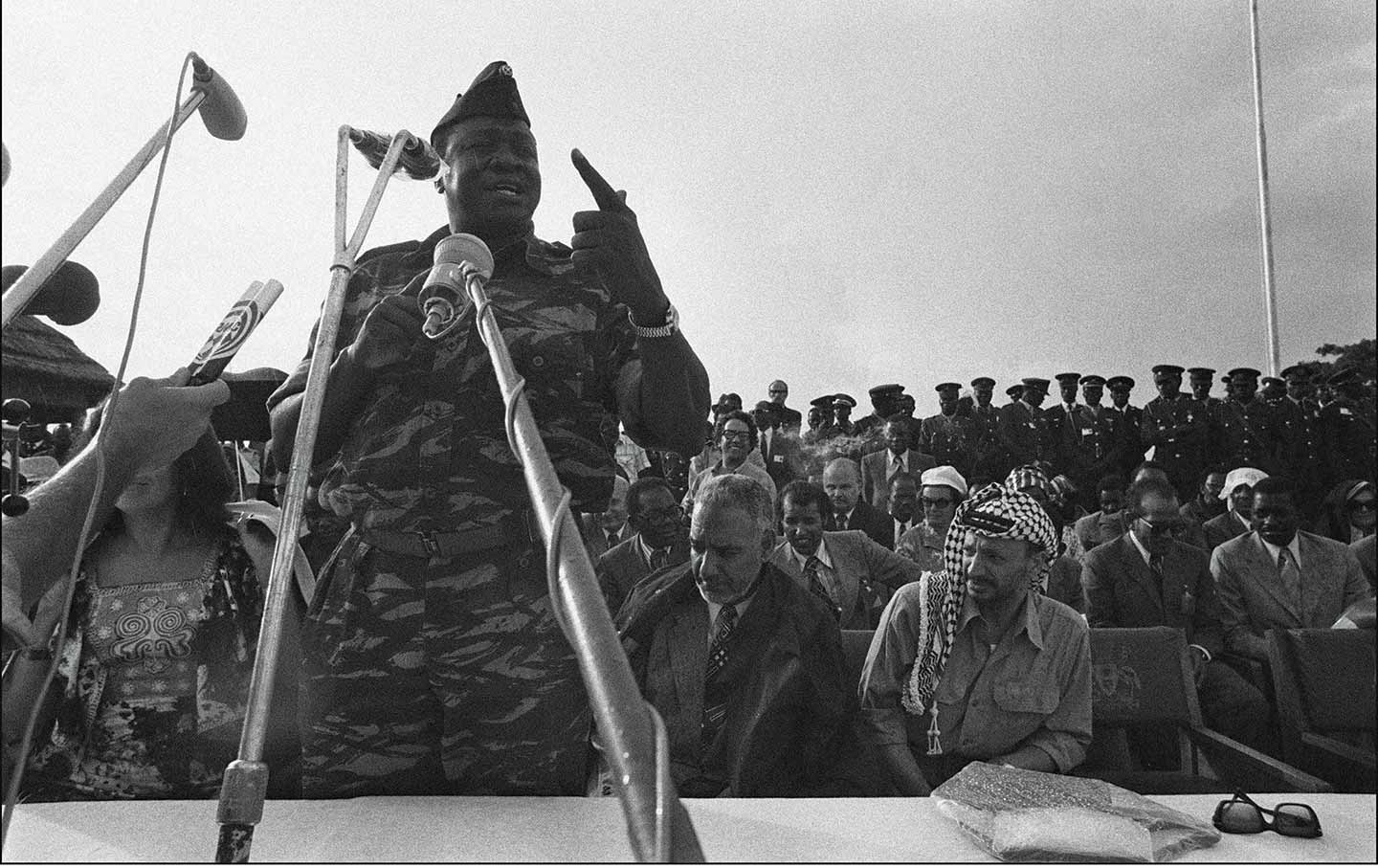
In his new book Slow Poison, the accomplished anthropologist revisits the Idi Amin and Yoweri Museveni years.

The US Is Looking More Like Putin’s Russia Every Day The US Is Looking More Like Putin’s Russia Every Day
We may already be on a superhighway to the sort of class- and race-stratified autocracy that it took Russia so many years to become after the Soviet Union collapsed.
Israel Wants to Destroy My Family's Way of Life. We'll Never Give In. Israel Wants to Destroy My Family's Way of Life. We'll Never Give In.
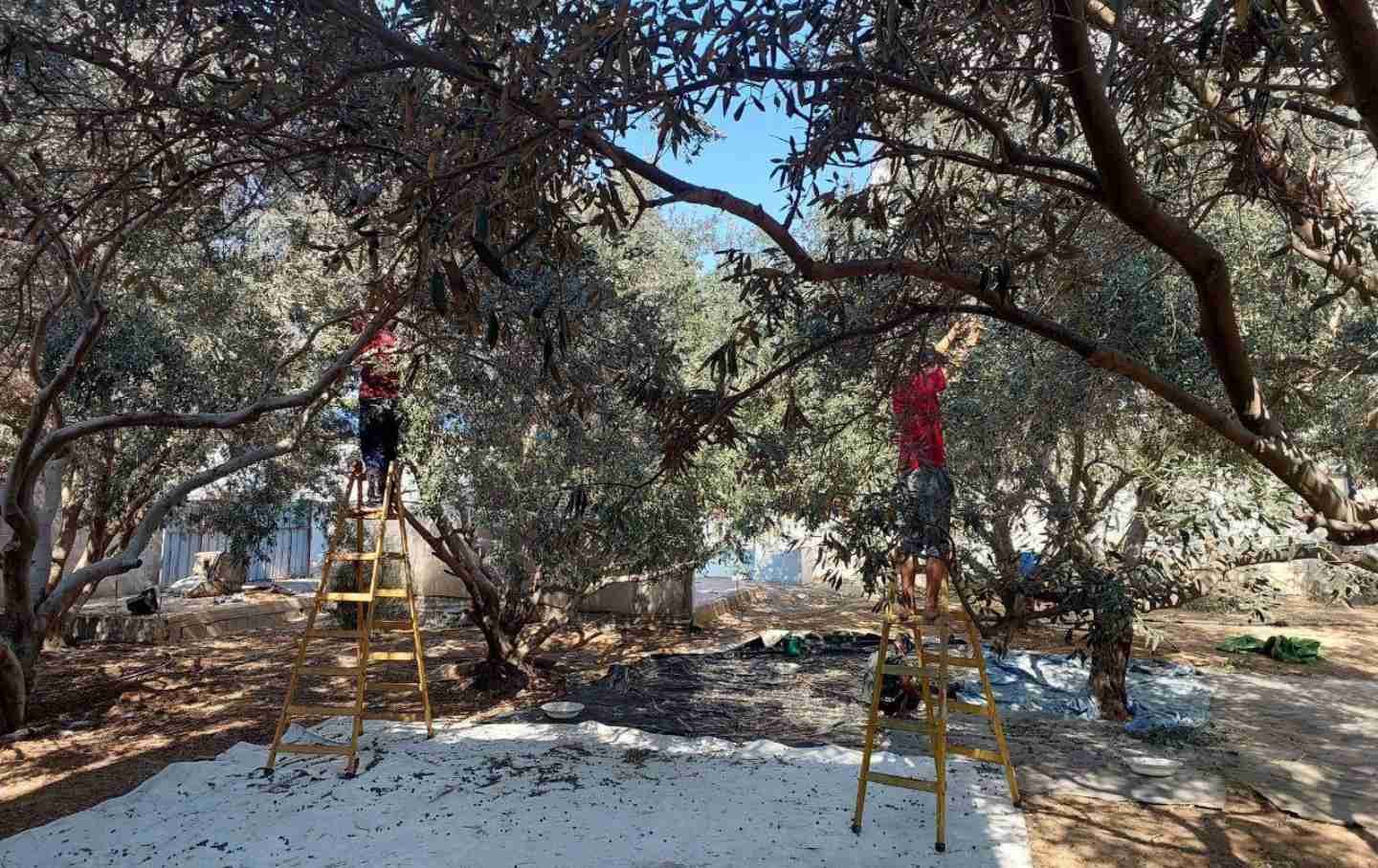
My family's olive trees have stood in Gaza for decades. Despite genocide, drought, pollution, toxic mines, uprooting, bulldozing, and burning, they're still here—and so are we.
Trump’s National Security Strategy and the Big Con Trump’s National Security Strategy and the Big Con
Sense, nonsense, and lunacy.
Does Russian Feminism Have a Future? Does Russian Feminism Have a Future?
A Russian feminist reflects on Julia Ioffe’s history of modern Russia.
Ukraine’s War on Its Unions Ukraine’s War on Its Unions
Since the start of the war, the Ukrainian government has been cracking down harder on unions and workers’ rights. But slowly, the public mood is shifting.

