A New International Campaign Rises in Ukraine
Its goal is unmistakable: let the captives of Russia’s war go.
Maksym Butkevych did not set out to fight a war. A Ukrainian journalist and human rights activist, he studied philosophy in Kyiv and social anthropology for his master’s degree at the University of Sussex in England. He worked for the BBC Ukrainian Service and later for the UN High Commissioner for Refugees in Eastern Europe as well as civil society groups and human rights organizations in Ukraine. In February 2022, when Russian launched its invasion of Ukraine, Maksym enlisted in the Armed Forces of Ukraine, posting on Facebook that he had put his work on hold. “There are times when you have to be ready to defend what is important,” he wrote. “And the rest—after the victory.” He was 44 years old.
Captured by the Russians in June 2022, he endured more than two years in captivity before being released last autumn in a prisoner exchange. Initially held in a section of the prison for prisoners of war, Maksym was subject to a show trial that led to his transfer to a Russian penal colony on the occupied territories of Ukraine. While detained he was beaten, deprived of food, and routinely subjected to degrading and humiliating practices, such as the use of stress positions (a form of torture) and excessive physical exercise. The Russian guards set out to break his spirit. He was offered the chance of being “freed soon,” but only on the condition that he give Russian media an interview, prepared in advance, condemning all his previous activity, his community, and his homeland. He refused. Then, under duress, he was forced to sign a fabricated confession alleging that he had taken part in war crimes. He was tried, convicted in a show trial, and sentenced to 13 years in prison.
The story of this personal ordeal is one of many that could be told about the horrors of the Russian occupation. There are thousands more POWs detained in Russian prisons.
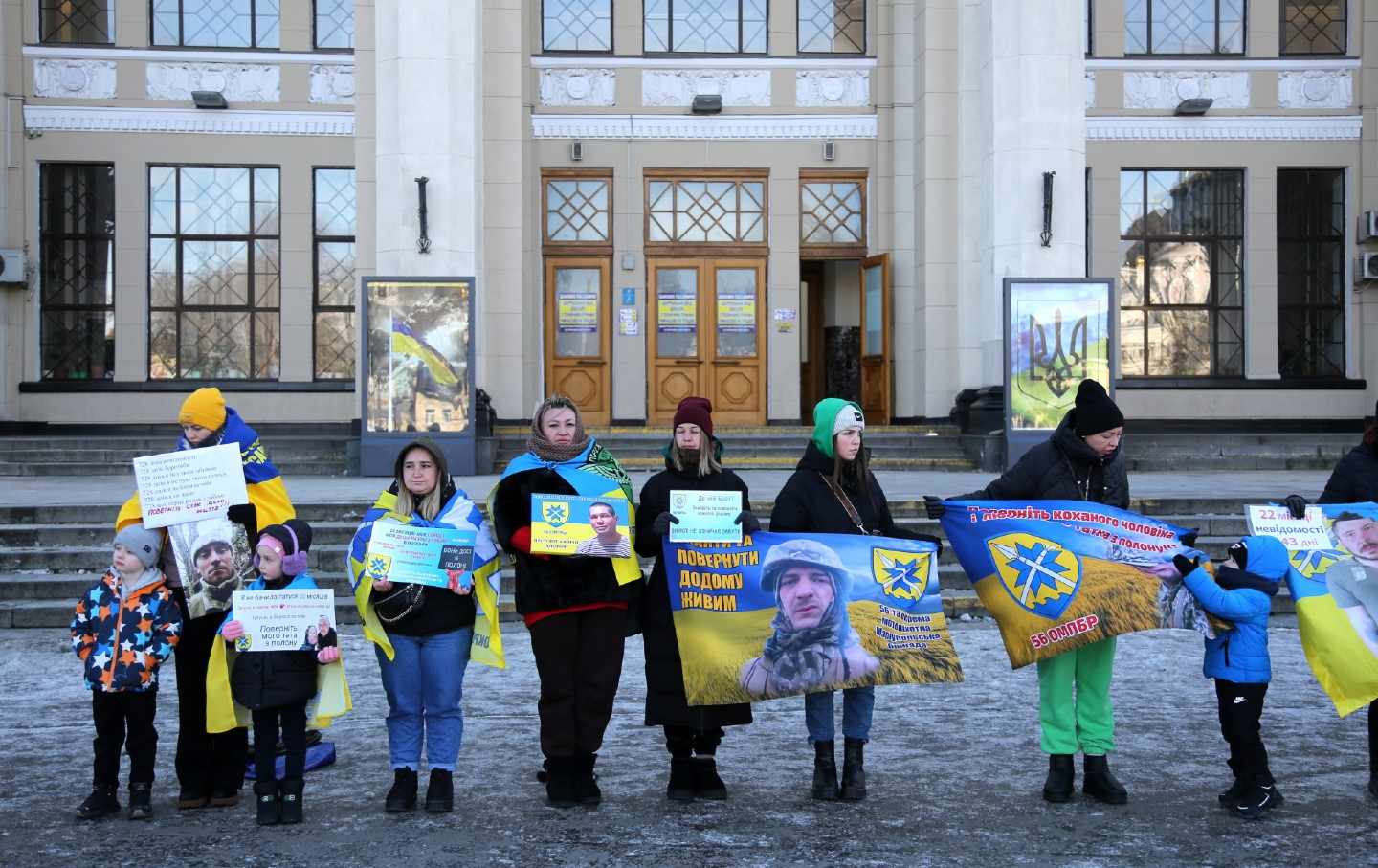
Prisoners are however subject to negotiated exchanges between the two sides, but this is not the case for the thousands of Ukrainian civilians who have been unlawfully detained or disappeared into the carceral machinery of the Russian regime. Ukraine’s Ombudsperson estimates that 16,000 Ukrainian civilians are missing and held unlawfully in Russia. As of September 1, 2024, the Kharkiv Human Rights Protection Group linked to the Nobel Peace Prize–winning Russian organization Memorial have individually documented the disappearance of 7,615 people.
The findings of UN bodies and human rights organizations such as the Nobel Prize–winning Center for Civil Liberties in Kyiv and the Kharkiv Human Rights Protection Group have confirmed that Maksym’s treatment is the norm, not the exception. For example, a December 2024 report from the United Nations Office of the High Commissioner for Human Rights reports continued executions, torture, and ill-treatment of Ukrainian POWS including electric shocks, beatings, prolonged solitary confinement, and sexual violence. Ukrainian POWs and civilians have been subjected to torture and other forms of degrading and inhumane treatment, including the degradation of their national identity. Stripped of their freedom, prisoners face the routine violation of their basic personal dignity. This forms part of a package of crimes by the occupying army.
In addition, since the full-scale invasion at least 20,000 Ukrainian children have been deported or forcibly transferred to Russia. This heinous crime led the International Criminal Court to bring charges against Russian President Vladimir Putin.
Citizens of Russia also live with the daily repressions of the autocratic regime. As of August 2024, the UN Office of the High Commissioner for Human Rights stated that there were 1,372 detainees in Russia (both Russian and from other countries including the US) held on politically motivated charges, most of them for peacefully opposing the war in Ukraine. Punished brutally for their courage to speak out, they join the long list of those whose lives have been tragically upended by the war.
President Donald Trump has announced his intention to seek a peace deal with Russia. He seems to have already accepted Russia’s demands that it retains control of captured territory and that Ukraine can never join NATO. He is also suggesting that Ukraine itself and European countries be excluded from any talks. This is why it is so important, at this juncture, to raise the plight of the captives of the Russian invasion. Fortunately, amid this grim geopolitical landscape, a new international movement has emerged to press for the safety and rights of the civilian detainees and POWs.
Under the banner of People First, a new international campaign has formed, led by the two Nobel Peace Prize laureates, the Center for Civil Liberties in Ukraine and Memorial in Russia, and supported by a wider coalition of human rights groups from Ukraine, Russia, and the international community. At the time of writing, 31 organizations have put their name to this vital campaign. The campaign is calling for a focus on the human dimension in any forthcoming negotiations. The demand is a simple one: At the outset of the negotiations, Russia should let the captives of the invasion go.
The People First campaign is highlighting one of the most harrowing injustices of the war. In doing so, it shows how the war is not simply a contest over territory but about political systems, rights, and values. It is calling for the release of all POWs; this is an obligation under the laws of wars in the event of a ceasefire. It is also calling for the release of all Ukrainian civilians captured and illegally detained, including those sentenced by Russian courts in sham proceedings, unconditionally and without delay and to allow them to return to their homes, whether in Ukraine or in occupied territories. Other demands of the campaign include the need for swift return of the illegally transferred or deported children to Ukraine. Russian anti-war political prisoners should also be released and face no limits on their freedom of movement, including being allowed to travel abroad if they wish to do so.
To ensure that these processes are effective and transparent, a special independent international mechanism should be established. This body would oversee the compliance of all parties with international humanitarian law, monitor the return of prisoners, and provide regular updates on progress. This is necessary not only to hold violators accountable but also to provide a measure of hope and reassurance to those still enduring captivity.
The message is both urgent and fundamentally humanitarian in its ethos: The lives and dignity of individuals cannot be treated as collateral damage in geopolitical negotiations between states. Peace talks cannot be transactional, focusing on whatever compromise over the lines of control may be struck. Instead, the aim should be to create the conditions in which people—those that have experienced unbearable hardships—can feel safe and have some hope for the future.
For people like Maksym Butkevych who have gone through such terrible suffering in their struggle for freedom and dignity, this step—minimal though it is—is a basic foundation. It is a starting point in the determination to end impunity and demand dignity.
The release and return home of the captives is not simply a “gesture of goodwill” but a moral imperative. The international community must insist, whoever is involved in the talks, that this is the first principle of any agreement.