The CIA Targets Cuba… Again
Covert operations add to Trump’s ruthless regime change efforts.
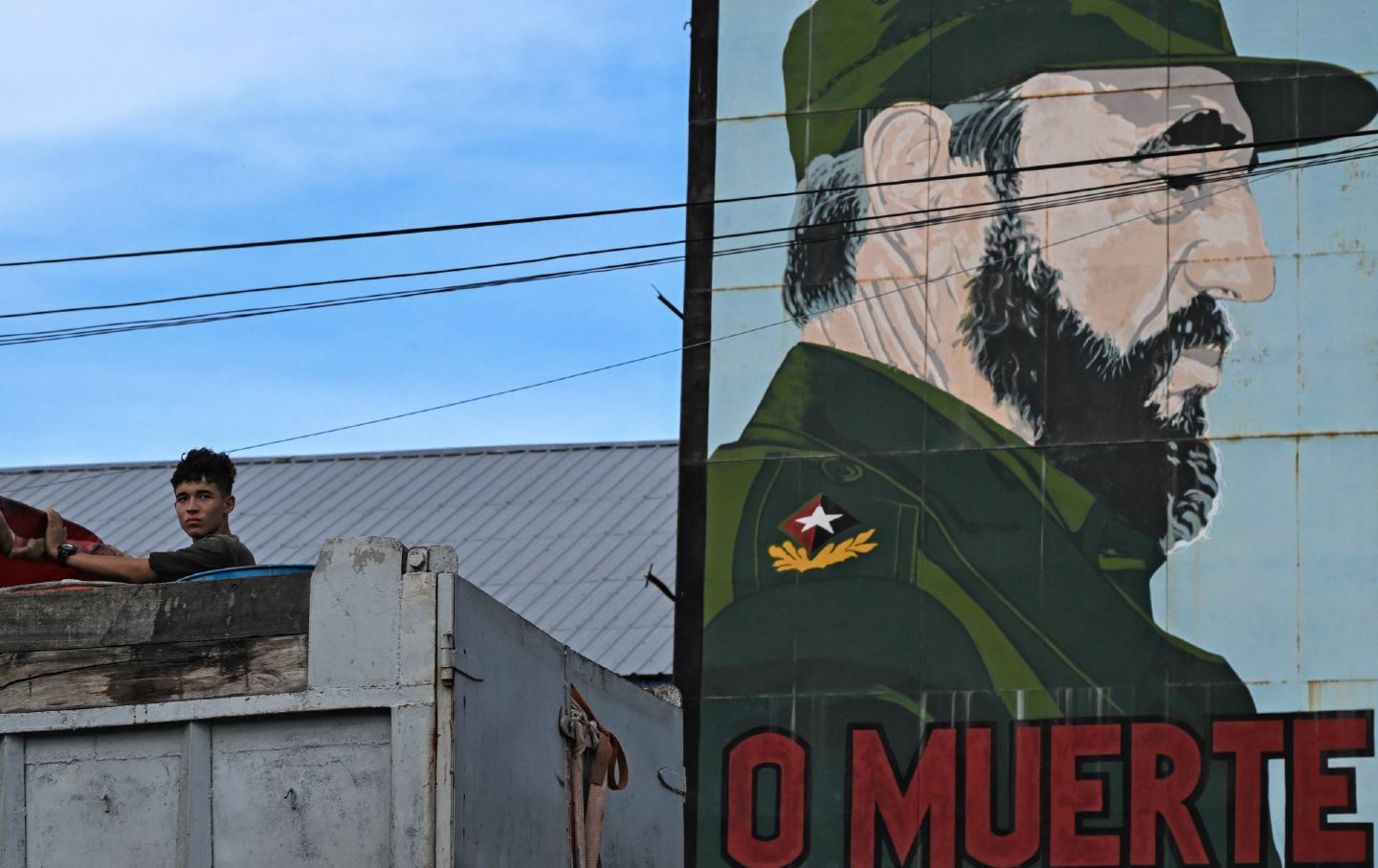
As part of President Trump’s escalating efforts to “take” Cuba, the CIA is significantly expanding its clandestine operations targeting the island nation. In recent days, US officials have leaked word that the CIA is increasing its agents and assets inside Cuba, repositioning satellites to enhance intelligence gathering, as well as adding cyberwarfare and covert influence specialists to the growing number of personnel assigned to implement the so-called “Donroe Doctrine” in the Caribbean.
Indeed, the Agency has established a new, secret “task force” whose covert mission, reportedly, is to sow division and destabilization inside the Cuban government—creating conditions conducive for an internal coup. The secret plan calls for the CIA to elevate pro-American leaders to positions of power. Those “pragmatic”—meaning malleable—Cuban officials would then do Washington’s bidding, resulting in “regime alteration rather than regime change,” as The New York Times clarified the covert efforts designed to replicate the Venezuela model. As part of the administration’s new National Intelligence Priorities Framework, the Times ominously reported, Cuba has been designated a “Priority 1” nation.
“The intentions here are no surprise, since Cuba has long been the target of the CIA’s efforts at espionage, subversion, and destabilization, including terrorism,” Cuban Deputy Foreign Minister Carlos Fernández de Cossío, responded in an interview.
To be sure, the Cubans have seen this playbook of dirty tricks before; since the advent of the 1959 revolution, Cuba has survived just about every form of paramilitary, assassination, infiltration, sabotage, and black propaganda operation the CIA has in its clandestine arsenal. But the covert operations will now augment a multifaceted US effort to coerce the Cuban leadership into bending the knee of the revolution to the Colossus of the North. Overseen by Secretary of State Marco Rubio, the Trump administration’s methodical “maximum pressure” campaign to asphyxiate an entire nation is, by far, the most existential threat Cuba has ever faced.
The CIA’s Covert Wars
The history of CIA covert action against Cuba remains legendary. The Bay of Pigs, Operation Mongoose, Mafia-supported assassination plots—poison pills, poison pens, poisoned cigars, toxic scuba diving suits, exploding seashells—among other clandestine regime change efforts, dominate the Agency’s checkered operational past. As part of this history, the CIA’s new Cuba task force has a number of predecessors—all of them abject failures.
Only a year after Fidel Castro took power, in early 1960 the CIA set up its first Cuba-centric unit inside its Western Hemisphere division known as “Branch 4 Task Force.” During the very first meeting of the Branch 4 task force, according to a secret summary, the head of that division, Col. J.C. King, reported that Fidel Castro had the overwhelming support of the Cuban people. “Unless Fidel and Raúl Castro and Che Guevara could be eliminated in one package,” King advised, “this operation can be a long, drawn-out affair and the present government will only be overthrown by the use of force.”
Drawing on that reality, the task force planning for regime change evolved into the Bay of Pigs paramilitary invasion—the most high-profile debacle in the CIA’s long history.
In the wake of Cuba’s stunning defeat of the CIA-led brigade of exiles at Playa Giron, the CIA’s clandestine efforts against Cuba were largely suspended, along with the Branch 4 task force, as President Kennedy considered dismantling the Agency and distributing its functions to the Defense and State Departments. In the late summer of 1961, however, Kennedy approved a revival of CIA operations, and eventually a broad new regime change program—Operation Mongoose.
Another task force was created: “Task Force W.” A gun-toting former FBI agent named William Harvey was put in charge. But during the October 1962 missile crisis, when the world teetered on the edge of nuclear Armageddon, Harvey drew the ire of Attorney General Robert Kennedy, who doubled as the chairman of the Special Group (Augmented) that oversaw the Mongoose program. The Agency was supposed to “stand down” on its sabotage operations during the crisis, but at the height of the nuclear confrontation a CIA team of infiltrators attempted to blow up Cuba’s Matahambre copper mine. By the end of 1962, CIA Director John McCone had transferred Harvey to Rome; in early 1963, the veteran CIA official Desmond Fitzgerald took over the CIA’s Cuba unit, now renamed the “SAS”—Special Activities Staff.
Under Fitzgerald, the CIA pursued a covert program codenamed AMTRUNK, aimed at “splitting the regime”; the operation established an uncanny precedent for Trump’s current covert plan to fragment the Cuban government. In a top-secret proposal to Director McCone, Fitzgerald proposed “a pincers strategy of economic strangulation to weaken and undermine the regime in conjunction with an intensive probing effort to identify and establish channels of communication to disaffected and potentially dissident non-Communist elements in the power centers of the regime.” The CIA’s mission would be to “identify and seek out these officers,” according to the proposal, and “try to convince them that their future lies only in disposing of Castro and establishing a new government which could be returned to the OAS family of nations.”
Fitzgerald pinned his hopes for the success of AMTRUNK on a CIA mole inside Castro’s military, Rolando Cubela, aka AMLASH. “The keystone of the plan,” notes Brian Latell, the CIA’s former lead analytical expert on Cuba, “was the use of Cubela to stimulate rebellion in the Cuban military.” In a series of furtive meetings in Brazil and Paris, CIA officers (including Fitzgerald himself) attempted to convince Cubela to organize a military uprising against Castro. But Cubela, who may have been acting as a double agent, told his CIA handlers that assassinating Castro was a more promising coup strategy. He asked the CIA to provide him with a sniper rifle; but at a secret meeting in Paris on November 22, 1963—that fateful day Kennedy was assassinated in Dallas—a CIA agent brought AMLASH a fake ballpoint pen with a hypodermic needle hidden inside, now one of the most infamous CIA devices in the murderous folklore of the Agency.
“Better Than the KGB”
For the CIA, Cuba has been the elusive great white whale—a Moby-Dick to the Agency’s Captain Ahab. The CIA’s Cold War efforts to roll back the Cuban revolution still haunt the history of its clandestine warfare: the Bay of Pigs became known as a “perfect failure” that almost cost the CIA its institutional existence. AMTRUNK failed, as did the multiple assassination plots against the Castros. When those plots were revealed in the mid-1970s by the special Senate committee chaired by Idaho senator Frank Church, they generated one of the biggest political scandals in the Agency’s controversial history.
In mid-1987, the CIA suffered yet another major defeat at the hands of the Cubans—one far less publicized than the Bay of Pigs. A top Cuban intelligence officer, Florentino Aspillaga, walked into the US Embassy in Vienna and asked to defect. In return he provided what one senior CIA official described as “blockbuster” intelligence. “He told us that all the Cuban agents that the CIA had in Cuba had been controlled from the beginning by Cuban intelligence,” the former Vienna station chief, James Olson, recounted in a revealing interview with Foreign Policy. “We had been had. We had been beaten,” Olson remembered thinking. “And we were absolutely devastated by it.”
From 1961 to 1987, Aspillaga’s information revealed, virtually every Cuban the CIA had recruited was, in fact, a double agent, many of whom the DGI, Cuba’s intelligence agency, had “dangled” to the CIA as “carnado”—bait. “Cuban intelligence had completely owned our entire asset inventory on the island,” Olson concluded. That meant all the CIA’s operational techniques had been compromised; and the money the CIA had paid its informants and assets had ended up in the coffers of the Cuban intelligence agency. It meant that the CIA had to officially retract decades of intelligence reports it had distributed to other US national security agencies. It meant that the identities of at least 170 CIA case officers who had worked with those Cuban agents had been compromised, with dire consequences for their future clandestine careers. “It was,” Olson stated, “one of the worst defeats that I think US intelligence has ever suffered.”
To add insult to the CIA’s injury, less than a month after Aspillaga’s defection, Fidel Castro broadcast a six-part series on Cuban national television on the CIA’s operations in Cuba. The various episodes showed footage of CIA officers in Havana and elsewhere on the island engaging in various espionage tradecraft activities, including conducting dead drops, holding furtive meetings, and positioning communications equipment. Cuban intelligence had been filming their every move. “We looked like the gang that could not shoot straight,” Olson recalled.
Popular
“swipe left below to view more authors”Swipe →Cuban intelligence had humiliated the CIA, “in terms of their tradecraft, and their discipline, their sophistication and their resistance to penetration,” Olson said. “They were better than the KGB.”
Another “Pincer” Operation
The CIA’s history in Cuba remains a cautionary tale of the self-destructive abuse of imperial power against a small but proud country. Nevertheless, the Trump administration is now mounting a modern version of Operation AMTRUNK, with a renewed “pincer” approach: a concerted effort of “economic strangulation” that will enhance covert operations to recruit officials inside the Cuban government whom the US can control. The blueprint for today’s clandestine warfare dates back to the early 1960s. Even in failure, they generated pain and suffering for the Cuban people, as the US is once again dedicated to doing now.
US officials make no secret that strangling Cuba into submission is their goal. Indeed, Secretary of State Rubio, who oversees the administration’s interventionist policy in Cuba, refers to the “noose” the US is progressively tightening. “Every time they create a new mechanism in which they try to get out of the noose, we just close it off,” Rubio stated in an interview with Axios last week. “They certainly can’t wait us out.”
After decades of economic blockades and CIA dirty tricks, Washington is still trying to teach the Cubans an imperial lesson. “What we’re trying to teach them,” according to Rubio’s chilling message, “is there are no escape valves.”
More from The Nation
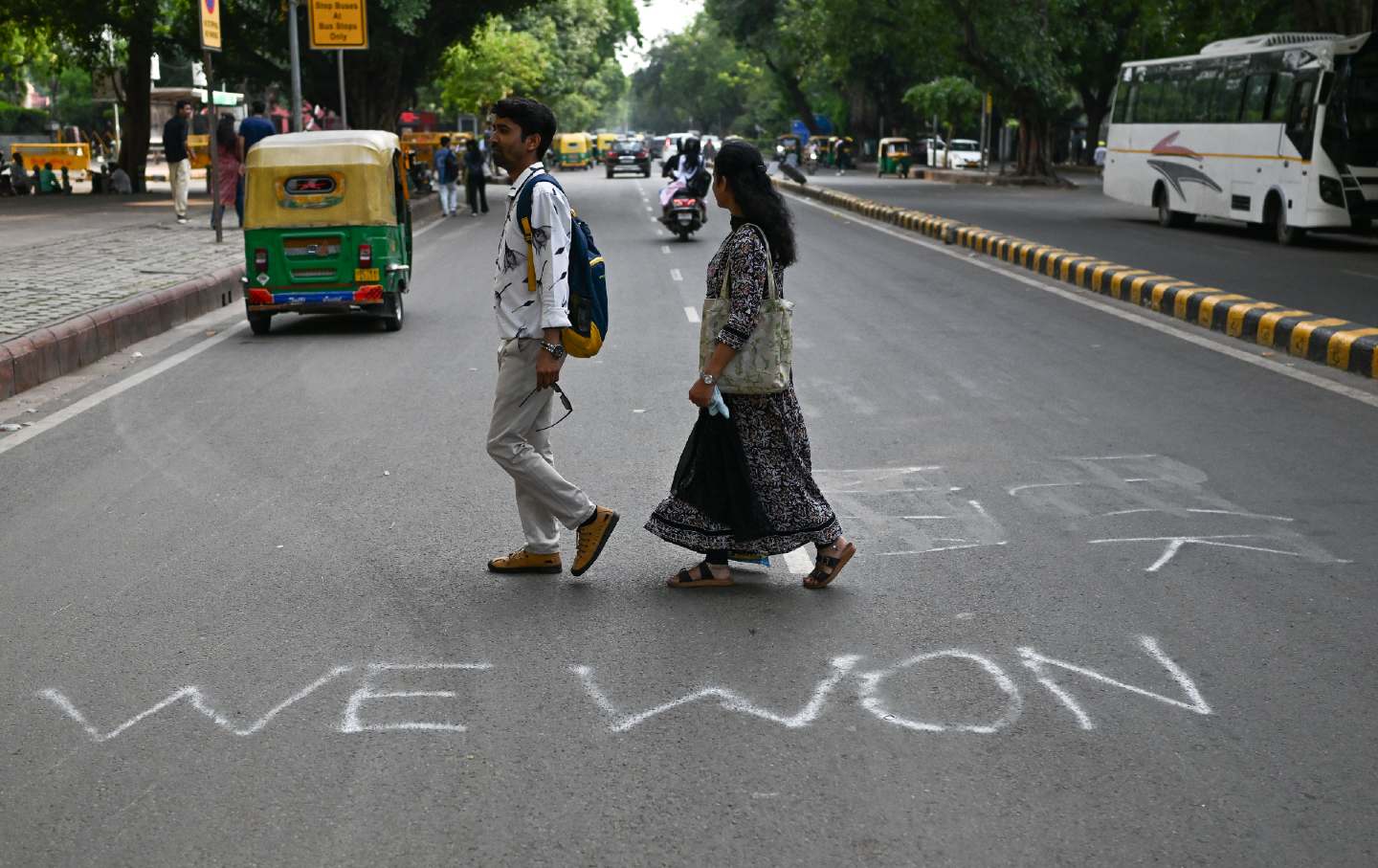
India’s Cockroaches Were Never Radical Enough India’s Cockroaches Were Never Radical Enough
The Cockroach Janata Party protests won a great victory. What will be their legacy?
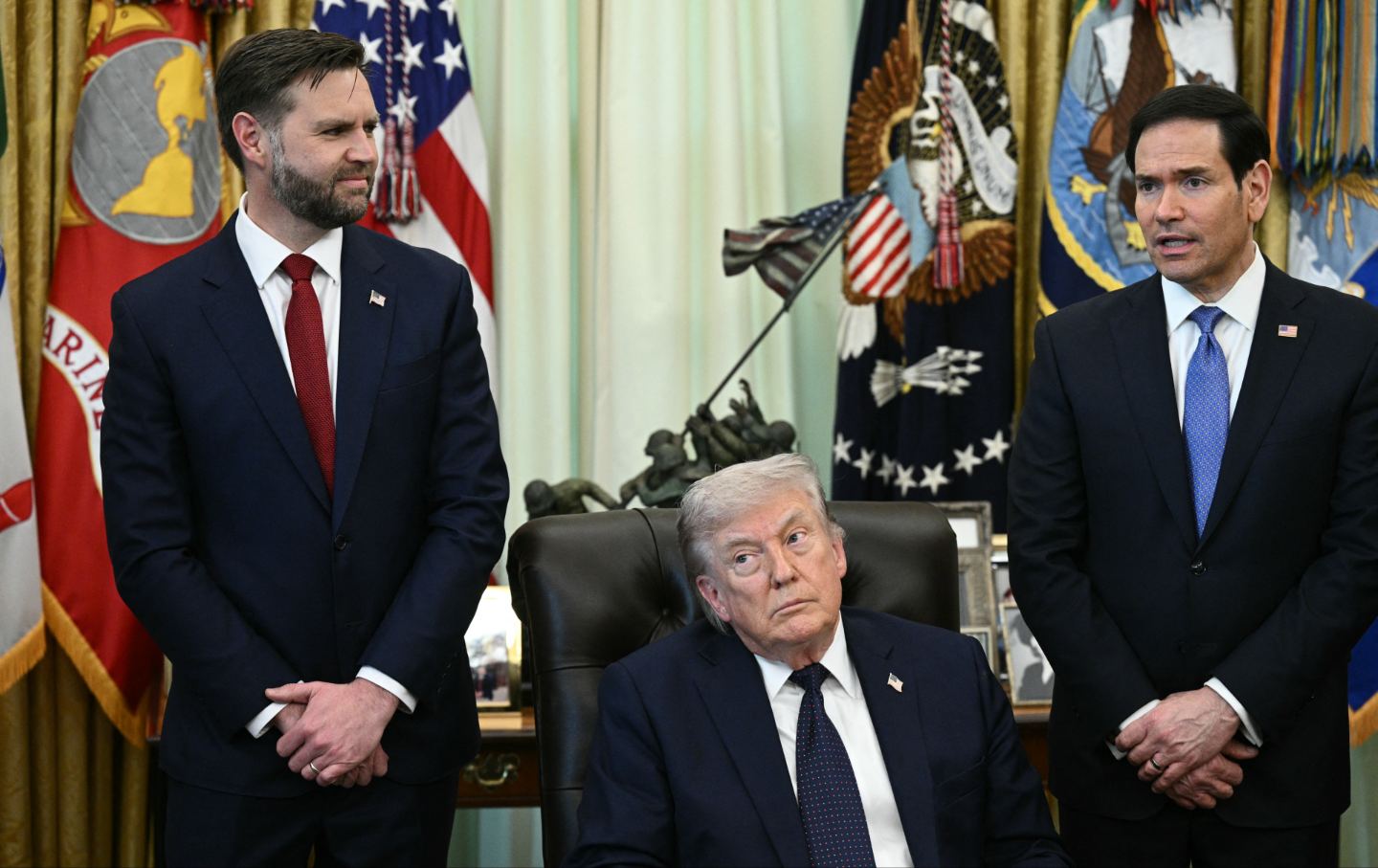
Trump’s Iran Disaster Is Making All His Cronies Look Like Fools Trump’s Iran Disaster Is Making All His Cronies Look Like Fools
Two foreign-policy camps are claiming Trump for themselves, while the Middle East fiasco humiliates every single one of them.

Looking Back on 9/11 Looking Back on 9/11
I hate to use this column to say “I told you so,” but in this case, “The Nation” was on the right side of history.
Don’t Believe the Gadi Eisenkot Hype Don’t Believe the Gadi Eisenkot Hype
The former IDF leader is being touted as the “anti-Netanyahu” in Israel’s upcoming elections. But in the ways that matter most, he's more of the same.
The Anniversaries of Hiroshima and Nagasaki Have Special Meaning in a World Out of Control The Anniversaries of Hiroshima and Nagasaki Have Special Meaning in a World Out of Control
As the last US-Russia nuclear arms control treaty expires, the anniversaries of Hiroshima and Nagasaki carry renewed urgency for a world edging toward a new arms race.
The Makings of a Mass Crisis The Makings of a Mass Crisis
Unless Morocco’s government provides better jobs, education, healthcare, and human rights to young people, the crisis we witnessed this last week will happen again.

