A Priest Races to Rescue Civilians as Russian Forces Close In
Meet Leonid Nomerchuk, the 39-year-old priest evacuating civilians from Ukrainian villages under Russian missile and drone attack.
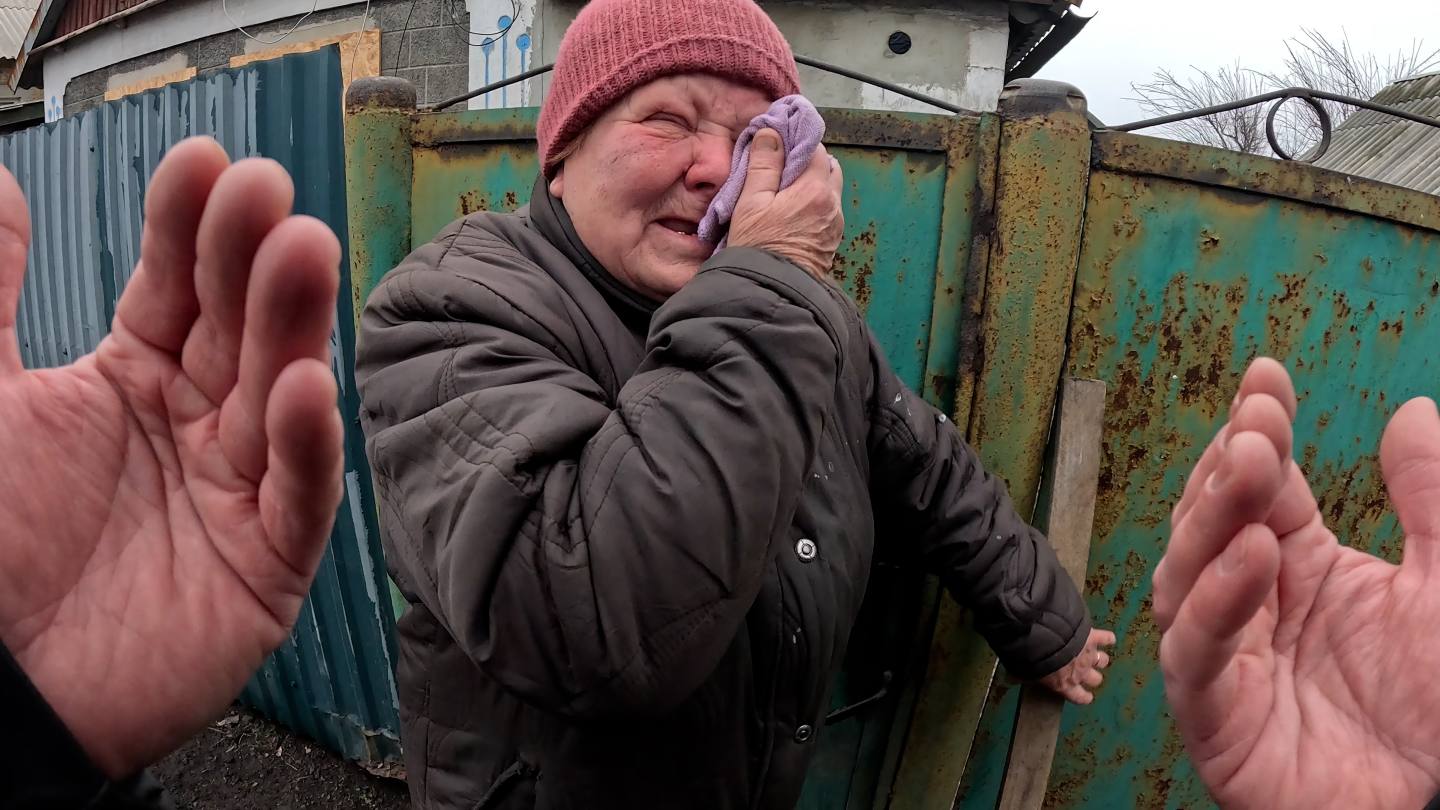
Dnipro, Ukraine—Leonid “Chaplain” Nomerchuk has one of the most dangerous civilian jobs in the world. Almost every morning in the central Ukrainian city of Dnipro, this 39-year-old priest and father of three checks an app maintained by local authorities and volunteers. He looks for the latest requests from civilians who need to be evacuated from frontline villages under heavy Russian missile and drone attack. Then, with two other members of the Volunteer Rescue Service NGO, he straps on a black bulletproof vest, puts on his helmet, and drives east in a heavily armored van to pick up the most urgent cases.
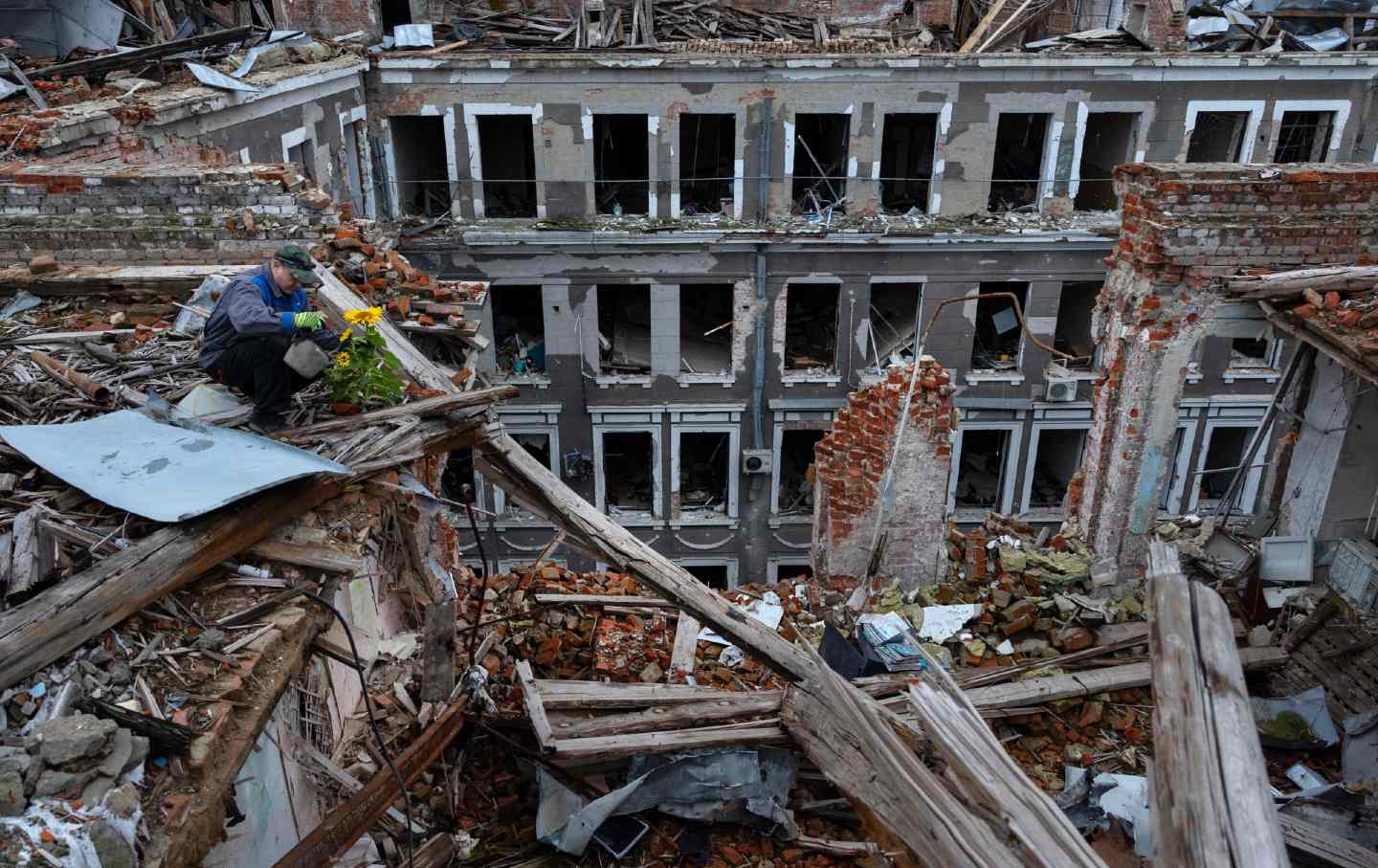
As Russian forces progress in Eastern Ukraine, requests for evacuations from families with children and the elderly keep coming. The Russians’ steady advance on the key logistics hub of Pokrovsk recently stalled, but they continue to push further south and to the west, field by field, grove by grove. Meanwhile, villages in the Dnipro Pokrovsk Oblast are facing evacuation for the first time since the invasion began nearly three years ago. As Trump pursues peace talks—including a recent phone call with Vladimir Putin—the front remains murky: Russian forces advance in some areas at a heavy price, Ukraine counterattacks in others. Putin’s Army is inching forward but remains far from completely annexing the Donetsk, Luhansk, Zaporizhzhia, and Kherson oblasts.
Nomerchuk greeted us on a recent Saturday evening in the gravel parking lot of his church, fresh from his latest run. He had short black hair streaked with gray and gave a “tired dad” sigh when asked how he’s doing. He told me, “God had mercy—we were able to evacuate three children and two adults.”
He’s just glad to be back. The journey itself is one of the riskiest parts of the job. Russians have made capturing Pokrovsk a priority, and the area is now the site of the most intense fighting.
Pokrovsk has served as a kind of linchpin for Ukraine’s defensive line in the east. Capturing it would give Russian forces a platform from which they could more easily threaten other Ukrainian strongholds in Donetsk, such as Kostiantynivka or Kramatorsk, or even push into central Ukraine. In recent days, Ukrainians have mounted a counterattack—described by one YouTuber as a “last attempt” to save the city—while Russians have intensified efforts to bypass and encircle Pokrovsk from the west.
Life in the city is bleak. Reuters reported that by year’s end, only 7,000 residents remained out of a prewar population of 60,000. That number has undoubtedly gone down since.
Near the front lines, Russians monitor roads, looking for vehicles to strike with drones—many of which now use ultra-thin fiber optic cables that make them immune to electronic jamming.
“There are situations when we get flat tires due to shrapnel, mines, or shelling. Once in New York [the Ukrainian city], we had to drive 10 kilometers on rims because stopping was impossible due to enemy drones. Now, we prepare our vehicles better, and we recently received an armored car, which greatly improves safety during missions” he said.
Ambulances and evacuation vehicles, even when clearly labeled, have been frequent targets. Exact statistics on volunteer casualties are scarce, but media and social-media reports suggest they’re common. A few days before we spoke, “Eddy,” a British medic working where Chaplain also operates, lost an arm and a leg when a drone hit his van.
“The last time I drove, I saw a video of a volunteer—maybe you heard—who was hit by a drone near Kurakhove,” Chaplain told us at a small shelter he runs for displaced people in Dnipro. “It penetrated the roof. Even though he had body armor, it struck him in the groin—flesh and blood. So when I’m in the vehicle, I gear up. It might not be perfect, but at least it’s something. That video still weighs on me.”
Inside the shelter—a modest house where evacuees stay before moving on to apartments with the help of the American NGO Plain Compass Crisis Response—we spoke to Natalya, a 62-year-old grandmother whom Nomerchuk picked up that morning from a village near Pokrovsk. Her daughter convinced her to leave; she made the request on Thursday and was picked up two days later.
A grandmother with short red hair and a gentle, deferring demeanor, she wore a “халат” or “khalat,” a kind of colorful robe or blouse, with a purple background and bright, intricate geometric designs with golden elephants on the shoulders—the kind of clothing people of her generation would wear at home.
“It’s a very difficult situation. The last eight days have seen heavy shelling, with missiles being shot down over the houses,” she said, fatigue evident in her voice. “You can’t sleep, you can’t even go outside to feed the dog. We let all the pets out,” she added, pausing to hug her daughter, who has just arrived.
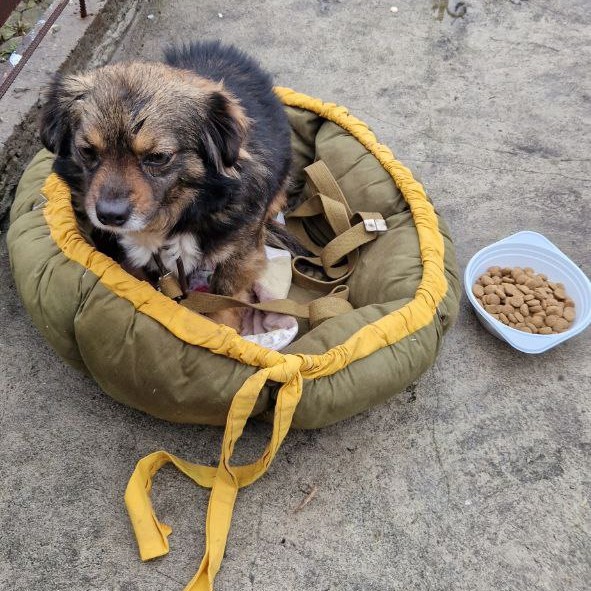
Natalya managed to bring one dog back—a small black and brown mix called “Corner” or “кутик,” and Nomerchuk helped her find it a new home in Dnipro. Natalya knew the Russians were advancing but never imagined they would reach so close to central Ukraine. “No one was waiting for them here,” she noted, bitterly. She wants her village to remain in Ukraine (not become part of Russia) and for the war to end so she can return home
“Every day,” she said that the government officials claimed “they wouldn’t get that far. Even two weeks ago, they said they wouldn’t come here. Yet here we are. The government needs to sit down at the negotiating table instead of driving people to the brink.”
Endless Tragedy
Volodymyr Fesenko, a Ukrainian political scientist and head of the Penta Center for Applied Research, told me Natalya’s desire for negotiations isn’t surprising, and is a common sentiment in areas close to the front line and in the Donbas region (Donetsk and Luhansk oblasts), which has seen fighting since 2014.
“In the combat zone and in frontline areas, the war is not just an endless tragedy but a very real catastrophe—your loved ones die, and you’re forced to abandon your home. Naturally, people who flee or stay in frontline regions are the most active supporters of ending the war,” he explained.
Still, Fesenko doubts that Putin truly wants to negotiate while believing he might still win, and he urged allies to keep pressing Russia and supporting Ukraine militarily. At the same time, he pointed to polls showing that Ukrainian public opinion began to shift in 2024, with more people favoring ending the war even if it means territorial concessions. Polls from the Kyiv Institute for Data show that in late 2022, only 8 percent supported compromises; by 2024, it had risen to 32 percent, and by December 2024, 38 percent. About half of respondents reject any concessions, insisting on fighting until all occupied territories are freed. Another group seeks a “just peace”—open to diplomacy, but not at any price. In June 2024, 38–57 percent favored some form of compromise; by December, that range climbed to 41–64 percent.
Popular
“swipe left below to view more authors”Swipe →Among Ukrainian politicians, Oleksandr Merezhko—the chairman of the Foreign Affairs Committee in the Verkhovna Rada, the Ukrainian parliament—said they are in “wait and see” mode regarding Trump’s plans. “We don’t know what Trump might offer; there hasn’t been real substance so far,” he said. He does see promise in Trump’s suggestion that the US continue military aid if granted access to Ukraine’s rare earth minerals. “He’s a businessman—he operates on mutual benefit. He wants economic guarantees for the US, because, for him, America comes first.”
President Volodymyr Zelenskyy is expected to hold talks with Vice President JD Vance at the sidelines of the Munich Security Council next weekend. On Monday, as reported by The Guardian, Zelenskyy told reporters that Ukraine would be ready for peace talks in any format as long as they “have an understanding that America and Europe will not abandon us.” Comments made by Trump in an interview Tuesday that Ukraine “might someday be Russian” are sure to be on the Ukrainian president’s mind.
War Spares No One
While Ukrainians wait to see what Trump’s plan entails, Nomerchuk continues to evacuate civilians from frontline cities and villages. The trips don’t always go smoothly. In one case, a son requested the evacuation of his elderly father near Pokrovsk. But when Nomerchuk arrived, the man refused, insisting that Russians wouldn’t target an old man. “We tried to convince him, but he was stubborn,” Nomerchuk recalled. With drones buzzing overhead, they usually stay only 10–15 minutes. They used a Starlink to get the son on the phone; still, the father wouldn’t budge. “I told you, I’m not leaving! Why are you calling these volunteers?”
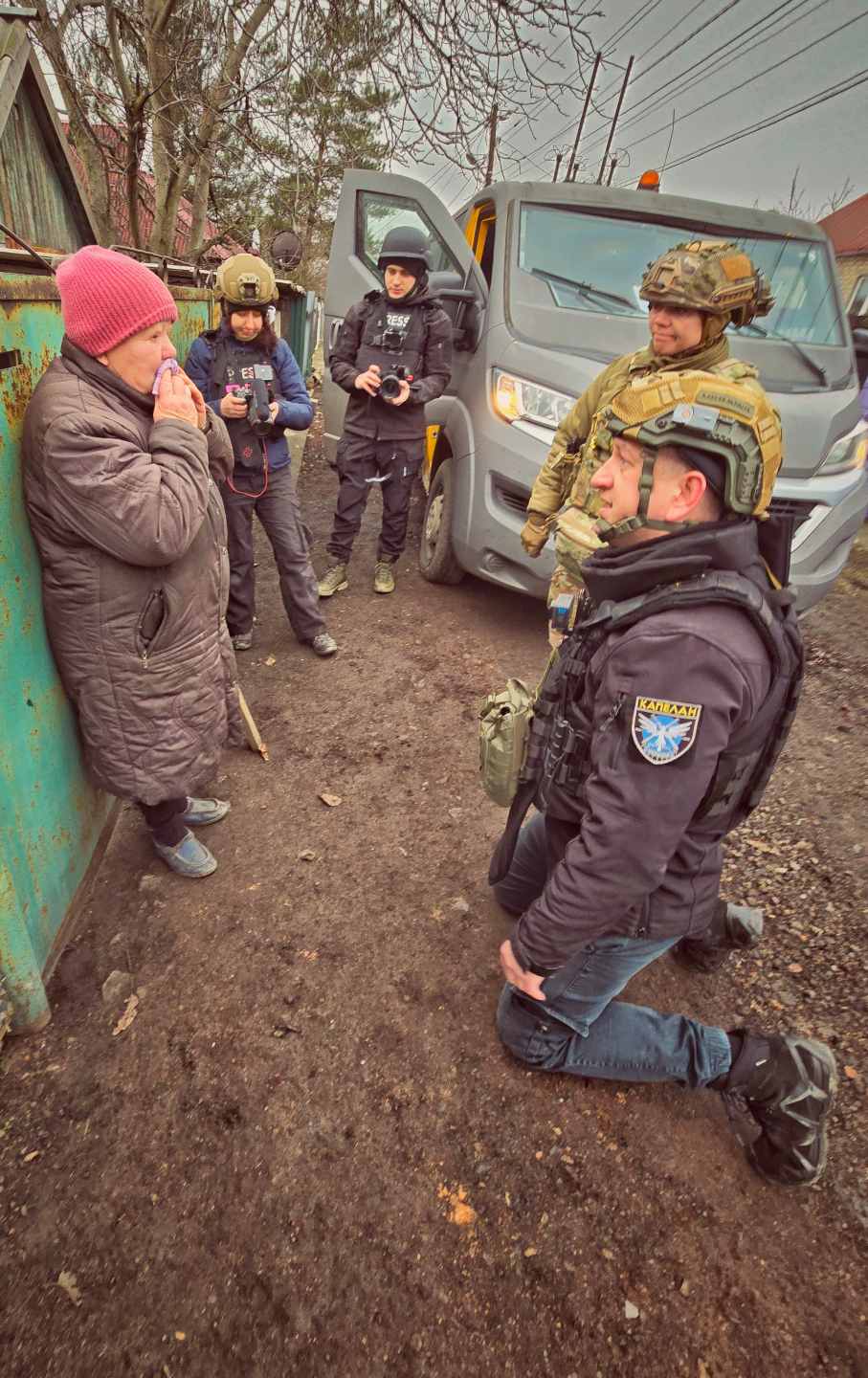
They left. A few days later, the son messaged Nomerchuk on Facebook: “A rocket hit my father’s house. He’s gone.”
Sometimes even those who request evacuations back out at the last minute. On January 26, Nomerchuk and his team arrived at a woman’s home in a dangerous part of Pokvost. Negotiations dragged on for 20 minutes, as captured by a videographer with the Ukrainian news outlet Ukrainska Pravda until they heard a drone overhead. Nomerchuk dropped to his knees, begging her to leave. She still refused. “I wasn’t ashamed to kneel if it might save her life. But she didn’t leave… I said a short prayer and left. What else could I do?”
Such calls haunt Nomerchuk. Staying positive is difficult, but his wife and faith keep him going.
“I don’t see how it can end. So I put my hope in God. I believe in our victory; otherwise, I wouldn’t be doing this. Some say there’s no future here, but I believe God sees our trials and won’t leave us. It seems impossible from the outside, but we keep going, trusting God to help us.”
Kostiantyn Yaremenko contributed to this piece as a producer, fixer, and translator.
Disobey authoritarians, support The Nation
Over the past year you’ve read Nation writers like Elie Mystal, Kaveh Akbar, John Nichols, Joan Walsh, Bryce Covert, Dave Zirin, Jeet Heer, Michael T. Klare, Katha Pollitt, Amy Littlefield, Gregg Gonsalves, and Sasha Abramsky take on the Trump family’s corruption, set the record straight about Robert F. Kennedy Jr.’s catastrophic Make America Healthy Again movement, survey the fallout and human cost of the DOGE wrecking ball, anticipate the Supreme Court’s dangerous antidemocratic rulings, and amplify successful tactics of resistance on the streets and in Congress.
We publish these stories because when members of our communities are being abducted, household debt is climbing, and AI data centers are causing water and electricity shortages, we have a duty as journalists to do all we can to inform the public.
In 2026, our aim is to do more than ever before—but we need your support to make that happen.
Through December 31, a generous donor will match all donations up to $75,000. That means that your contribution will be doubled, dollar for dollar. If we hit the full match, we’ll be starting 2026 with $150,000 to invest in the stories that impact real people’s lives—the kinds of stories that billionaire-owned, corporate-backed outlets aren’t covering.
With your support, our team will publish major stories that the president and his allies won’t want you to read. We’ll cover the emerging military-tech industrial complex and matters of war, peace, and surveillance, as well as the affordability crisis, hunger, housing, healthcare, the environment, attacks on reproductive rights, and much more. At the same time, we’ll imagine alternatives to Trumpian rule and uplift efforts to create a better world, here and now.
While your gift has twice the impact, I’m asking you to support The Nation with a donation today. You’ll empower the journalists, editors, and fact-checkers best equipped to hold this authoritarian administration to account.
I hope you won’t miss this moment—donate to The Nation today.
Onward,
Katrina vanden Heuvel
Editor and publisher, The Nation