Naomi Klein and Her Doppelgänger
On this episode of The Time of Monsters, Laura Marsh discusses the differences between Naomi Klein and Naomi Wolf.

The Nation Podcasts
Here's where to find podcasts from The Nation. Political talk without the boring parts, featuring the writers, activists and artists who shape the news, from a progressive perspective.
Naomi Klein and Her Doppelganger | Time of Monsters with Jeet Heer
On this episode of the Time of Monsters podcast, Laura Marsh discusses Noami Klein's new book, Doppleganger, about Noami Wolf.
Advertising Inquiries: https://redcircle.com/brands
Privacy & Opt-Out: https://redcircle.com/privacy
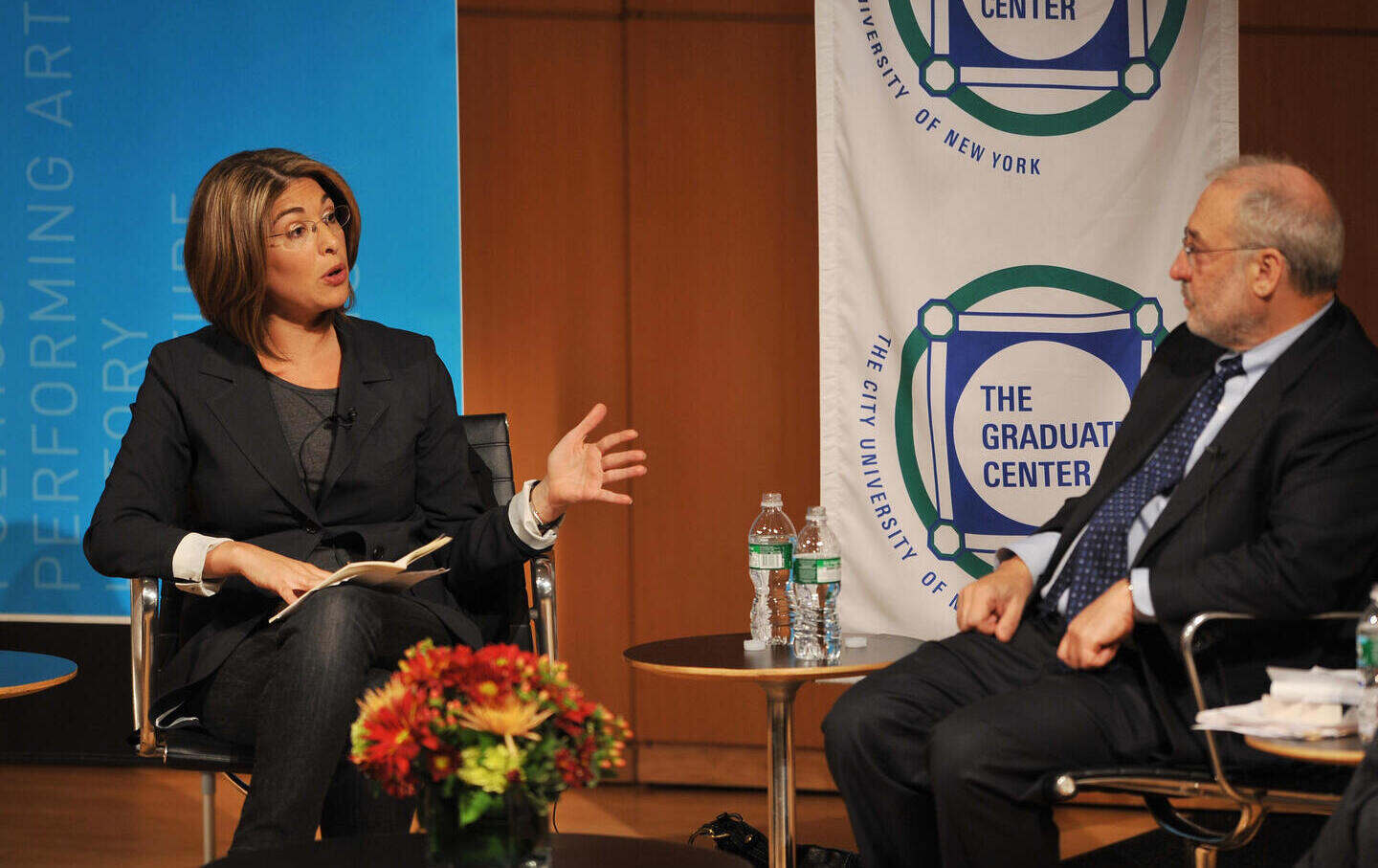
US journalist Naomi Klein (L), columnist for The Nation and The Guardian and the author of The Shock Doctrine: The Rise of Disaster Capitalism, speaks as Joseph Stiglitz, Nobel Prize–winning economist and University Professor at Columbia University, listens at a debate on Economic Power on October 20, 2008, during the Great Issues Forum at the Graduate Center of the City University of New York in New York.
(Stan Honda / AFP via Getty Images)Naomi Klein, the esteemed author of The Shock Doctrine and other essential guides to politics, has long had to deal with the minor annoyance that many people conflate her with Naomi Wolf, the increasingly crankish writer best known for her first book, The Beauty Myth. This minor annoyance has become something worse in the Covid era, as Wolf has rebranded herself as a major opponent of vaccination and increasingly allied herself with far right figures like Steve Bannon.
In response, Klein has written a book, called Doppelganger, about Wolf, which might seem like too gimmicky an idea. But in fact, Klein has written an excellent book, one that uses Wolf as a symptom of wider problems of fragmentation and alienation in the age of multiple crisis that are tearing apart the social fabric. The book asks why so many people becoming unmoored and attracted to conspiracy theories. It also provides sobering thoughts about the program needed to renew our shared sense of reality and social purpose. Laura Marsh, literary editor of The New Republic, wrote an excellent long essay that tackled the issues raised by Klein’s book. On this episode of The Time of Monsters, I talked to Laura about this profound and essential new book and the issues it raises.
The Nation Podcasts
Here's where to find podcasts from The Nation. Political talk without the boring parts, featuring the writers, activists and artists who shape the news, from a progressive perspective.
Bombing Iran Won’t Help the Protesters, with Annelle Sheline | The Time of Monsters with Jeet Heer
Iran is facing upheavals at home and abroad. For more than two decades, the Islamic Republic has faced waves of protests from citizens demanding a more democratic society. Over the past two weeks, these protests have erupted with a new ferocity and are being met with violent repression. Meanwhile, the Israeli government is pushing the United States to renew bombing Iran, a military objective now being given the guise of a humanitarian mission. To discuss the turmoil in Iran and place it in the larger context of regional instability and competing visions of the future of the Middle East, I spoke with Annelle Sheline, a research fellow at The Quincy Institute who studies the region, in this special Friday edition of the podcast.
Advertising Inquiries: https://redcircle.com/brands
Privacy & Opt-Out: https://redcircle.com/privacy
Search Results placeholder